

Posted on Leave a comment

“From Saudi Streets to Jail Cells: Pakistan’s Zero-Tolerance Shock Therapy for Deportees”

In a decisive move to curb illegal migration and protect Pakistan’s international reputation, the federal government has announced stringent measures targeting citizens deported from foreign countries. Effective immediately, deported individuals will face passport cancellation and the registration of First Information Reports (FIRs) against them. This policy shift aims to deter unlawful activities abroad and reinforce the integrity of Pakistan’s travel documentation system.(UrduPoint, Dawn, Daily Times)

🚨 Key Measures Implemented

Interior Minister Mohsin Naqvi, during a high-level meeting in Islamabad on May 24, 2025, outlined the following actions:(Geo News)

  • Passport Cancellation: Deported individuals will have their passports revoked upon return to Pakistan.(Daily Times)
  • FIR Registration: Criminal cases will be filed against deportees to address their involvement in illegal activities abroad.(Facebook)
  • Passport Control List (PCL): Names of deported citizens will be added to the PCL for five years, restricting their ability to obtain new travel documents.(ARY NEWS)
  • Policy Review Committee: A committee led by the Interior Secretary has been established to strengthen passport issuance regulations and prevent misuse.

Minister Naqvi emphasized a zero-tolerance approach, stating that deportees have caused embarrassment to Pakistan on the international stage and will no longer be granted leniency. (Arab News)

📊 The Scale of the Issue

The decision follows alarming statistics regarding the deportation of Pakistani nationals:(Arab News)

  • Saudi Arabia: Over 5,000 Pakistani beggars have been deported in the past 16 months.(Geo News)
  • Other Countries: An additional 369 individuals were apprehended for begging in five other countries during the same period.(Dawn)
  • Europe: In April alone, 106 Pakistanis deported from various European nations arrived in Islamabad.(Geo News)

These figures highlight a troubling trend of Pakistani citizens engaging in unlawful activities abroad, prompting the government to take corrective action.

🌐 International Repercussions

The surge in deportations, particularly for offenses like organized begging, has tarnished Pakistan’s global image. A viral video earlier this year featured a Pakistani woman revealing that her in-laws’ luxurious lifestyle was funded through professional begging, underscoring the extent of the issue. (@EconomicTimes)

By implementing these new measures, the government aims to:

  • Deter Illegal Activities: Discourage citizens from engaging in unlawful conduct abroad.
  • Enhance Accountability: Hold individuals accountable for actions that damage the country’s reputation.
  • Strengthen Documentation Integrity: Ensure the Pakistani passport is not misused for illicit purposes.

🛂 Implications for Citizens

The government’s crackdown serves as a stern warning to those considering illegal migration or involvement in unlawful activities overseas. Citizens are urged to:

  • Adhere to Legal Channels: Pursue overseas opportunities through authorized and legal means.
  • Avoid Exploitative Practices: Refrain from engaging in activities that could lead to deportation and legal consequences.
  • Stay Informed: Keep abreast of government policies regarding international travel and migration.

🔚 Conclusion

Pakistan’s decision to cancel passports and file FIRs against deported citizens marks a significant step in addressing illegal migration and its associated challenges. By enforcing strict measures, the government seeks to uphold national dignity, ensure the responsible use of travel documents, and protect the country’s standing on the global stage.

Posted on Leave a comment

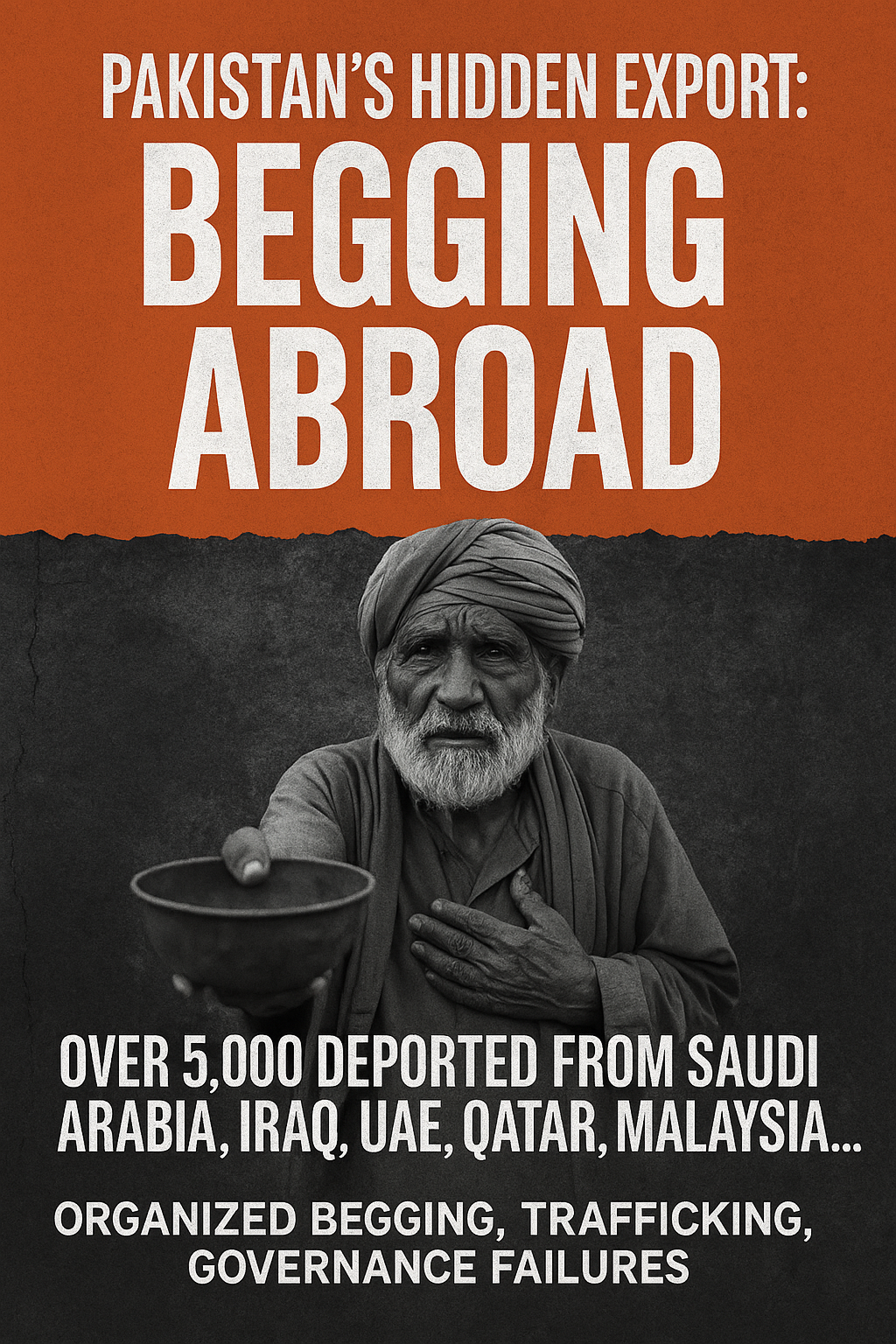
Pakistan’s Hidden Export: The Shameful Economy of Begging Abroad


By Remedy Talks Editorial Team
When poverty becomes a business model and shame is shipped overseas.


There’s no easy way to say it: Pakistan is now exporting beggars.
Over 5,000 Pakistani nationals have been deported from countries like Saudi Arabia, Iraq, the UAE, Qatar, and Malaysia in just the past 16 months. The revelation came straight from the country’s interior minister—publicly admitted in parliament. What should’ve sparked national outrage has instead been met with silence.

This isn’t just another headline. It’s a damning reflection of how deep poverty, human trafficking, and state neglect have intertwined to form an industry of exploitation—and it’s turning Pakistan into a global embarrassment.


Beyond Poverty: The Rise of the Begging Mafia

Let’s be clear: not every deported person was a desperate soul looking for food or shelter. Many were part of organized begging rings—a full-fledged, cross-border racket that sends individuals abroad under false pretenses, only to exploit them on foreign streets.

And it’s not a small operation either. Reports estimate that this “industry” within Pakistan pulls in billions of rupees annually, operating in broad daylight with the help of trafficking agents, fake visa handlers, and local enablers.

The sad truth? Begging is no longer just a symptom of poverty; it has become a profitable economy—one that thrives on the backs of society’s most vulnerable.


Deportation Stats: The Shame in Numbers

According to official data:

  • 52% of those deported for begging hail from Sindh,
  • followed by Punjab and Khyber Pakhtunkhwa.
  • Thousands are now on the Exit Control List (ECL), banned from traveling abroad.

But let’s not kid ourselves. Adding names to a no-fly list doesn’t address the core issue. That’s like bandaging a bullet wound while ignoring the gunfire.


Who’s Really at Fault?

The begging crisis in Pakistan isn’t just about those holding out their hands—it’s about the systems failing them:

  • Governance breakdown has allowed trafficking rings to operate without fear.
  • Weak employment policies offer no alternatives to those pushed to the margins.
  • Lack of vocational education and rehabilitation programs means there’s no way back for many once they’re on the streets.
  • Charity culture, while noble, is often unregulated—fueling exploitation by rewarding beggars without questioning who’s behind them.

So when foreign governments crack down and publicly shame us by deporting thousands, we have to ask:
Where is our shame at home?


The International Fallout

The diplomatic implications are serious. Countries that once offered Pakistanis employment opportunities are now tightening visa restrictions. This doesn’t just hurt those involved in begging networks—it punishes hardworking migrants, laborers, and professionals who now face suspicion, stigma, and rejection at every border.

Imagine losing the moral and legal standing to defend your citizens abroad—because the world has started associating your passport not with talent or trade, but with organized begging.


The Way Out: Fixing the Root, Not Just the Rot

If the state can track down and detain thousands of undocumented Afghans, it can certainly dismantle domestic trafficking and begging mafias. The question isn’t “how”—it’s whether there’s political will to go beyond surface-level solutions.

Real steps must include:

  • Cracking down on human trafficking networks that facilitate illegal travel for begging.
  • Rehabilitating beggars through job training, microfinance, and skill development, particularly in high-risk regions like Karachi, interior Sindh, and south Punjab.
  • Launching widespread awareness campaigns to expose the exploitation behind “charitable” street begging.
  • Strengthening child protection units to stop the recruitment of children into these criminal operations.
  • Punishing ringleaders with real legal consequences, not just public shaming.

And perhaps most importantly—educating the public. Your loose change might feel like compassion, but it could be fueling an underground economy of abuse.


A National Wake-Up Call

This is not just a story of deportation—it’s a warning sign.
When a nation becomes known for sending its poor to beg abroad, when children are trafficked for sympathy, and when poverty is weaponized as profit—we have lost more than just our international dignity. We’ve lost our moral compass.

There is no quick fix. But ignoring it will only make it worse. Pakistan must recognize that this isn’t just about optics or reputation—it’s about reclaiming human dignity, at home and abroad.


Final Word:
You can’t solve begging with a blacklist.
You can only solve it by giving people a life where they don’t have to beg to survive.