Posted on Leave a comment

THE FOREVER WAR IN GAZA: A HUMANITARIAN AND POLITICAL NIGHTMARE

Introduction

The ongoing conflict in Gaza has once again erupted into a devastating humanitarian crisis, deeply rooted in decades of political tensions and failed diplomacy. Recent developments during former U.S. President Donald Trump’s Middle East visit have added new dimensions to the crisis. As Israel intensifies its military campaign under the guise of “destroying Hamas once and for all,” the region is witnessing unprecedented levels of destruction, displacement, and international condemnation.

Trump’s Middle East Diplomacy and Israel’s Exclusion

During Trump’s recent visit to the Middle East, the former president made several moves that appeared to sideline Israel. From lifting sanctions on Syria and meeting with Syrian leaders to forging a ceasefire with the Houthis in Yemen and engaging directly with Hamas to free an American hostage, Trump’s actions deviated sharply from traditional U.S.-Israel policy coordination. Most notably, his willingness to enter nuclear negotiations with Iran—a staunch Israeli adversary—was perceived in Tel Aviv as a direct challenge to Israeli interests.

These actions have not only unsettled Israeli leadership but have also marked a shift in Washington’s diplomatic approach. Commentators like Kim Ghattas have observed that Trump was “cutting Israel out of the deals it is making,” leaving Prime Minister Netanyahu reduced to a mere spectator.

Israel’s Gideon’s Chariots Offensive

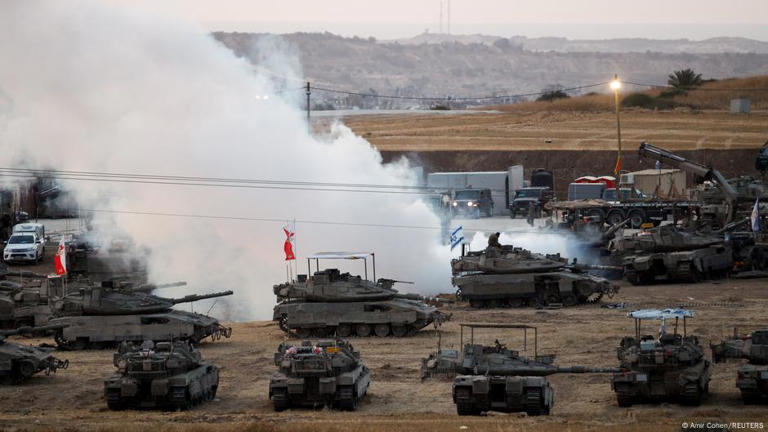
In response, Israel has launched what it calls the “Gideon’s Chariots” offensive, aiming to take control of all of Gaza and obliterate Hamas. The campaign targets both southern and northern Gaza, and is widely viewed as a strategy to push Palestinians out of the Strip permanently. Netanyahu’s long-standing ambition to displace Gaza’s population is now being enacted through brutal military force.

This military escalation has resulted in mass displacement, the collapse of humanitarian infrastructure, and mounting civilian casualties. Despite international pressure, including a warning from the White House that Netanyahu would be “on his own” if he continued the war, Israel has shown no signs of halting its aggression.

International Response and Condemnation

The world is watching in horror. United Nations Secretary-General António Guterres described the crisis as “beyond description, beyond atrocious, and beyond inhumane,” warning that the entire population of Gaza faces famine. Western allies such as France, the UK, and Canada have issued joint statements condemning Israel’s actions, even threatening sanctions and a review of trade relations.

Amnesty International’s statement underscored the global outrage: “It is outrageous and morally reprehensible that it took the world nearly 80 days of broadcast starvation and cruelty amidst genocide to exert enough pressure on Israel to even slightly ease its total siege.”

Humanitarian Crisis and Militarised Aid

Under intense international scrutiny, Israel has allowed minimal aid into Gaza. However, these efforts are widely considered insufficient. The new U.S.-backed plan to manage aid through centralized, militarized distribution centers has drawn sharp criticism. Managed by the Swiss-incorporated Gaza Humanitarian Foundation and protected by private contractors, the plan is seen as another form of displacement.

UN officials have refused to participate, condemning the militarisation of aid and accusing Israel of turning starvation into a bargaining chip. This method not only undermines the impartiality of humanitarian work but also exacerbates the suffering of displaced Palestinians.

Ceasefire Hopes and Political Deadlock

Talks to renew a ceasefire have stalled, largely due to Israel’s reluctance. Despite U.S. pressure, particularly from the Trump administration, Netanyahu remains committed to achieving what he calls “total victory” over Hamas. His unilateral decision to break the last ceasefire in March has further diminished hopes for a peaceful resolution.

Vice President J.D. Vance’s cancellation of his planned visit to Israel is seen as a signal of U.S. frustration, though diplomatic efforts continue. Without meaningful negotiations, the region is doomed to further cycles of violence and instability.

The Question of Trump’s Plan

A disturbing element in this conflict is the suggestion that Israel’s current actions may be part of a broader plan attributed to Donald Trump—a plan involving the permanent relocation of Gaza’s population to third countries. Israel’s far-right finance minister Bezalel Smotrich openly spoke about “destroying everything that’s left of the Gaza Strip” and pushing the population out.

Whether this is indeed Trump’s plan or a misappropriation of his ideas remains unclear. However, it is vital for Washington to clarify its stance. If such a plan is being implemented with U.S. approval, it undermines any claims of America being a force for peace. If not, disowning the policy could pressure Israel into reevaluating its actions.

Conclusion

The situation in Gaza is a tragic embodiment of failed diplomacy, unchecked military aggression, and a collapsing humanitarian system. While Trump’s approach to Middle East politics may have shifted alliances, it has not achieved the lasting peace it seemed to promise. Israel’s relentless offensive, underpinned by plans like Gideon’s Chariots and possible forced relocations, only deepens the wounds of a long-suffering population.

It is time for the international community—including the U.S.—to take a firm, principled stand. Real peace will not come from sidelining key players or militarising aid, but from addressing the root causes of the conflict, ending occupation, and respecting human rights.

Internal Linking Suggestion: For further analysis on how military conflict impacts humanitarian law, read our post: “The Weaponization of Aid in Modern Warfare” on remedytalks.com.
Posted on Leave a comment

“300 Miscarriages, No Medicine: The Silent Atrocities of Gaza’s Collapsed Healthcare”

The humanitarian situation in Gaza has reached catastrophic levels as Israel’s military campaign intensifies. With over 53,000 Palestinians reported dead and nearly the entire population displaced, the international community watches with growing concern.

Escalating Conflict: A Grim Toll

Since the onset of hostilities on October 7, 2023, Gaza has been subjected to relentless airstrikes and ground operations by Israeli forces. Recent reports indicate that Israeli jets struck 100 targets in Gaza over the past day alone, further exacerbating the crisis.

The Gaza Civil Defence has reported at least 15 fatalities from Israeli strikes, highlighting the ongoing peril faced by civilians.

🏥 Healthcare System on the Brink

The healthcare infrastructure in Gaza is collapsing under the strain of continuous attacks and resource shortages. Al-Awda Hospital, a critical medical facility, has been targeted multiple times, with its director reporting bombings around the hospital perimeter and attacks on ambulances transporting the wounded.

Health workers and patients find themselves trapped in hospitals, unable to evacuate due to the ongoing bombardments.

🍞 Humanitarian Crisis: Starvation and Displacement

The blockade and destruction have led to severe shortages of food and medical supplies. The World Food Programme reports that over 70,000 children in Gaza are facing acute malnutrition.

Tragically, the Gaza Government Media Office has documented 300 cases of miscarriages among pregnant women due to lack of nutrition and medical care.

🌍 International Response and Appeals

Global leaders and organizations are calling for immediate action to address the crisis:

  • United Nations: The UN has emphasized that “nowhere is safe” in Gaza, urging for humanitarian corridors and ceasefires to allow aid delivery.
  • South Africa: President Cyril Ramaphosa has accused Israel of “war crimes and genocide” in Gaza, calling for international intervention. (
  • United States: Veterans have begun a hunger strike outside the UN headquarters, demanding an end to the violence and increased humanitarian aid to Gaza.

📊 Public Opinion and Political Implications

A recent poll indicates that half of Israelis believe Prime Minister Netanyahu is more interested in maintaining power than ending the Gaza operation.

Internationally, there is growing pressure on governments to reassess their positions and take concrete steps to alleviate the suffering in Gaza.

🔚 Conclusion: A Call for Immediate Action

The situation in Gaza is dire, with thousands dead, countless injured, and a population on the brink of famine. The international community must act swiftly to facilitate ceasefires, ensure the delivery of humanitarian aid, and work towards a sustainable resolution to the conflict.

Posted on Leave a comment

Gaza Under Fire Again: What Israel’s New Offensive Means Amid Rising Global Pressure

As Gaza reels under yet another wave of deadly violence, the world watches with growing alarm. Israel’s newly launched military campaign—titled “Gideon’s Chariots”—has plunged the besieged Palestinian enclave into deeper turmoil, triggering condemnation and urgent warnings from key international players. The offensive, which began just days after former U.S. President Donald Trump’s visit to the region ended without a truce or hostage deal, marks a significant escalation in one of the most enduring and brutal conflicts of our time.

In the span of just a few days, hundreds have been killed. Entire families have been buried beneath the rubble of collapsed buildings, and humanitarian access has been pushed to a new breaking point. The violence, now shifting from airstrikes to an intensified ground invasion, is reigniting fears of a long-term war with devastating consequences for civilians.

The Operation: “Gideon’s Chariots”

The Israeli Security Cabinet gave its nod to the military operation on May 5, signaling an expansion of the war aims that have defined the conflict in Gaza. Officially, the stated objectives are clear: eliminate Hamas as a military and political force and recover the remaining Israeli hostages held in Gaza.

The Israel Defense Forces (IDF) swiftly executed the directive. Heavy aerial bombardments were launched across the strip, targeting what Israel claims are Hamas strongholds. But as is often the case in Gaza, the line between combatants and civilians is tragically blurred. Hospitals have reported an influx of civilian casualties, many of them women and children, with some entire families reportedly wiped out in a single strike.

As the weekend gave way to Monday, the campaign intensified further with Israeli ground troops advancing simultaneously into both northern and southern Gaza. The push, according to military statements, is designed to dismantle what remains of Hamas’s infrastructure while asserting full territorial control—a goal Prime Minister Benjamin Netanyahu openly stated Israel now seeks.

Global Outcry and the Threat of Sanctions

This latest escalation has not gone unnoticed by the international community. For the first time since the war’s early days, staunch Western allies of Israel are expressing serious displeasure—and issuing direct warnings.

The United Kingdom, France, and Canada released a rare joint statement on Monday threatening “concrete actions” if Israel does not halt its assault and immediately allow unhindered humanitarian aid into Gaza. Among the measures under consideration are targeted sanctions, diplomatic freezes, and even potential arms review agreements.

The shift in tone is notable. Historically, these countries have maintained a largely supportive posture toward Israel, often citing its right to self-defense. But the scenes emerging from Gaza—mass civilian deaths, destroyed aid convoys, and blocked relief efforts—are testing that alignment.

Israel’s decision to allow five trucks of humanitarian aid into Gaza has done little to stem the criticism. UN aid chief Tom Fletcher called the effort “woefully insufficient,” noting that it represents only a fraction of what is needed to address the hunger, medical emergencies, and displacement within the enclave. “A drop in the ocean,” Fletcher said, capturing the sheer scale of the crisis.

The Stalled Ceasefire and Doha Talks

At the heart of this renewed violence is a failure in diplomacy. Hopes were briefly raised when Hamas and Israel entered indirect negotiations in Doha, Qatar over the weekend. However, those talks appear to have reached an impasse. Hamas has refused to accept Israel’s terms, especially those requiring unconditional surrender and no guarantees of Palestinian autonomy.

Former President Trump, who had positioned his visit as a chance to broker a deal, left the region without any tangible outcome. Soon after his departure, Israel moved forward with its military agenda—leaving little doubt that the operation was premeditated, and not merely a response to stalled talks.

The timing has raised questions about Israel’s long-term intentions. Is this offensive aimed at pressuring Hamas into submission, or is it part of a broader strategy to redraw the political map of Gaza? Netanyahu’s remarks about taking “complete control” over the territory suggest the latter.

Humanitarian Collapse and the Cost to Civilians

For Gazans, the price of this war continues to climb with unbearable speed. More than two million people live in the Gaza Strip, already suffering from years of blockade, power shortages, and crippled infrastructure. This new ground offensive, paired with sustained airstrikes, is compounding a humanitarian disaster that has few parallels in the modern world.

Reports from inside Gaza paint a grim picture. Hospitals are overwhelmed. Medical supplies are running out. Clean water is scarce. And families are being displaced for the third, fourth, or fifth time within just a few months. The situation is not only a tragedy; it is a breach of international humanitarian law, according to several rights organizations.

Meanwhile, aid agencies remain largely sidelined. Their convoys are blocked, their workers endangered, and their missions increasingly politicized. Even when aid is allowed through, it’s too little and too late.

What Comes Next?

As Israel pushes forward with its campaign, and global powers inch closer to imposing punitive measures, the question remains: what is the endgame?

Will this offensive truly eliminate Hamas, or will it deepen the cycles of violence and radicalization that have haunted the region for decades? Can Western governments follow through on their threats of sanctions, or will geopolitical calculations again override moral imperatives?

What’s increasingly clear is that the cost of inaction—both diplomatic and humanitarian—is unsustainable. The longer the war continues, the more it erodes regional stability, inflames public sentiment, and alienates Israel from its traditional allies.

But beyond the politics and the military strategies, it is the ordinary civilians—mothers, children, the elderly—who are paying the highest price.

This is not just a geopolitical story. It is a story of broken homes, shattered lives, and fading hope. And unless the world steps in with more than just statements, that story will only grow darker in the days to come.

Posted on Leave a comment

Global Hunger Crisis: Gaza on the Brink, Pakistan at Risk


As we move deeper into 2025, the world is facing an escalating food security emergency. According to the latest Global report on food crisis the number of people experiencing high levels of acute food insecurity is the highest ever recorded. Conflict, economic shocks, and climate disasters are pushing vulnerable populations to the edge—and in some regions, over it.

No place illustrates this human catastrophe more starkly than Gaza, where the entire population of over 2.1 million people is now trapped in a web of starvation, siege, and suffering. But Gaza isn’t alone. From northern Pakistan to the drought-stricken Horn of Africa, hunger is becoming a global phenomenon—and political inaction is letting it happen.


Gaza: Starvation by Design

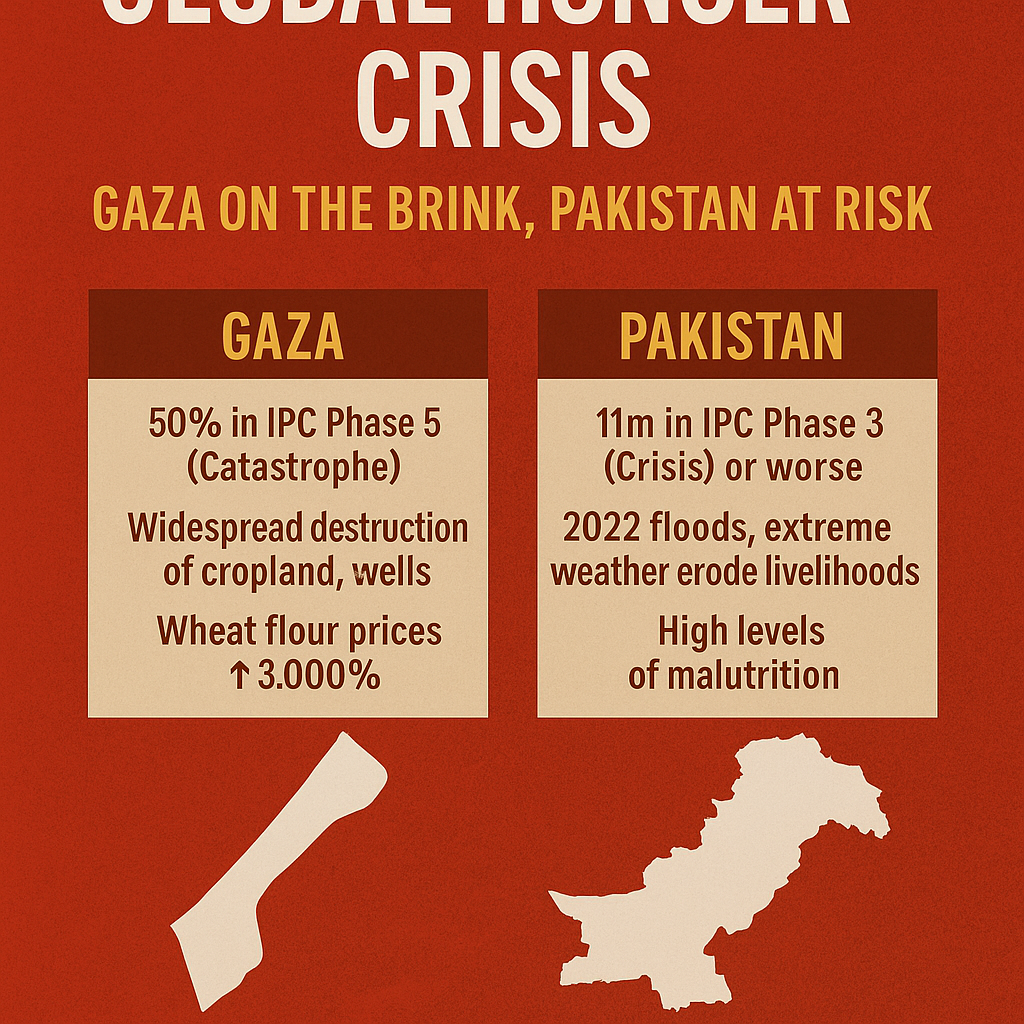
The humanitarian situation in Gaza has become apocalyptic. As of March 2024, over half the population was classified at IPC Phase 4 (Emergency), while a staggering 50% were in IPC Phase 5 (Catastrophe)—the last step before an official famine declaration. These are not just numbers. They represent real families, children, and communities enduring daily misery with no end in sight.

The root cause isn’t merely bad luck or natural disaster—it’s political policy. Gaza’s economy has been strangled by a 17-year blockade, compounded by frequent military escalations. Basic infrastructure has been shattered. By the end of 2024:

  • 75% of cropland was destroyed
  • 57% of greenhouses were obliterated
  • 68% of wells were made inoperable

The destruction of Gaza’s food systems is systematic. In North Gaza and Gaza governorates, 70% of the population now survives solely on humanitarian aid, which is not only insufficient but erratic. To make matters worse, food prices have surged beyond imagination. Between February and April 2025, the cost of wheat flour rose by 3,000%.

This is not just a failure of governance—it’s a violation of human dignity. As famine looms, humanitarian access remains severely restricted. Aid trucks entering Gaza are far below pre-conflict levels, and every delay worsens the crisis. Global silence is not neutrality; it’s complicity.


Pakistan: A Growing Storm Beneath the Surface

While Gaza’s tragedy dominates headlines, Pakistan is quietly edging toward its own food security tipping point. Although food inflation dipped to 0.3% by December 2024, that statistic hides a deeper truth. Persistent poverty, rising unemployment, and climate shocks are undermining household access to nutrition—especially in the country’s most vulnerable regions.

The 2022 floods left long-term damage that Pakistan has yet to recover from. Recurrent extreme weather events in 2023 and 2024, including erratic rainfall, droughts, and early frosts, have dealt further blows to already fragile livelihoods. Farmers in Balochistan, Sindh, and Khyber Pakhtunkhwa (KP) have been especially hard-hit, with water scarcity and crop losses forcing many into crippling debt cycles.

The latest IPC assessment reveals a troubling picture:

  • 11 million people in Pakistan are in IPC Phase 3 (Crisis) or worse
  • 2.2 million are facing IPC Phase 4 (Emergency)
  • Malnutrition rates among children, especially in Sindh and KP, are alarmingly high

In these regions, low birth weight, child stunting, and high infection rates from diarrhoea and respiratory illness are accelerating the downward spiral. Compounding these challenges is a global reduction in humanitarian funding, which has led to scaled-down food assistance programs when they’re most needed.


A Global Crisis, Fueled by Political Neglect

What unites Gaza and Pakistan—and indeed most hunger hotspots—is not just food scarcity, but policy failure. Food insecurity in 2025 is largely man-made. It is rooted in:

  • Protracted conflict and political instability
  • Climate-induced agricultural loss
  • Economic inequality and fragile safety nets
  • Restriction of aid for geopolitical gain

In Gaza, it is the result of an intentional siege and destruction of civilian infrastructure. In Pakistan, it’s a dangerous cocktail of natural disaster, economic fragility, and underfunded social protection.

This is not simply a humanitarian challenge. It’s a moral one.


What Must Be Done: Recommendations for Pakistan

While international actors must demand an immediate ceasefire and unrestricted humanitarian access to Gaza, Pakistan’s government must act now to prevent a deeper crisis within its own borders. The following steps are critical:

1. Strengthen Social Safety Nets

Existing poverty alleviation programs like the Benazir Income Support Programme (BISP) must be expanded with a special focus on food assistance, child nutrition, and maternal health.

2. Scale Up Nutrition-Focused Interventions

Targeted support is essential in Sindh and KP. Government and NGO partnerships should focus on mobile health clinics, school feeding programs, and vitamin supplementation to reduce child mortality.

3. Invest in Climate-Resilient Agriculture

Introduce drought-resistant crop varieties, improve irrigation infrastructure, and train farmers in climate-smart techniques to reduce risk and improve yields.

4. Enhance Water Security

Pakistan must take steps to secure its water future, including reforestation, building rainwater harvesting systems, and ensuring fair access to water in drought-prone regions.


The Road Ahead: A Choice for Humanity

The question is not whether we have the resources to end hunger. The world grows enough food. The problem is how that food is distributed—and how hunger is weaponized in times of conflict. Food should never be used as a tool of war.

In Gaza, the world must say: enough.
In Pakistan, the state must act: now.
And globally, we must remember: hunger is not inevitable—it is a choice we allow.

As millions go to sleep tonight without food, as children face another day with empty stomachs and no certainty of survival, we must ask ourselves:

How long can humanity endure this silence?


Posted on Leave a comment

GENOCIDE IN GAZA: WHEN WILL THE WORLD WAKE UP?


With more Israeli forces than ever now deployed inside Gaza, and a fresh call-up of reservists, the situation has shifted from dire to devastating. Gaza is now under a relentless siege—cut off from food, water, medicine, and electricity for over six weeks. Despite warnings from the UN, WHO, and multiple human rights watchdogs about the imminent threat of mass starvation, the aid blockade remains firmly in place.

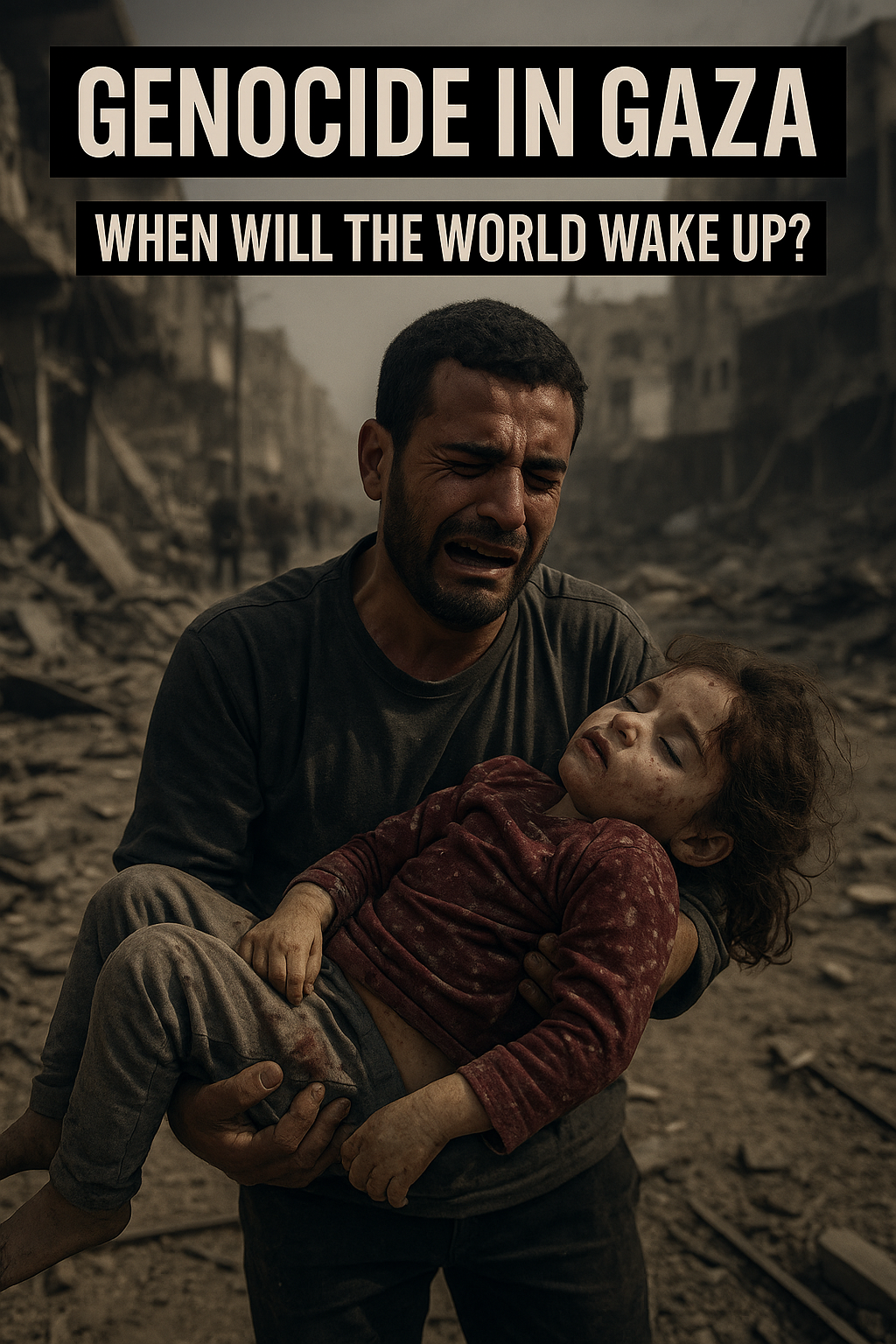
Bombings have escalated. Hospitals have been reduced to rubble. Entire neighborhoods flattened. Children are buried under debris, mothers clutch their lifeless babies, and doctors treat patients without anesthesia. And yet, world leaders stay silent—or worse, continue justifying it as “Israel’s right to defend itself.”

A Military Operation or Ethnic Cleansing?

Israel continues to claim its operation is focused on freeing the remaining hostages. But the facts on the ground tell another story. As journalist Mark Seddon wrote on X:

“Only 8 hostages have been rescued by the Israeli army. 33 have been killed by Israeli airstrikes. 148 were freed through negotiations. This isn’t about the hostages—it’s about the annihilation of the Palestinian people.”

The numbers speak for themselves. The cruelty cannot be overstated. Gaza’s children—over 18,000 of them, most under 10 years old—are already dead. The very same West that once vowed “Never Again” after the Holocaust is now watching history repeat itself. And doing nothing.

The Silence of the “Free” World

Despite its lofty claims of democracy, human rights, and journalistic freedom, the Western world has clearly picked a side—and it isn’t with the oppressed.

Mainstream media dehumanizes Palestinians. Every day, we see 50, 75, or 100 deaths reported as mere numbers. These are people. Children. Families. Journalists. Doctors. Yet their lives seem to matter less.

Meanwhile, foreign journalists have been barred from Gaza. Local journalists—every one of whom Israel claims is “Hamas”—have been systematically killed. This silence ensures that genocide can proceed without global outcry.

Images That Break the Soul

Who hasn’t seen the footage? A father carrying the broken body of his daughter. A mother screaming next to the shattered corpse of her son. Hospital corridors stained with blood. Entire families vaporized in seconds. Gaza looks less like a warzone and more like a mass graveyard.

Healthcare workers operate with no medicine, no supplies, no electricity—yet they continue, carrying out surgeries by flashlight. Many don’t survive the next airstrike.

Words fail. Adjectives feel useless. And still, we scroll past.

Is the World Finally Realizing?

Perhaps, just perhaps, the horrors are beginning to catch up with Western leaders. Maybe even their selective morality is starting to sting. When Donald Trump, Keir Starmer, and Emmanuel Macron start voicing concerns about the Gaza aid blockade, it’s not a shift in conscience—it’s political panic. Because people are waking up. Protesters are flooding the streets in London, Paris, New York, Berlin. Even under harsh repression.

But the real betrayal comes from the Arab world—silent, complicit, obedient. Some of the richest Muslim countries welcomed American presidents with red carpets and billion-dollar deals but failed to speak a single word for Gaza.

A Diabolical Plan: The Next Nakba?

According to an NBC report, a shocking plan is allegedly in the works: the forced relocation of up to one million Palestinians from Gaza to Libya. Yes, Libya—a nation already broken by Western intervention.

NBC says the U.S. would offer Libya billions of dollars in frozen assets as “incentives.” It’s a horrifying echo of 1948—a second Nakba. And it must alarm every Arab and European leader.

Because what happens when these Palestinians—angry, dispossessed, and desperate—refuse to stay in Libya? Europe, already seeing a surge in far-right extremism due to refugee fears, could face destabilizing consequences. The entire Mediterranean could become a humanitarian disaster zone.

When Terrorism Becomes an Excuse for Genocide

Western hypocrisy is no longer even subtle. Leaders who once refused to meet elected Palestinian officials now share handshakes with people like Syrian President Ahmed al-Sharaa—a former Al Qaeda leader with a $10 million bounty on his head.

This proves one chilling point: The problem was never Hamas. It’s the Palestinians themselves. It’s the idea of a free Palestine. It’s the dream of an independent, dignified life for people who have lived under siege for over 16 years.

The project is Greater Israel. And everything else is collateral damage.

A Choice the World Must Make

The world is standing at a crossroads. Do we let another genocide take place while hiding behind diplomatic language and meaningless press releases? Or do we finally raise our voices and demand accountability?

Humanity is not defined by how we treat the powerful, but how we respond to the cries of the powerless. Gaza has been crying for far too long.

It’s time for the world to listen.


✊ CALL TO ACTION

Don’t just read. Share. Speak up. Educate others. Support journalists risking their lives. Push for sanctions. Demand an arms embargo. Write to your representatives. Protest.

History is watching. So are the children of Gaza—if they survive.


Posted on Leave a comment

Israel Intensifies Gaza Offensive Amid Mounting Humanitarian Crisis

In a significant escalation of the ongoing conflict, Israel has launched a major offensive in the Gaza Strip, resulting in substantial casualties and widespread destruction. The operation, dubbed “Gideon’s Chariots,” aims to dismantle Hamas’s military infrastructure and secure the release of hostages taken during the October 2023 attacks.(The Guardian)

Operation “Gideon’s Chariots”: Objectives and Actions

The Israeli Defense Forces (IDF) have intensified air and ground operations across Gaza, targeting over 150 locations, including areas in northern Gaza such as Beit Lahiya and the Jabalia refugee camp. These strikes have resulted in the deaths of more than 250 Palestinians since Thursday, with many casualties being women and children .(Reuters)

The IDF states that the offensive is part of a broader strategy to:(www.ndtv.com)

The Israeli government has also indicated that if Hamas does not agree to a ceasefire and release the remaining hostages, it may consider reoccupying parts of the Gaza Strip .(BBC)

Humanitarian Crisis Deepens

The intensified military operations have exacerbated an already dire humanitarian situation in Gaza. The territory has been under a complete blockade, preventing the entry of food, water, and medical supplies. Over the past three days, more than 200 Palestinians have been killed, contributing to a death toll exceeding 53,000 since the conflict’s resurgence in March .(AP News)

Humanitarian organizations warn of an impending famine, with half a million people facing starvation. Children are disproportionately affected, with reports of severe malnutrition and lack of access to medical care. The United Nations and various NGOs have called for immediate and unrestricted humanitarian access to the affected areas.(AP News, The Guardian)

International Reactions and Diplomatic Efforts

U.S. President Donald Trump, following a regional tour, acknowledged the severe humanitarian crisis, stating that people in Gaza are “starving” and that the U.S. will address the situation . However, his visit did not include a stop in Israel, and his administration’s efforts to broker a ceasefire have yet to yield tangible results.(The Guardian)

Meanwhile, Israel has expanded its military operations beyond Gaza, conducting airstrikes on Houthi-controlled ports in Yemen, which it claims are used for weapon transfers. These actions have further complicated the regional dynamics and drawn criticism from various international actors .(WSJ)

Conclusion

The escalation of Israel’s military operations in Gaza has led to significant civilian casualties and a worsening humanitarian crisis. While the stated objectives focus on dismantling Hamas and securing the release of hostages, the broader implications raise concerns about long-term regional stability and the well-being of the civilian population. International actors continue to call for immediate humanitarian access and renewed diplomatic efforts to bring an end to the hostilities.(www.ndtv.com)

Posted on Leave a comment

Netanyahu’s Gaza Endgame: The Shocking Strategy That Could Redraw the Middle East – And Why the World Isn’t Ready

Gaza City, Gaza Strip

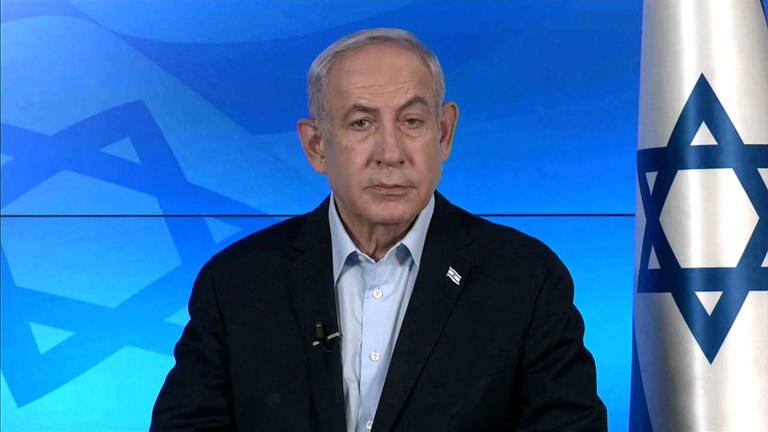
Israeli Prime Minister Benjamin Netanyahu has declared that the Israeli military will launch a “full force” offensive in Gaza in the coming days. This escalation aims to achieve two primary objectives: the complete defeat of Hamas and the release of all hostages held by the group. (Cadena SER, Fox News)

🇮🇱 Netanyahu’s Stance

In a recent statement, Netanyahu emphasized that there would be “no situation where we stop the war,” even if Hamas offers to release additional hostages. He mentioned that while temporary ceasefires might occur to facilitate hostage releases, the overarching goal remains the total dismantling of Hamas’s capabilities. (Xinhua News)

🕊️ Humanitarian Concerns

The planned offensive has raised significant humanitarian concerns. Recent Israeli airstrikes have resulted in numerous civilian casualties, including women and children. The Gaza Health Ministry reports that 90% of residents face severe water insecurity, and over 1.1 million people lack basic nutrition. (The Guardian, The Times)

🌍 International Reactions

International leaders have expressed alarm over the escalating situation. French President Emmanuel Macron criticized Israel’s actions in Gaza as “shameful,” prompting Netanyahu to accuse Macron of siding with Hamas. (The Times, reuters.com)

🗺️ Post-War Plans

Netanyahu’s government is reportedly exploring options for the “voluntary emigration” of Palestinians from Gaza, seeking countries willing to accept them. A dedicated agency may be established to facilitate this process. (AP News)

As the situation develops, the international community continues to monitor the unfolding events and their implications for regional stability.

Posted on Leave a comment

AI and the Changing Character of Warfare: How Technology Is Reshaping Modern Conflict

Introduction: A New Chapter in Military Evolution

The face of war is changing—from traditional battlegrounds to digital frontiers. In today’s rapidly evolving landscape, artificial intelligence (AI) in warfare is emerging as a transformative force. Nations are integrating smart technologies into defense strategies, reshaping not just how wars are fought, but how they’re perceived, managed, and even deterred.

As discussed in The Express Tribune’s editorial, AI is no longer limited to science fiction. It is now a critical tool in national security, triggering debates on ethics, legality, and the future of warfare.

From Drones to Decision-Making: What AI Brings to the Battlefield

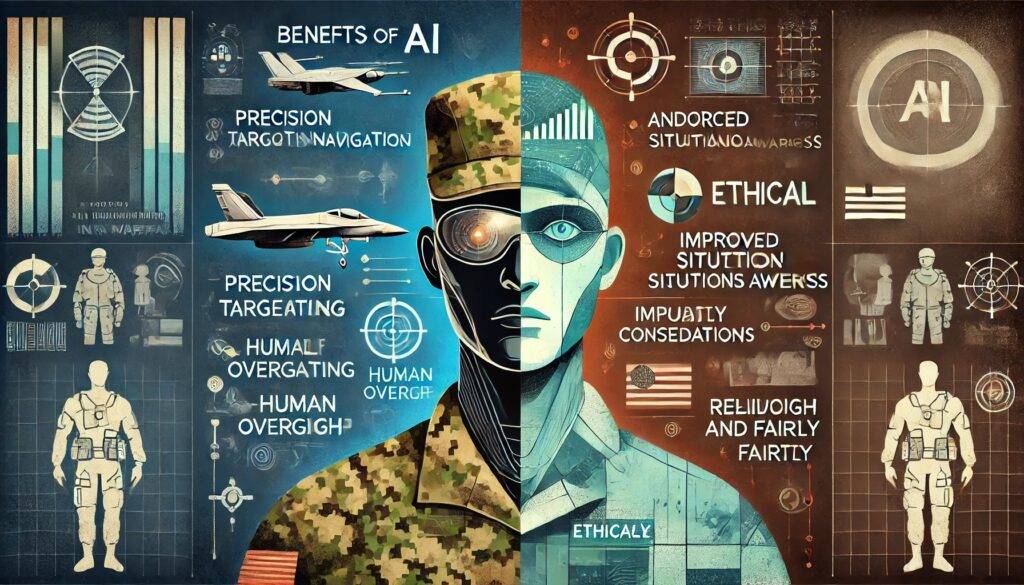
AI is being applied across the military spectrum—from logistics and surveillance to autonomous combat and cyberwarfare. Lethal Autonomous Weapon Systems (LAWS), in particular, have captured global attention. These systems can identify, track, and engage targets without direct human input, raising both strategic possibilities and ethical red flags.

Unlike traditional weapons, LAWS are driven by algorithms. Their ability to make split-second decisions can be a tactical advantage—but what happens when a machine makes the wrong call? Who is responsible?

The use of AI in targeting and operational planning is revolutionizing combat but also complicating accountability, making it harder to attribute decisions to a human chain of command.

The Global AI Arms Race: Who’s Leading?

The integration of AI in military systems isn’t confined to one nation. It’s a global race—with powerful countries investing billions to dominate this new frontier.

1. United States

The U.S. leads in AI military development. Programs like the Autonomous Multi-Domain Adaptive Swarm of Systems are creating autonomous drone swarms that communicate in real-time, overwhelm enemy defenses, and operate across land, air, and sea.

2. China

China’s New Generation Artificial Intelligence Development Plan aims to make it the world leader in AI by 2030. With heavy investment in AI-based surveillance and predictive warfare models, China is rapidly expanding its digital military footprint.

3. India

India’s defense sector has also embraced AI. The launch of 75 AI-based military platforms during the ‘AI in Defence’ symposium shows the country’s determination to integrate AI into military technology and decision-making.

These developments reflect one clear truth: AI in warfare is not a future trend—it’s today’s reality.

Ethical Dilemmas in AI Warfare

As we hand over more decisions to machines, ethical concerns are escalating.

A controversial example is the “Habsora” (Gospel) system used by the Israeli Defense Forces, which employs AI algorithms to prioritize airstrike targets. Critics argue such systems risk high civilian casualties and violate international humanitarian law if not carefully monitored.

With machines analyzing vast data sets to predict enemy movement or civilian patterns, the line between military targets and collateral damage becomes increasingly blurred. Who draws the moral boundaries in a machine-led war?

Can We Regulate AI in War?

Despite the risks, there is no unified international agreement on regulating lethal autonomous weapons. The lack of consensus makes AI warfare a legal and diplomatic minefield.

Organizations like the United Nations and Campaign to Stop Killer Robots have been calling for regulation, but geopolitical tensions continue to stall progress.

Establishing a global framework for AI ethics in warfare is more important than ever. Without it, the unchecked rise of autonomous weapons could escalate conflicts faster than humans can control them.

AI as a Force Multiplier: Not a Replacement for Soldiers

Despite concerns, AI doesn’t necessarily eliminate the human role in war—it augments it. When used responsibly, AI can reduce human error, speed up intelligence analysis, and help save lives by predicting threats in advance.

But this only works when there’s clear human oversight. Military experts agree that critical decisions—like launching a strike—must remain in human hands.

Blending AI with human judgment is key to ensuring ethical and effective military operations. The future of warfare should focus on human-machine collaboration, not full automation.

The Future of Conflict: Faster, Smarter, Riskier

The introduction of AI-driven warfare systems makes modern conflict faster and less predictable. Wars might no longer begin with troops crossing borders, but with an algorithm triggering cyberattacks or drone swarms.

AI enables preemptive strikes, real-time battlefield analysis, and autonomous retaliation, making the decision window incredibly small. While this may deter aggression through superior tech, it also increases the risk of unintended escalation.

That’s why the future of warfare needs thoughtful design, not just powerful code.

Conclusion: Choosing the Right Path in AI-Driven Warfare

Artificial Intelligence is rewriting the rules of modern conflict. From autonomous drones to predictive military strategies, AI in warfare is here to stay. But with this advancement comes a greater responsibility: to ensure technology is used ethically, legally, and with a clear moral compass.

If nations continue down this path without regulations, we risk creating a battlefield where human life is decided by lines of code.

It’s time for global leaders, defense experts, and ethicists to come together and shape the future of war—before war shapes the future of humanity.

Posted on Leave a comment

Hamas to Release American Hostage Edan Alexander Amid Ceasefire Progress

In a significant development in the ongoing Gaza conflict, Hamas has announced the imminent release of Edan Alexander, the last known living American hostage held in Gaza. The decision comes as part of early steps toward a potential ceasefire agreement that could bring critical humanitarian relief to the region.

Khalil Al-Hayya, head of Hamas’ negotiating team, confirmed that positive communication had taken place with the U.S. administration over the past few days. He stated that the group is “ready to immediately start intensive negotiations” aimed at ending the conflict, exchanging prisoners, and establishing a neutral, professional body to govern the Gaza Strip.

“The movement affirms its readiness to… make serious efforts to reach a final agreement to stop the war,” Al-Hayya said.

According to sources close to the negotiations, Steve Witkoff, former Middle East envoy under the Trump administration, is expected to arrive in Tel Aviv Monday morning ahead of Alexander’s release. The release is being framed as a gesture of goodwill, even as Israeli military activity in Gaza appears poised to escalate.

Key Points:

  • Edan Alexander: The only confirmed living American hostage in Gaza
  • Ceasefire talks underway with potential for a broader peace deal
  • Israel may intensify operations, raising the urgency of negotiations
  • Humanitarian aid expected to enter Gaza as part of the early ceasefire steps

Sources close to the Israeli government told RemedyTalks.com that Prime Minister Benjamin Netanyahu acknowledged the likelihood of Alexander’s release during a closed session of the Foreign Affairs and Defense Committee Sunday evening.

The story was initially reported by Axios and is quickly gaining international attention.

🕊️ This is a developing story. Stay with remedytalks.com for timely and verified updates.