Posted on Leave a comment

From Burnout to Balance: Medical Students’ Mental Health in Crisis

Behind the stethoscopes, white coats, and long hours of study, a troubling crisis unfolds—excessive work hours, unending exams, and immense pressure to excel. While society often views doctors as strong and resilient heroes, more and more future doctors are burning out even before they graduate. The irony is striking: those trained to heal others often suffer in silence themselves.

The Alarming State of Medical Student Mental Health

A landmark meta-analysis published in JAMA revealed that:

  • 27.2% of medical students worldwide experience depressive symptoms
  • 11.1% report suicidal ideation
  • Only 15-20% seek help
  • 50-75% of doctors experience burnout during training 

What Drives Medical Student Burnout?

Burnout is not just “being tired”—it’s a state of emotional exhaustion, depersonalization, and a reduced sense of achievement. Several overlapping factors contribute to this phenomenon:

1. Overwhelming Workload and Academic Pressure

With endless exams, ward duties, packed schedules, and an average of 4-6 hours of sleep, students often feel:

“I feel like I’m constantly running a race I can’t finish,” said one 4th-year student in a BMJ mental health survey (2023).

2. Isolation and Competitive Culture

Many students adopt the belief that struggle is normal in med school and don’t seek support. The competitive environment encourages the fear of being seen as “weak” and prevents students from seeking therapy or taking breaks.

3. Emotional Toll of Clinical Rotations

Clinical rotations expose students to trauma, patient death, medical errors, and ethical dilemmas—without providing sufficient emotional training or support to deal with this stress.

4. Financial Stress & Career Uncertainty

Increasing tuition fees, living expenses, and concerns about future residency opportunities contribute to ongoing stress—particularly in nations such as Pakistan, India, and even the UK.

Voices from the Frontlines: Medical Students Speak Out

“I remember studying for Step 1 while battling panic attacks. I was terrified to tell anyone because I didn’t want to be labeled as ‘unstable.'” – Anonymous M3

“The worst part wasn’t the workload—it was the guilt. If I took a day off, I felt like I was failing.” – Reddit user

These stories highlight a toxic cycle: pressure → burnout → silence → worsening mental health.

Coping Strategies: From Crisis to Care

Fortunately, a shift is starting to occur. Studies now endorse various evidence-based approaches that assist students in coping with stress and avoiding burnout:

1. Mindfulness-Based Stress Reduction (MBSR)

This structured 8-week program teaches meditation and self-awareness, showing immense benefits in reducing anxiety, improving sleep, and even improving academic focus.

A recent 2025 review found mindfulness programs reduced burnout scores by 30-40% among medical students.

2. Peer Support & Mentorship

Programs that connect students with other students or senior mentors should be introduced as they reduce feelings of isolation and create safe spaces for discussion.

3. Curriculum Reforms

Some schools have adopted pass/fail grading systems, mandatory mental health breaks, and reduced working hours, which have seen significant improvements in student well-being.

4. Accessible Campus Counseling

The availability of round-the-clock mental health services and policies allowing students to take leave without penalties are having a significant impact—particularly in European and North American institutions.

5. Address Financial Strains

Reducing tuition fees, forgiving loans and providing financial literacy training can ease economic anxiety.

Healing the Healers

Medical students are the future of healthcare—but how can they care for others if no one cares for them?

It’s time to move from burnout to balance as real change requires systemic shifts—institutional policies that prioritize mental health, a culture that embraces vulnerability, and a training model that values balance as much as knowledge.

We don’t need tougher doctors. We need healthier ones.
Posted on Leave a comment

THE FOREVER WAR IN GAZA: A HUMANITARIAN AND POLITICAL NIGHTMARE

Introduction

The ongoing conflict in Gaza has once again erupted into a devastating humanitarian crisis, deeply rooted in decades of political tensions and failed diplomacy. Recent developments during former U.S. President Donald Trump’s Middle East visit have added new dimensions to the crisis. As Israel intensifies its military campaign under the guise of “destroying Hamas once and for all,” the region is witnessing unprecedented levels of destruction, displacement, and international condemnation.

Trump’s Middle East Diplomacy and Israel’s Exclusion

During Trump’s recent visit to the Middle East, the former president made several moves that appeared to sideline Israel. From lifting sanctions on Syria and meeting with Syrian leaders to forging a ceasefire with the Houthis in Yemen and engaging directly with Hamas to free an American hostage, Trump’s actions deviated sharply from traditional U.S.-Israel policy coordination. Most notably, his willingness to enter nuclear negotiations with Iran—a staunch Israeli adversary—was perceived in Tel Aviv as a direct challenge to Israeli interests.

These actions have not only unsettled Israeli leadership but have also marked a shift in Washington’s diplomatic approach. Commentators like Kim Ghattas have observed that Trump was “cutting Israel out of the deals it is making,” leaving Prime Minister Netanyahu reduced to a mere spectator.

Israel’s Gideon’s Chariots Offensive

In response, Israel has launched what it calls the “Gideon’s Chariots” offensive, aiming to take control of all of Gaza and obliterate Hamas. The campaign targets both southern and northern Gaza, and is widely viewed as a strategy to push Palestinians out of the Strip permanently. Netanyahu’s long-standing ambition to displace Gaza’s population is now being enacted through brutal military force.

This military escalation has resulted in mass displacement, the collapse of humanitarian infrastructure, and mounting civilian casualties. Despite international pressure, including a warning from the White House that Netanyahu would be “on his own” if he continued the war, Israel has shown no signs of halting its aggression.

International Response and Condemnation

The world is watching in horror. United Nations Secretary-General António Guterres described the crisis as “beyond description, beyond atrocious, and beyond inhumane,” warning that the entire population of Gaza faces famine. Western allies such as France, the UK, and Canada have issued joint statements condemning Israel’s actions, even threatening sanctions and a review of trade relations.

Amnesty International’s statement underscored the global outrage: “It is outrageous and morally reprehensible that it took the world nearly 80 days of broadcast starvation and cruelty amidst genocide to exert enough pressure on Israel to even slightly ease its total siege.”

Humanitarian Crisis and Militarised Aid

Under intense international scrutiny, Israel has allowed minimal aid into Gaza. However, these efforts are widely considered insufficient. The new U.S.-backed plan to manage aid through centralized, militarized distribution centers has drawn sharp criticism. Managed by the Swiss-incorporated Gaza Humanitarian Foundation and protected by private contractors, the plan is seen as another form of displacement.

UN officials have refused to participate, condemning the militarisation of aid and accusing Israel of turning starvation into a bargaining chip. This method not only undermines the impartiality of humanitarian work but also exacerbates the suffering of displaced Palestinians.

Ceasefire Hopes and Political Deadlock

Talks to renew a ceasefire have stalled, largely due to Israel’s reluctance. Despite U.S. pressure, particularly from the Trump administration, Netanyahu remains committed to achieving what he calls “total victory” over Hamas. His unilateral decision to break the last ceasefire in March has further diminished hopes for a peaceful resolution.

Vice President J.D. Vance’s cancellation of his planned visit to Israel is seen as a signal of U.S. frustration, though diplomatic efforts continue. Without meaningful negotiations, the region is doomed to further cycles of violence and instability.

The Question of Trump’s Plan

A disturbing element in this conflict is the suggestion that Israel’s current actions may be part of a broader plan attributed to Donald Trump—a plan involving the permanent relocation of Gaza’s population to third countries. Israel’s far-right finance minister Bezalel Smotrich openly spoke about “destroying everything that’s left of the Gaza Strip” and pushing the population out.

Whether this is indeed Trump’s plan or a misappropriation of his ideas remains unclear. However, it is vital for Washington to clarify its stance. If such a plan is being implemented with U.S. approval, it undermines any claims of America being a force for peace. If not, disowning the policy could pressure Israel into reevaluating its actions.

Conclusion

The situation in Gaza is a tragic embodiment of failed diplomacy, unchecked military aggression, and a collapsing humanitarian system. While Trump’s approach to Middle East politics may have shifted alliances, it has not achieved the lasting peace it seemed to promise. Israel’s relentless offensive, underpinned by plans like Gideon’s Chariots and possible forced relocations, only deepens the wounds of a long-suffering population.

It is time for the international community—including the U.S.—to take a firm, principled stand. Real peace will not come from sidelining key players or militarising aid, but from addressing the root causes of the conflict, ending occupation, and respecting human rights.

Internal Linking Suggestion: For further analysis on how military conflict impacts humanitarian law, read our post: “The Weaponization of Aid in Modern Warfare” on remedytalks.com.

Posted on Leave a comment

How Public Opinion and the Press Shape Pakistan’s Foreign Policy

Whether it’s outrage over a drone strike, admiration for a new foreign alliance, or emotional support for a cause abroad, public sentiment matters. And so does the media’s framing of that sentiment. Together, these forces play a growing role in shaping how Pakistan engages with the world.

Foreign policy decisions are often seen as elite-level strategies, crafted behind closed doors by diplomats, generals, and career bureaucrats. But in countries like Pakistan, foreign relations don’t exist in isolation. They’re shaped, pressured, and sometimes redirected by the people—and the press that informs them.

So, how exactly do public opinion and press influence foreign policy in Pakistan? And what does that say about the evolving relationship between democracy, diplomacy, and information?


The Public Voice in Foreign Affairs

It’s easy to think that the average citizen has little to do with international negotiations. After all, what influence could a protester in Lahore have over trade talks with Beijing or border policy with India?

But in reality, public opinion in Pakistan has repeatedly proven to be a quiet force with loud consequences.

Issues like Kashmir, Palestine, the U.S.-Pakistan relationship, and regional ties with Iran or Afghanistan have historically been more than just diplomatic concerns—they’re social touchpoints. They appear in classrooms, mosques, dinner table conversations, and trending hashtags. These aren’t just foreign policy issues; they’re national identity markers.

When the public feels strongly, governments are forced to respond. Often, public pressure leads to symbolic gestures—strong statements in the UN, state-sponsored solidarity events, or diplomatic warnings. Sometimes, it goes further, influencing real policy shifts, halting cooperation, or pushing back against allies.


Kashmir, Palestine, and the Pulse of the People

Two of the clearest examples of this are Pakistan’s policies on Kashmir and Palestine. Both issues have deeply emotional roots in Pakistani society. The media plays them heavily. Political parties reference them constantly. And the public responds—loudly.

When violence escalates in Kashmir or Gaza, social media floods with prayers, anger, and calls for government action. It’s not uncommon to see protests outside embassies, public rallies, or viral campaigns demanding diplomatic retaliation or humanitarian assistance.

These movements don’t just express national solidarity—they compel the government to take action, even when those actions risk international backlash. Public emotion becomes political pressure, and policy is shaped accordingly.


The Role of the Press: Informer, Influencer, Amplifier

In a democratic setting—or even a semi-democratic one like Pakistan—the press becomes the middleman between the state and the public. It doesn’t just report policy; it frames it, questions it, and sometimes reshapes it.

Pakistani media, particularly television news and Urdu-language papers, hold immense power in how the public understands foreign events. How the media frames China’s investment, India’s military moves, or U.S. diplomatic statements directly shapes public opinion—and, by extension, government action.

At times, the press functions as an ally to the state, reinforcing narratives and defending policy decisions. Other times, especially during scandals or crises, it becomes a source of accountability, spotlighting diplomatic failures or missteps.

But it’s not always neutral. Political bias, editorial pressure, and censorship do influence coverage. Sensitive topics—especially those involving powerful allies like China or Saudi Arabia—are often handled with caution. Even so, the media’s overall impact remains undeniable.


Social Media: The New Age Foreign Policy Forum

While mainstream media still holds sway, social media has become a rising force in shaping foreign policy discourse. Twitter storms, viral TikTok videos, and Facebook posts now set the tone for national debates.

Hashtags like #BoycottFrance, #StandWithKashmir, or #FreePalestine have trended across Pakistan, mobilizing thousands—sometimes millions—within hours. These online campaigns often spill into real-world pressure, influencing how politicians frame their statements and what steps ministries take next.

Social media has also amplified diaspora voices. Pakistanis abroad often weigh in on policy with force and visibility, making the state more conscious of how its decisions play not just domestically but globally.


When Policy and Public Pressure Clash

However, public sentiment isn’t always aligned with strategic goals. In fact, one of the biggest challenges in modern diplomacy is managing the gap between what’s popular and what’s practical.

Take U.S.-Pakistan relations. While there’s long-standing public suspicion of American motives, Pakistan continues to cooperate with Washington due to economic, military, and regional security reasons. Balancing this cooperation with public distrust is a diplomatic tightrope—and the press only sharpens that tension.

Similarly, Pakistan’s closeness with China is often celebrated in the media, but criticisms of Chinese labor conditions, local displacements under CPEC, or environmental concerns are muted. Here, press narratives limit public discourse, creating a different kind of policy challenge—one where lack of criticism leads to unchecked decision-making.


Press Freedom and the Foreign Policy Debate

A free press is vital to a well-informed public, and a well-informed public is vital to thoughtful policy. But Pakistan’s press, despite being lively and competitive, still faces barriers when it comes to covering foreign policy honestly.

Military influence, political pressure, and self-censorship mean that not all foreign issues are debated with equal openness. Criticism of certain allies, or of the military’s behind-the-scenes role in diplomacy, often hits a wall.

Despite this, many journalists continue to push boundaries. Investigative reports, sharp op-eds, and alternative media voices are expanding the space for meaningful dialogue. And as the press grows more sophisticated, so does the public it serves.


Conclusion: Democracy’s Foreign Policy Toolkit

Foreign policy in Pakistan is no longer shaped solely in government offices. It’s forged in TV studios, protest rallies, online forums, and newsroom debates. It’s influenced by the passions of the people, and filtered through the power of the press.

While the process is messy, emotional, and sometimes reactive, it’s also proof that foreign relations are not above democracy. They are part of it. And in countries like Pakistan, that democratic influence is only growing.

As the world becomes more connected, and as the Pakistani public becomes more informed, we can expect a more engaged—and more demanding—citizenry. The challenge for policymakers will be to listen to that voice without being overwhelmed by it.

And the responsibility for the press? To make sure that voice is based not just on emotion—but on truth, depth, and perspective.


Written by:
Remedy Talks Editorial Team
Real Issues. Real Conversations. Real Impact.


Posted on Leave a comment

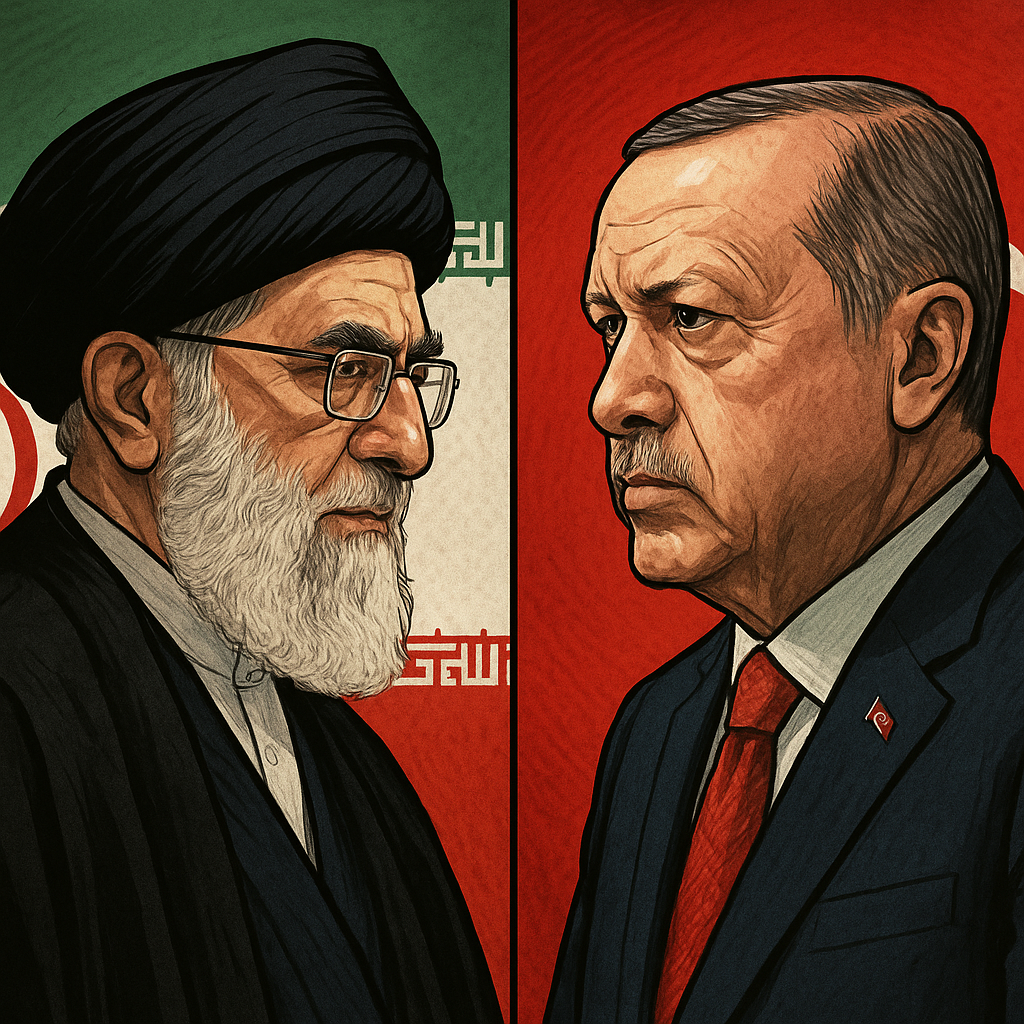
Comparing the Leadership Structures of Iran and Turkey — And How They Shape National Policy


In the Middle East, two nations stand out for their political influence, distinct governance models, and bold foreign policies: Iran and Turkey. Both countries are regional powerhouses, rich in history, culture, and geopolitical importance. Yet their leadership structures couldn’t be more different, and those differences have a direct impact on how policies are made — from the economy and education to diplomacy and national security.

So how do these two systems function? And what can we learn by comparing their approaches to leadership and decision-making?


Iran: A Theocracy with Layers of Power

Iran’s political system is unique in the modern world — it combines republican elements (like elected officials) with deeply entrenched religious authority.

At the top of the hierarchy is the Supreme Leader, currently Ayatollah Ali Khamenei. He holds ultimate authority over all branches of government, the military, judiciary, media, and even foreign policy. Beneath him are:

  • The President, elected by the people every four years
  • The Guardian Council, which vets candidates and can veto laws
  • The Parliament (Majlis), which passes legislation
  • And the Assembly of Experts, which technically oversees the Supreme Leader — though in practice, this oversight is limited

What does this mean for policy? In Iran, no major decision bypasses religious oversight. Even if the elected president wants to pursue reforms — say, economic liberalization or improved Western relations — those efforts can be blocked or undone by unelected clerics.

This centralized, theocratic system ensures ideological consistency, but it also leads to friction between reformist and conservative factions. As a result, policies are often cautious, reactive, and shaped more by internal political balance than public demand.


Turkey: A Presidential Republic with Expanding Executive Power

Turkey, by contrast, is a secular republic — but one that has evolved dramatically in recent years under the leadership of President Recep Tayyip Erdoğan.

Historically, Turkey operated under a parliamentary system, with a prime minister serving as head of government. That changed in 2017, when a national referendum approved a shift to a presidential system. Now, the president is both head of state and government, with broad control over the cabinet, appointments, and the national budget.

Key players include:

  • The President, directly elected and extremely powerful
  • The Grand National Assembly, which passes laws but has limited power over the executive
  • The Judiciary, which is technically independent but often criticized for lacking autonomy under Erdoğan’s rule

This system has enabled fast and centralized decision-making, especially in areas like infrastructure development, military action, and regional diplomacy. But it’s also drawn criticism for weakening democratic checks and balances, silencing dissent, and shrinking media freedom.

Unlike Iran’s clerical dominance, Turkey’s leadership is driven by political ideology, nationalism, and increasingly personalist rule.


Policy in Practice: Where Structure Meets Strategy

To understand how these different systems affect real-world decisions, consider three key areas:


1. Foreign Policy

Iran’s foreign policy is heavily influenced by its religious identity and strategic priorities. The Supreme Leader sets the tone — often one of resistance to Western influence, strong ties with non-Western allies (like Russia and China), and support for regional proxies like Hezbollah.

Turkey, on the other hand, adopts a more pragmatic, transactional approach. Erdoğan’s policies often shift to suit short-term goals: negotiating with Russia and NATO simultaneously, balancing relations with the EU, and acting assertively in Syria and Libya.

In short: Iran’s foreign policy is doctrinal; Turkey’s is strategic.


2. Economic Strategy

Iran’s economy is heavily sanctioned, and its leaders often rely on self-sufficiency rhetoric. Policy shifts are slow, partly due to religious constraints and internal political tug-of-war.

Turkey faces no such religious oversight. It has adopted bold economic experiments, from rapid infrastructure expansion to unorthodox monetary policies (like Erdoğan’s preference for low interest rates despite high inflation). While these policies are risky, they also reflect the agility and dominance of the executive branch.

Iran’s policies are shaped by ideology and isolation. Turkey’s are shaped by ambition and central control.


3. Public Freedoms and Governance

In Iran, press freedom and civil liberties are restricted, particularly when it comes to criticizing religious authority. Elections are held, but candidates are pre-screened by religious bodies.

In Turkey, the space for opposition has shrunk, especially after the 2016 coup attempt. Erdoğan’s government has jailed journalists, purged civil servants, and used emergency powers to consolidate control. While technically a democracy, Turkey increasingly resembles a managed or illiberal democracy.

Both countries struggle with dissent — but for different reasons and under different banners.


Two Models, One Region

Both Iran and Turkey use centralized leadership to navigate regional instability and internal pressure. But while Iran’s system is built on religious legitimacy, Turkey’s power structure has evolved toward strongman politics under an executive presidency.

The impact on policy is clear:

  • Iran moves cautiously, with deep ideological roots guiding every step
  • Turkey moves fast, often reshaping policies to fit short-term goals or Erdoğan’s vision

Neither model is without flaws. But both demonstrate how leadership structure directly influences how a country governs, reforms, and engages with the world.


Final Thoughts

In an age of global crises — from economic shocks to regional conflict — leadership matters. And how leaders rise, rule, and respond is shaped not just by their personalities, but by the systems that empower them.

Whether it’s Iran’s religious hierarchy or Turkey’s presidential concentration of power, understanding these structures is key to understanding why these nations act the way they do — and where they might be heading next.


Author:
Remedy Talks Editorial Team
Analyzing global leadership, one structure at a time.


Posted on Leave a comment

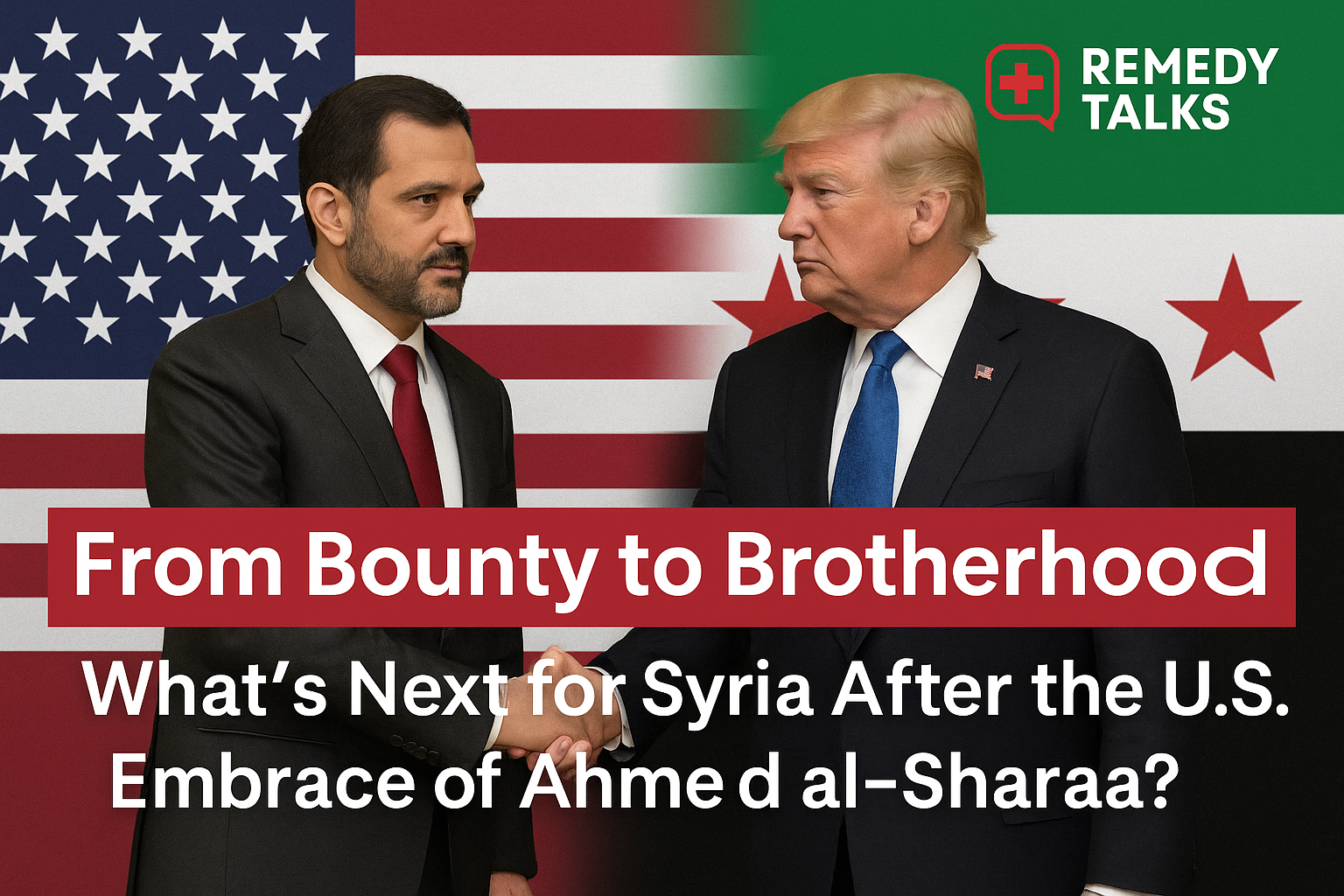
From Bounty to Brotherhood: What’s Next for Syria After the U.S Embrace of Ahmed al-Sharaa?


By Remedy Talks Editorial Team
Published on RemedyTalks.com


A Shift in Allegiances That History Won’t Forget

Geopolitics has always been a realm where alliances shift like sand in the wind, but few transformations have been as jarring as the one we just witnessed in Syria. The man once known to the world as Abu Mohammed al-Jolani, feared leader of the Al Qaeda-linked Al Nusra Front, has now stepped onto the global stage with a new identity: Ahmed al-Sharaa, interim leader of Syria—endorsed, welcomed, and legitimized by none other than former U.S. President Donald Trump in a formal meeting in Riyadh.

For Syrians who have endured more than a decade of civil war, displacement, and international isolation, this moment is a complicated one. On the one hand, the lifting of U.S. sanctions signals a potential opening for economic recovery. On the other, it raises deeply uncomfortable questions about morality, memory, and the future of governance in a war-torn nation.


From ‘Terrorist’ to Transitional Leader: A Calculated U-Turn

It wasn’t long ago that the United States placed a $10 million bounty on al-Sharaa’s head. He was then seen as a dangerous militant with ties to extremist ideology. His group, Al Nusra Front, was notorious for its brutal tactics and Islamist agenda.

So what changed?

Nothing about Sharaa’s past did. What shifted was his strategic value in the geopolitical chessboard. He played a crucial role in bringing down the Assad regime, a goal long pursued by the U.S., its European allies, and Gulf states. In doing so, he helped diminish the stronghold of Iranian and Russian influence in the Levant.

His reward? Legitimacy, a handshake, and the promise of reconstruction funding.


A Tale of Two Militants: Syria vs. Afghanistan

The irony is thick when comparing this development to how the world treats the Taliban in Afghanistan. Despite ending a two-decade occupation and taking control of Kabul, the Taliban remain under sanctions and globally isolated.

Ideologically, the Taliban and Sharaa’s previous circle are not dissimilar. But where one challenged Western dominance, the other aligned with it to achieve mutual goals. The message is clear: in the eyes of major powers, militancy is acceptable—if it serves their interests.

This kind of selective political hygiene—where one extremist is rehabilitated and another condemned—does little to build global trust or long-term peace.


The Golan Question and the Price of Recognition

During the Riyadh meeting, President Trump reportedly asked Sharaa to recognize Israel. Yet there was no mention of Israel returning Syrian territory it has occupied for decades, including the strategic Golan Heights.

This puts Syria’s new rulers in a precarious position. Recognition of Israel without territorial restitution could fracture internal unity even further and alienate important regional actors. It might also weaken Sharaa’s domestic legitimacy, especially among nationalists and minority communities already skeptical of his leadership.


Old Fears, New Faces: Will Extremism Simply Change Hands?

The hope—at least on paper—is that this new chapter brings stability and inclusion. Sharaa has spoken of building an “inclusive state.” But early signs are troubling.

Recent reports from within Syria speak of sectarian clashes, especially involving the Alawi and Druze minorities. These communities fear being sidelined or persecuted by a government with deep roots in jihadist ideology.

The risk is that Syria could move from autocracy under Assad to ideological rigidity under Sharaa, replacing one form of oppression with another. The world must avoid being lulled into complacency by the narrative of progress while the reality on the ground deteriorates further.


What Syria Needs — And Deserves

The Syrian people have suffered enough. Over 500,000 lives lost, millions displaced, and an entire generation born into war. What they need now is not another power shift dictated by outside interests but a genuinely inclusive, homegrown process of rebuilding.

That includes:

  • Minority protections, including legal and political safeguards
  • Free and fair elections, not appointments based on militant resumes
  • Economic recovery that lifts communities from poverty, not just elite circles
  • A truth and reconciliation process, to reckon with war crimes on all sides

If these steps aren’t taken, Syria risks falling back into the very cycle of rebellion and repression that tore it apart in the first place.


Looking Ahead: What Future Awaits Syria?

With U.S. sanctions lifted, international investors may begin circling once again. Gulf nations could funnel in aid and contracts. There might even be a diplomatic push to normalize Syria’s relations with the West under its new leadership.

But the path forward will not be smooth. Sharaa’s past will continue to haunt him. Civil society groups, international watchdogs, and disillusioned Syrians will demand accountability, not just economic development.

Syria stands at a crossroads. This could be the beginning of true rehabilitation—if it is led with humility, inclusivity, and a break from past cycles of violence. Or it could simply be a rebranding of authoritarianism, draped in the cloak of international approval.


Final Thoughts

This isn’t just a Syrian story. It’s a cautionary tale of how power works on the global stage—how definitions of “terrorist,” “leader,” and “ally” change not based on morality, but on utility.

The world may have rebranded Ahmed al-Sharaa, but Syrians will judge him not by meetings in Riyadh or endorsements from Washington, but by whether he brings peace, justice, and dignity back to their homes.

And for their sake, the world should hold him to that standard.


Author:
Remedy Talks Team
Truth beyond headlines. Context behind conflict.


Posted on Leave a comment

How Pakistan Built the Bomb: A Story of Resolve, Sacrifice, and Survival

Explore how Pakistan quietly built its nuclear weapons program against global resistance. Learn how political pressure, military ambition, and national pride helped shape South Asia’s nuclear future.


Introduction

Few countries have faced the kind of security challenges Pakistan did after the 1971 war. Surrounded by regional threats and politically isolated, Pakistan made a choice that would define its future: to develop a nuclear deterrent at any cost. This is the story of how a poor, developing nation secretly built one of the most powerful arsenals in the world—despite sanctions, technology bans, and massive international opposition.


The Turning Point: 1971 and the Loss of East Pakistan

The fall of Dhaka in 1971 was not just a military loss—it was a psychological shock for Pakistan. The country lost half its population, suffered deep national humiliation, and saw the limits of its conventional military power. In that moment of crisis, Pakistan’s leadership realized that survival in a hostile neighborhood would require more than soldiers and tanks.

With India already far ahead economically and militarily, and its nuclear ambitions becoming public, Pakistan feared being cornered. In early 1972, a high-level meeting was held to launch the country’s nuclear weapons program. The decision was made quietly, but its impact would echo for decades.


A Vow to Never Be Vulnerable Again

The leadership vowed to develop a nuclear deterrent—whatever it took. The phrase “we will eat grass but build the bomb” captured the national mood. Resources were limited, but the motivation was powerful: never again should Pakistan be forced to surrender or be humiliated in war.

This was the beginning of a decades-long scientific, military, and political mission. Unlike large nations with open programs, Pakistan’s nuclear development had to be done in total secrecy, away from the eyes of the world and even many of its own citizens.


Building in the Shadows: Science, Secrecy, and Sacrifice

Throughout the 1970s and 1980s, Pakistan quietly worked on uranium enrichment and warhead design. Scientists worked in labs with limited tools and aging equipment. Engineers had to smuggle or re-engineer parts that Western nations refused to sell. Intelligence agencies built covert networks to acquire critical components from overseas.

Despite multiple leadership changes—from Zulfikar Ali Bhutto to General Zia-ul-Haq, and later to elected governments—the nuclear effort never slowed. It became a national mission, passed from one administration to the next like sacred trust.

Ordinary Pakistanis often didn’t know about the program, but behind closed doors, labs and facilities were operating around the clock. Scientists lived under strict control and high pressure, often cut off from their families for long periods.


Facing the World: The 1998 Nuclear Tests

In May 1998, India tested its nuclear weapons in a show of strength. The pressure on Pakistan to respond was overwhelming. Politicians, military officials, and the public demanded action.

Less than three weeks later, Pakistan carried out five underground nuclear tests in the mountains of Chagai, Balochistan. The explosions turned the hills white and announced to the world: Pakistan was now a nuclear power.

These tests changed everything. They confirmed Pakistan’s place in the global strategic landscape and cemented its deterrence strategy. The world reacted with sanctions and criticism, but inside Pakistan, it was a moment of triumph.


Strategic Balance in South Asia

Since then, nuclear weapons have shaped the military balance between Pakistan and India. Despite multiple border crises and terror incidents, both countries have avoided full-scale war. The presence of nuclear weapons has added a layer of caution to South Asia’s dangerous rivalries.

Pakistan’s doctrine is built on deterrence, not aggression. It has developed delivery systems—missiles, aircraft, and more—to ensure that any attack would result in unacceptable consequences.


The Costs and Responsibilities of the Bomb

Building nuclear weapons didn’t come free. Billions were spent on research, facilities, and maintenance. Sanctions hurt Pakistan’s economy. And the program raised tough questions about civil-military control, transparency, and international trust.

There were also darker chapters, such as unauthorized technology transfers to other countries in the early 2000s. These incidents shook Pakistan’s international credibility but also led to tighter controls and stronger oversight structures.


Legacy and Lessons

Pakistan’s nuclear journey is about more than bombs and missiles. It’s about a nation’s resolve to defend itself in a world that often left it isolated. It’s about scientists and soldiers working in silence, often without recognition. And it’s about political leaders making difficult choices in the name of national survival.

Today, Pakistan continues to modernize and secure its strategic assets, not just as a show of strength, but as a matter of national identity and survival.


Final Thoughts

Pakistan’s path to becoming a nuclear power is a story of grit, sacrifice, and strategic determination. It is a powerful example of how a country with limited resources, under constant threat, managed to achieve one of the most complex scientific and military feats in the modern world.

Understanding this journey is essential for anyone who wants to grasp the security dynamics of South Asia—and the importance of diplomacy, stability, and deterrence in a nuclear-armed region.


Enjoyed this article? For more insights on regional security, geopolitics, and untold historical stories, follow us on RemedyTalks.com.

#PakistanNuclearHistory #ChagaiTests #SouthAsiaSecurity #NuclearDeterrence #StrategicDefense #RemedyTalks

Posted on Leave a comment

AI and the Changing Character of Warfare: How Technology Is Reshaping Modern Conflict

Introduction: A New Chapter in Military Evolution

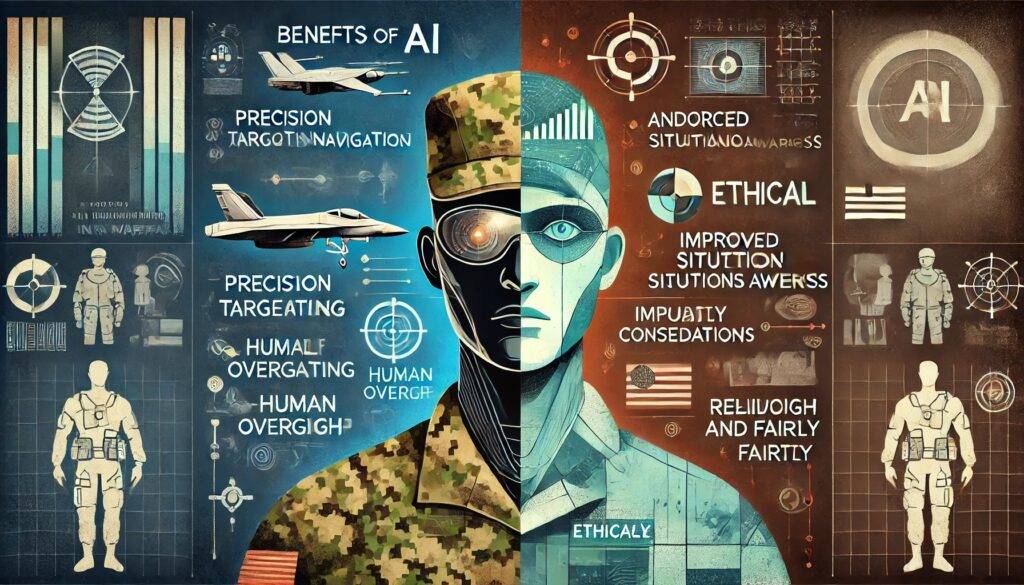
The face of war is changing—from traditional battlegrounds to digital frontiers. In today’s rapidly evolving landscape, artificial intelligence (AI) in warfare is emerging as a transformative force. Nations are integrating smart technologies into defense strategies, reshaping not just how wars are fought, but how they’re perceived, managed, and even deterred.

As discussed in The Express Tribune’s editorial, AI is no longer limited to science fiction. It is now a critical tool in national security, triggering debates on ethics, legality, and the future of warfare.

From Drones to Decision-Making: What AI Brings to the Battlefield

AI is being applied across the military spectrum—from logistics and surveillance to autonomous combat and cyberwarfare. Lethal Autonomous Weapon Systems (LAWS), in particular, have captured global attention. These systems can identify, track, and engage targets without direct human input, raising both strategic possibilities and ethical red flags.

Unlike traditional weapons, LAWS are driven by algorithms. Their ability to make split-second decisions can be a tactical advantage—but what happens when a machine makes the wrong call? Who is responsible?

The use of AI in targeting and operational planning is revolutionizing combat but also complicating accountability, making it harder to attribute decisions to a human chain of command.

The Global AI Arms Race: Who’s Leading?

The integration of AI in military systems isn’t confined to one nation. It’s a global race—with powerful countries investing billions to dominate this new frontier.

1. United States

The U.S. leads in AI military development. Programs like the Autonomous Multi-Domain Adaptive Swarm of Systems are creating autonomous drone swarms that communicate in real-time, overwhelm enemy defenses, and operate across land, air, and sea.

2. China

China’s New Generation Artificial Intelligence Development Plan aims to make it the world leader in AI by 2030. With heavy investment in AI-based surveillance and predictive warfare models, China is rapidly expanding its digital military footprint.

3. India

India’s defense sector has also embraced AI. The launch of 75 AI-based military platforms during the ‘AI in Defence’ symposium shows the country’s determination to integrate AI into military technology and decision-making.

These developments reflect one clear truth: AI in warfare is not a future trend—it’s today’s reality.

Ethical Dilemmas in AI Warfare

As we hand over more decisions to machines, ethical concerns are escalating.

A controversial example is the “Habsora” (Gospel) system used by the Israeli Defense Forces, which employs AI algorithms to prioritize airstrike targets. Critics argue such systems risk high civilian casualties and violate international humanitarian law if not carefully monitored.

With machines analyzing vast data sets to predict enemy movement or civilian patterns, the line between military targets and collateral damage becomes increasingly blurred. Who draws the moral boundaries in a machine-led war?

Can We Regulate AI in War?

Despite the risks, there is no unified international agreement on regulating lethal autonomous weapons. The lack of consensus makes AI warfare a legal and diplomatic minefield.

Organizations like the United Nations and Campaign to Stop Killer Robots have been calling for regulation, but geopolitical tensions continue to stall progress.

Establishing a global framework for AI ethics in warfare is more important than ever. Without it, the unchecked rise of autonomous weapons could escalate conflicts faster than humans can control them.

AI as a Force Multiplier: Not a Replacement for Soldiers

Despite concerns, AI doesn’t necessarily eliminate the human role in war—it augments it. When used responsibly, AI can reduce human error, speed up intelligence analysis, and help save lives by predicting threats in advance.

But this only works when there’s clear human oversight. Military experts agree that critical decisions—like launching a strike—must remain in human hands.

Blending AI with human judgment is key to ensuring ethical and effective military operations. The future of warfare should focus on human-machine collaboration, not full automation.

The Future of Conflict: Faster, Smarter, Riskier

The introduction of AI-driven warfare systems makes modern conflict faster and less predictable. Wars might no longer begin with troops crossing borders, but with an algorithm triggering cyberattacks or drone swarms.

AI enables preemptive strikes, real-time battlefield analysis, and autonomous retaliation, making the decision window incredibly small. While this may deter aggression through superior tech, it also increases the risk of unintended escalation.

That’s why the future of warfare needs thoughtful design, not just powerful code.

Conclusion: Choosing the Right Path in AI-Driven Warfare

Artificial Intelligence is rewriting the rules of modern conflict. From autonomous drones to predictive military strategies, AI in warfare is here to stay. But with this advancement comes a greater responsibility: to ensure technology is used ethically, legally, and with a clear moral compass.

If nations continue down this path without regulations, we risk creating a battlefield where human life is decided by lines of code.

It’s time for global leaders, defense experts, and ethicists to come together and shape the future of war—before war shapes the future of humanity.

Posted on Leave a comment

The Way Forward: A Call for Sustainable Peace in South Asia

Introduction: A Fragile But Vital Opportunity

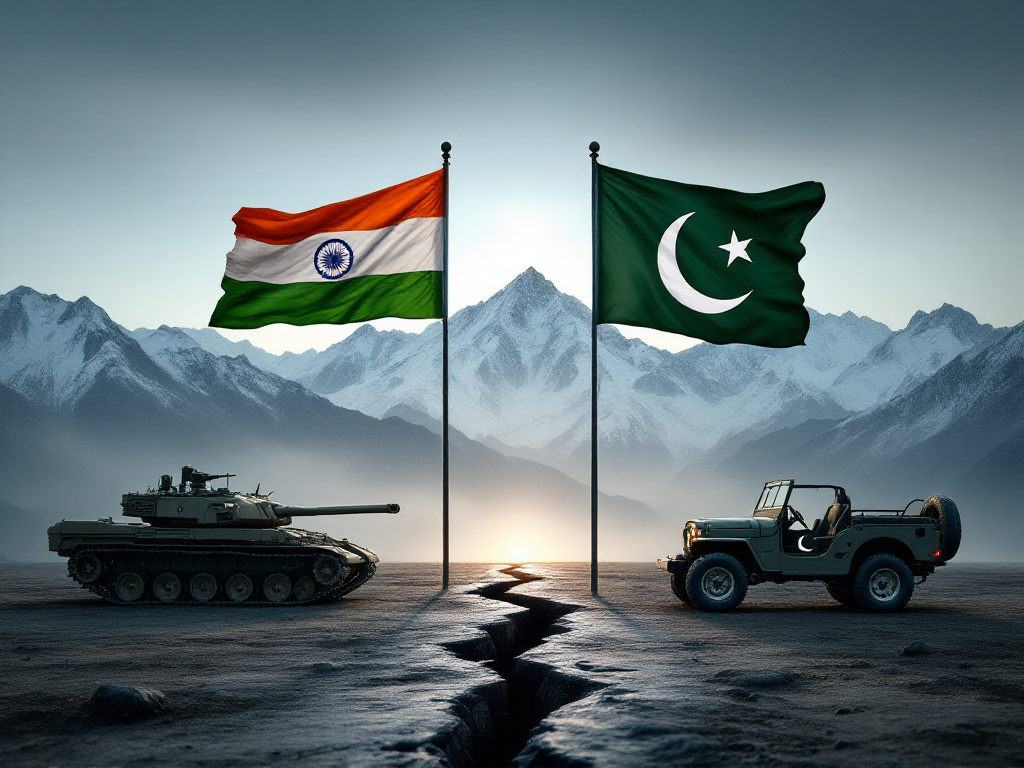
South Asia has once again arrived at a critical juncture. Following renewed tensions between India and Pakistan, a U.S.-brokered ceasefire agreement has brought temporary calm. But if history is any guide, such truces—while welcome—rarely last without a broader, more inclusive peace framework. The real test lies ahead: Can this be the moment both nations choose dialogue over confrontation?

At the heart of this challenge lies Kashmir, a decades-old dispute that continues to fuel hostility between two nuclear powers. As highlighted in this blog a way forward a long-term solution must go beyond short-term ceasefires and address the roots of regional instability.

Why This Ceasefire Matters

The May 2025 ceasefire comes after a sharp escalation of military hostilities, once again putting the lives of millions at risk. What makes this truce different is the renewed international pressure, particularly from the United States, urging both sides to return to diplomatic channels.

This agreement is not merely a pause in conflict; it is a strategic opening—an opportunity to initiate serious discussions about peace and regional cooperation. For South Asia, peace isn’t a luxury. It’s a necessity.

The Kashmir Dispute: The Heart of the Matter

The Historical Wound

No discussion on South Asian peace is complete without acknowledging the Kashmir dispute—a deeply rooted conflict since the 1947 partition. While numerous attempts at resolution have been made, the situation deteriorated significantly after India revoked Jammu and Kashmir’s semi-autonomous status in August 2019.

This unilateral move by the BJP-led Indian government was seen by Pakistan—and many neutral observers—as a direct attack on the region’s already fragile identity and autonomy.

A Path Forward

The editorial argues that Pakistan remains willing to engage in peaceful dialogue. However, India’s current posture is described as inflexible. Sustainable peace demands that both sides come to the table with equal urgency and open minds.

One potential solution could involve revisiting the Musharraf-Manmohan framework from the early 2000s—a roadmap that emphasized self-governance, demilitarization, and joint supervision. While not perfect, it could serve as a starting point for renewed negotiations.

The Role of Global Powers

Mediation and Moral Pressure

The role of global actors—especially the United States—has proven critical in de-escalating the latest round of tensions. But the question remains: How far will they go?

While no external power can impose a resolution, they can certainly influence the tone and urgency of the dialogue. For example, sustained diplomatic engagement by the U.S., China, or the UN could encourage a more flexible stance from India—something Pakistan has long advocated for.

Out-of-the-Box Solutions

The editorial rightly emphasizes that peace will not come from recycled rhetoric. Instead, what’s needed are “out-of-the-box” solutions that are acceptable to Pakistan, India, and—most importantly—the people of Kashmir. These solutions must include economic development, demilitarization, and political representation.

The Cost of Inaction

Humanitarian Toll

Without a permanent solution, the people of Kashmir will continue to suffer the consequences—curfews, media blackouts, economic marginalization, and human rights abuses. Peace isn’t just about governments; it’s about people.

Economic and Strategic Impact

Continued hostility between Pakistan and India also threatens regional trade, energy projects, and foreign investment. Instead of reaping the benefits of economic cooperation, both countries spend billions on defense—a tragic misuse of resources in regions where poverty and healthcare challenges persist.

The Need for Political Will

Sustainable peace requires more than diplomacy—it requires courage. Political leaders in both countries must demonstrate the maturity and will to move beyond jingoism and prioritize long-term stability over short-term political gain.

Elections come and go, but the impact of conflict lingers for generations. It’s time for statesmanship, not showmanship.

Conclusion: A Regional Imperative

The way forward is not easy, but it is possible. The current ceasefire, while fragile, offers a rare opportunity to redefine South Asia’s trajectory. Both Pakistan and India must recognize that dialogue is not a sign of weakness—it is the cornerstone of civilized governance.

As this blog poignantly argues, any meaningful peace must address Kashmir, engage all stakeholders, and seek innovative, inclusive solutions. The road to peace is not paved with weapons or threats—it’s built on empathy, vision, and negotiation.

Final Thoughts: A Remedy Rooted in Reason

At RemedyTalks, we believe that lasting change begins with honest conversations. The people of South Asia deserve a future free from the shadow of war. Now is the time for leaders on both sides to rise above nationalism and embrace the shared dream of peace and prosperity.

📢 Share Your Voice

  • What’s your take on the current situation?
  • Do you believe a long-term peace deal is possible in our lifetime?
  • Let us know your thoughts in the comments or tag us on social media.
Posted on Leave a comment

Hamas to Release American Hostage Edan Alexander Amid Ceasefire Progress

In a significant development in the ongoing Gaza conflict, Hamas has announced the imminent release of Edan Alexander, the last known living American hostage held in Gaza. The decision comes as part of early steps toward a potential ceasefire agreement that could bring critical humanitarian relief to the region.

Khalil Al-Hayya, head of Hamas’ negotiating team, confirmed that positive communication had taken place with the U.S. administration over the past few days. He stated that the group is “ready to immediately start intensive negotiations” aimed at ending the conflict, exchanging prisoners, and establishing a neutral, professional body to govern the Gaza Strip.

“The movement affirms its readiness to… make serious efforts to reach a final agreement to stop the war,” Al-Hayya said.

According to sources close to the negotiations, Steve Witkoff, former Middle East envoy under the Trump administration, is expected to arrive in Tel Aviv Monday morning ahead of Alexander’s release. The release is being framed as a gesture of goodwill, even as Israeli military activity in Gaza appears poised to escalate.

Key Points:

  • Edan Alexander: The only confirmed living American hostage in Gaza
  • Ceasefire talks underway with potential for a broader peace deal
  • Israel may intensify operations, raising the urgency of negotiations
  • Humanitarian aid expected to enter Gaza as part of the early ceasefire steps

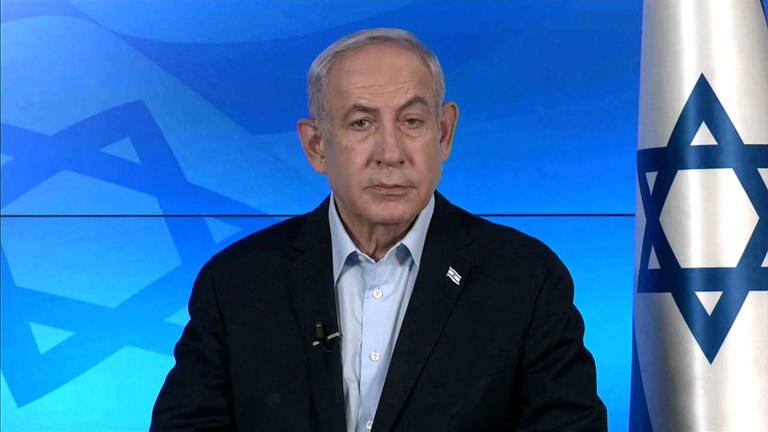
Sources close to the Israeli government told RemedyTalks.com that Prime Minister Benjamin Netanyahu acknowledged the likelihood of Alexander’s release during a closed session of the Foreign Affairs and Defense Committee Sunday evening.

The story was initially reported by Axios and is quickly gaining international attention.

🕊️ This is a developing story. Stay with remedytalks.com for timely and verified updates.

Posted on Leave a comment

Weight Loss Drugs: The Science, Safety, and Breakthroughs

With increasing obesity rates and related health risks, weight loss medications have become important complements to lifestyle changes. Although lifestyle modifications are crucial for obesity management, these drugs can assist patients in achieving lasting weight loss results.

The Need for Pharmacotherapy in Obesity

Over 1 billion people worldwide live with obesity, according to the World Obesity Federation, which significantly increases the risk of serious health issues like type 2 diabetes, heart disease, and certain cancers. While changing habits is important, sustaining weight loss can be difficult, making weight loss drugs a helpful option.

How Do Weight Loss Drugs Work?

  • LIPASE INHIBITORS: Orlistat (Alli, Xenical) helps reduce fat absorption in the body by blocking certain enzymes in the digestive system. It can lower fat absorption by about 30%..
  • APPETITE SUPPRESSANTS: Phentermine, often combined with Topiramate (Qsymia), is an appetite-suppressing stimulant used for weight loss, though it carries some risks.
  • GLP-1 RECEPTOR AGONISTS: Initially created for diabetes treatment, GLP-1 agonists have become transformative in the field of obesity medication.
    • Liraglutide (Saxenda)
    • Semaglutide (Wegovy)
  • DUAL AGONISTS: Tirzepatide is a medication that helps treat both type 2 diabetes and obesity. In the SURMOUNT-1 trial, patients lost an average of 20.9% of their body weight over 72 weeks. This result is better than any previous weight loss medications.

Key Weight Loss Drugs Approved by the FDA

Drug Name (Brand)Active IngredientAvg. Weight LossCommon Side Effects
WegovySemaglutide15-20% of body weightNausea, diarrhea, constipation
ZepboundTirzepatide20-25% of body weightNausea, vomiting, acid reflux
SaxendaLiraglutide5-10% of body weightHeadache, dizziness, pancreatitis risk
ContraveNaltrexone/bupropion5-10% of body weightInsomnia, dry mouth, increased blood pressure
Orlistat (Xenical, Alli)Orlistat5-7% of body weightOily stools, gas, diarrhea

Nonetheless, weight loss tends to level off after approximately a year, and many individuals may regain weight if they discontinue the medication.

Who Qualifies for Weight Loss Drugs?

According to the FDA and NIH, these medications are recommended for:

  • Adults with a BMI ≥30 (obesity).
  • Adults with a BMI ≥27 + weight-related conditions (diabetes, hypertension).
  • Patients who have not succeeded with diet and exercise alone.

They are not recommended for:

  • Individuals looking for “instant solutions” without making lifestyle adjustments.
  • Those with a history of pancreatitis, thyroid cancer, or certain mental health conditions.

Potential Side Effects & Risks

While effective, these drugs can cause:

  1.  Common side effects:
    • Nausea
    • Vomiting
    • Diarrhea
    • Constipation
  2.  Serious (but rare) risks:
    • Pancreatitis (linked to GLP-1 drugs)
    • Gallbladder disease
    • Thyroid tumors (seen in animal studies, but human risk is unclear)

The Cost & Accessibility Challenge

  • Wegovy and Zepbound cost between $1,000 and $1,500 a month if you don’t have insurance.
  • Many insurance companies do not cover weight loss medications unless a doctor says they are necessary.
  • Shortages have occurred due to high demand.
  • Alternative options include:
    • Compound pharmacies (cheaper versions, but safety concerns exist).
    • Older, cheaper drugs (like phentermine, but with more side effects).

The Future of Obesity Pharmacotherapy

Research into combination therapies, such as GLP-1 plus Amylin analogues, is advancing quickly and reshaping the field of weight loss medications. The aim extends beyond mere weight loss to include maintaining metabolic health, decreasing inflammation, and enhancing overall quality of life.

Conclusion

Although they are not a “cure-all,” drugs such as Semaglutide and Tirzepatide are transforming the approach to obesity treatment. Success requires:
✅ Using medication along with diet and exercise.
✅ Long-term commitment (many regain weight if they stop).
✅ Medical supervision to manage side effects.

For the suitable individual, these medications provide a potent resource—but they represent merely one aspect of a lasting weight loss journey.

Disclaimer: This article is for educational purposes only. Always consult a healthcare professional before starting any medication.