Posted on Leave a comment

Trump’s Iran Strike: The End of Diplomacy in the Middle East?

Donald Trump’s military strikes on Iran mark a dangerous shift in U.S. foreign policy. As diplomacy collapses, tensions soar across the Middle East. What happens next?


Trump’s Iran Strike and the Collapse of Diplomacy in the Middle East

Keywords: Trump Iran strike, US-Iran conflict, Middle East tensions, nuclear diplomacy, Iran nuclear sites, UN Charter violation


🔥 A New War in the Middle East?

Despite repeated claims that he would avoid new wars, former U.S. President Donald Trump authorized a military strike on Iran’s nuclear facilities, dragging the United States into a direct confrontation with Iran—alongside Israel.

Targeting Fordow, Natanz, and Isfahan, the joint U.S.-Israeli operation marks a violation of the UN Charter and plunges the Middle East into dangerous new territory.


⚠️ A Historic First: Nuclear States Attack an NPT Member

This is the first time two nuclear-armed states have attacked a non-nuclear NPT member (Iran). Though diplomacy appeared to be in play days before the attack, the airstrikes exposed those talks as a strategic deception.

Trump claimed a decision was “two weeks away,” but his true intent was revealed through his coordinated actions with Israeli forces. In a televised address, he called the strikes a “spectacular success”, boasting that Iran’s nuclear capabilities were “completely obliterated.”


🇮🇷 Iran Responds: Caution, Not Capitulation

Iran’s Foreign Minister Abbas Araghchi condemned the strike, calling it a flagrant violation of international law. While Iran has vowed to continue its nuclear program, it is expected to halt cooperation with the International Atomic Energy Agency (IAEA) and has demanded an emergency UN Security Council meeting.

The UN Secretary-General António Guterres warned that the conflict risks spinning out of control and poses a direct threat to global peace.


⚔️ Strategic Calculations: Will Iran Retaliate?

So far, Iranian officials report limited damage and no civilian casualties, and much of their nuclear material was reportedly moved in advance. Rather than escalating the conflict, Iran may opt for diplomatic and non-kinetic responses, such as:

  • Closing the Strait of Hormuz (triggering global oil price spikes)
  • Cyber or proxy responses
  • International legal action

However, any retaliatory step could provoke further U.S. strikes, something Iran’s leadership seems keen to avoid—at least for now.


🎲 Trump’s Gamble: A Repeat of Iraq?

This is a high-risk foreign policy move for Trump. With no clear exit strategy, the U.S. could face a repeat of the Iraq war quagmire—a scenario involving endless conflict and rising global opposition.

Trump has signaled he will escalate unless Iran fully surrenders its nuclear program—a condition Tehran has firmly rejected.


💣 Diplomacy Betrayed

Perhaps the biggest casualty in this entire crisis is faith in diplomacy.

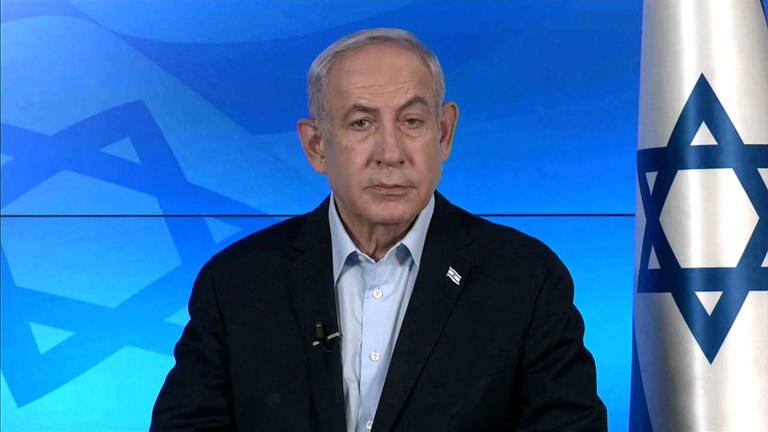
Despite engaging Iran in negotiations mediated by Oman and the EU, Trump was simultaneously planning and coordinating military operations with Israel. He later admitted to working with Israeli PM Benjamin Netanyahu in an “unmatched partnership.”

Iran’s Foreign Minister bluntly stated:

“Last week, we were in negotiations with the U.S. when Israel decided to blow up that diplomacy. This week, we held talks with the EU when the U.S. decided to blow up that diplomacy.”


🚨 What Happens Next?

If Iran emerges from this crisis intact, it may very well pursue nuclear weapons capabilities—not out of aggression, but survival. This would mark a historic failure of American and Israeli strategy and could trigger a nuclear arms race in the region.


📌 Conclusion: A Turning Point in U.S. Foreign Policy?

Trump’s actions have not only destabilized the Middle East but also eroded global trust in U.S.-led diplomacy. As tensions soar, and alliances fracture, the question remains: Can peace ever return to the region—or has the world entered a new era of nuclear brinkmanship?
Posted on Leave a comment

Israel Launches “Operation Rising Lion”: Major Strike on Iran

Date: June 13, 2025
Platform: Remedytalks.com


🔴 Live Update Summary

  • What happened: Early on June 13, Israel launched airstrikes across Iran—dubbed Operation Rising Lion—targeting nuclear, missile, and military sites in cities including Tehran, Natanz, Khorramabad, and Khondab
  • Notable targets & casualties: The strikes reportedly killed several IRGC commanders—including Major General Hossein Salami—and Iran’s Armed Forces Chief of Staff, Mohammad Bagheri. Nuclear scientists and facilities were also hit
  • Scale & precision: Carried out by the Israeli Air Force and Mossad with dozens of jets and covert operations, Israel described the attack as precise and intelligence-driven
  • Israel’s justification: Prime Minister Netanyahu announced the strikes were preemptive to thwart an imminent Iranian nuclear threat—claims supported by intelligence findings of uranium enrichment nearing weapons‑grade levels
  • U.S. stance: The United States confirmed it was not involved but warned Iran against targeting American interests. Israel had notified U.S. officials beforehand
  • Regional escalation fears: Iran declared national emergency, sealed its airspace, and warned of “bitter and painful” retaliation. International concern is rising as oil markets and global aviation routes respon.

In-Depth Analysis

1. Background

Iran’s uranium enrichment exceeded limits set by the 2015 nuclear deal. The IAEA’s June 12 resolution, the first in two decades, found Iran non-compliant. Tehran quickly expanded enrichment and centrifuge installations, escalating tensions

2. Objectives of Operation Rising Lion

  • Nuclear prevention: To dismantle Iran’s nuclear capabilities before weapons-grade production became irreversible.
  • Targeted elimination: Aimed at IRGC leadership to degrade command structure and strategic capabilities
  • Deterrence: Sent a geopolitical signal to allies and adversaries in the region, resetting the balance of power.

3. Casualties & Damage

Both Sardars and civilians were reportedly killed, including women and children living near hit sites. Residential areas housing military personnel were among the targets .

4. International Reactions

  • United States: Distance maintained; bipartisan voices urged caution to prevent wider conflict.
  • Global leaders: Australia, China, and the EU expressed alarm over escalating violence. Iran sealed its borders and vowed retribution .
  • Oil and aviation impact: Oil prices jumped as airlines rerouted flights, anticipating regional instability .

What Comes Next?

WatchpointDescription
Iran’s retaliationTehran has promised severe response—likely via ballistic missiles or drone attacks. Israeli civil defense has activated nationwide alerts.
U.S. military postureWhile not complicit, Washington is preparing protective measures for assets in the region.
Regional responseGulf states, NATO, and EU are urging de-escalation; Iran may call for renewed sanctions.
Global marketsContinued global market sensitivity anticipated as stability in the Gulf is critical.

📌 Conclusion

Operation Rising Lion marks a historic shift—from proxy skirmishes to direct confrontation. Israel’s bold strike underscores deep fears of a nuclear-capable Iran. The world watches warily as both sides brace for a confrontation that could redraw Middle Eastern geopolitics.

Stay tuned to Remedytalks for ongoing coverage.

Posted on Leave a comment

CHINA: INDIA’S REAL-TIME NIGHTMARE AND STRATEGIC DILEMMA

Introduction: The Elephant and the Dragon

India’s geopolitical tension with China has never been a passing storm. It is a simmering, real-time nightmare that defines much of New Delhi’s foreign and defense policy. As Ram Udhav highlights in Uneasy Neighbours (2014), India’s paranoia is neither baseless nor new. It dates back to a prescient warning from Sardar Vallabhbhai Patel to Prime Minister Nehru in 1950: beneath China’s ideological expansion, lurk racial and imperial ambitions.

Fast forward to today, and the fault lines are glaring. From the 1962 war to China’s strategic embrace of Pakistan, India’s vulnerabilities — political, military, and cyber — remain under pressure. China’s expanding technological and military support to Pakistan has forced India into a 21st-century arms race, making its worst fears come true.


Historical Context: Patel’s Warning and Nehru’s Oversight

In 1950, India’s first Home Minister, Sardar Patel, warned Nehru that China’s ideological posturing was a façade for broader imperial ambitions. Patel’s exact words still resonate: “In the guise of ideological expansion lie concealed [China’s] racial, national or historical claims.”

But Nehru, deeply committed to non-alignment and idealistic diplomacy, dismissed Patel’s concerns. He declared “Hindi-Chini bhai-bhai” (Indians and Chinese are brothers), a stance that backfired tragically when Chinese troops swept into Arunachal Pradesh (Zàngnán to China) in 1962. India was caught unprepared, both militarily and politically. The psychological scar of that conflict still looms over Indian strategic thinking.


China-Pakistan Nexus: India’s Two-Front Anxiety

In today’s geopolitical theatre, India faces not just a potential two-front war but a tightly interlocked military axis between China and Pakistan. As Mani Shankar Aiyar aptly put it, the China-Pakistan alliance is “uninterrupted, and uninterruptible.” China has become Pakistan’s all-weather ally. From defense pacts to infrastructure deals like CPEC (China-Pakistan Economic Corridor), the bond runs deep.

India’s concern is not just about the current balance of power but how rapidly Pakistan is absorbing Chinese military technology. There’s growing alarm in Indian intelligence circles that China may supply Pakistan with cutting-edge weaponry — fifth-generation JF-35 fighters, access to its 400 surveillance satellites, and bolstered marine, air, and cyber capabilities.


Pakistan’s Economic Fragility, China’s Strategic Depth

One natural question arises: How can a nearly bankrupt Pakistan afford such upgrades?

The answer lies in strategic subsidization. China’s support for Pakistan mirrors the Soviet Union’s Cold War-era patronage of Cuba. In the 1960s, the USSR paid absurdly high prices for Cuban sugar — not for economic gain, but to maintain a strategic outpost near the U.S.

China is doing the same. It’s not economics, it’s geopolitics. And unlike the U.S. — whose arms deals with Pakistan were conditional and primarily anti-communist — China imposes no such caveats. Their target is clear: India.


Modi’s Nationalism vs Realpolitik

Indian Prime Minister Narendra Modi has framed his political narrative around muscular nationalism. From the Balakot airstrikes to public displays of strength, Modi projects an image of decisive leadership. But critics argue it is more optics than substance.

Yashwant Sinha, a former BJP stalwart, accuses Modi of politicizing national security incidents like Pulwama and Pahalgam to gain electoral mileage. He notes the pattern: tragic events followed by emotional rhetoric, weaponized for votes.

Rahul Gandhi adds another dimension, questioning Modi’s “selective outrage” — asking why his blood boils only in front of cameras, not in closed-door diplomacy.


Global Military Shifts: Learning from NATO and Gaza

While India contends with China and Pakistan, the global military landscape is also shifting. NATO allies are being urged by the U.S. to increase defense spending. The International Institute for Strategic Studies estimates NATO’s rearmament bill at over $340 billion. A vast chunk will go toward naval and air power — paradoxical, given that NATO’s main threat (Russia) is more land-based, as the Ukraine war proves.

Meanwhile, the human cost of war elsewhere — especially in Gaza — serves as a brutal reminder of how military strategies can lose moral ground. Over 50,000 Palestinians have died, with 70% being women and children. Israeli leaders like Moshe Ya’alon and Yair Golan have condemned Prime Minister Netanyahu’s strategy as politically motivated and morally bankrupt.


Religion, Rhetoric, and the Weaponization of Grief

Dr. Alaa al-Najjar’s loss — nine of her ten children in Gaza — echoes ancient laments, evoking biblical sorrow reminiscent of King David mourning Absalom. Her tragedy isn’t just personal; it has become symbolic of the toll authoritarian strategies take on innocent lives.

Back in India, Modi has also used grief as political fuel. During campaign speeches, he claimed his blood now flows with “hot sindoor,” portraying himself as the ultimate nationalist. Yet this theatricality has done little to address the underlying security concerns India faces from China and Pakistan.


Religious Symbolism vs Military Reality

Even the Vatican has tried to weigh in on peace. Pope Leo XIV recently met Ukrainian President Zelensky, hoping to use the Church’s moral influence to end the war. But history reminds us of the limits of such efforts. When advised in the 1930s that Pope Pius XII might object to Soviet religious oppression, Stalin scoffed, “How many divisions has he got?”

Pope Pius responded, “Our divisions are in heaven.” But modern wars aren’t fought with prayers. They’re fought with drones, data, and disinformation.


India’s Strategic Takeaway

India must draw several lessons:

  • China is not just a regional rival; it is a strategic hegemon. It leverages weak states like Pakistan to stretch India thin.
  • Rhetoric is not a substitute for readiness. India needs rapid modernization in cyberwarfare, AI-driven defense systems, and strategic diplomacy.
  • Geopolitical alliances matter. India must strengthen QUAD, fortify ties with ASEAN, and mend strained relationships with neighbors like Nepal and Sri Lanka.
  • Humanitarian integrity is vital. In an age of global media, state brutality — whether in Gaza, Kashmir, or Xinjiang — shapes international legitimacy.

Conclusion: A Time to Wake Up

India’s nightmare with China is not a fantasy. It is an evolving, escalating reality. From military pressure to cyber threats, and from strategic encirclement to information warfare, China has outpaced India in nearly every domain.

New Delhi must now respond not with emotional slogans, but with cold-eyed realism. Patriotism without preparedness is just performance.


Posted on Leave a comment

Joe Biden Diagnosed with Aggressive Cancer, Receives Global Support Including Letter from King Charles


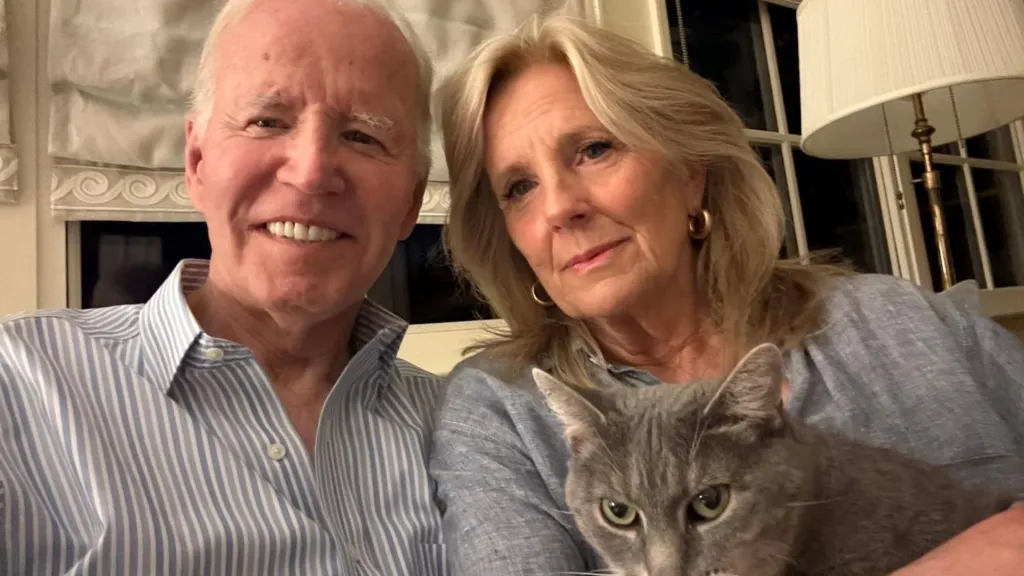
Washington, D.C. – Former U.S. President Joe Biden has revealed that he has been diagnosed with an aggressive form of prostate cancer that has spread to his bones. The announcement, made on Sunday by his office, sparked a wave of support and concern from around the globe.

On Monday morning, Biden addressed the public in a heartfelt social media post, expressing gratitude for the messages of solidarity he and his wife Jill have received.

Cancer touches us all,” Biden wrote. “Like so many of you, Jill and I have learned that we are strongest in the broken places. Thank you for lifting us up with love and support.”

Royal Support: King Charles Sends Private Letter

Among those who reached out was King Charles III of Britain, who reportedly sent a private letter to Biden. While the contents have not been disclosed, sources close to the Biden family describe the note as warm, personal, and deeply appreciated.

The gesture highlights the strong diplomatic ties between the United States and the United Kingdom, and also underscores the shared human experience of battling illness—even among global leaders.

Biden’s Health and Prostate Cancer Diagnosis

According to the official statement, Joe Biden’s prostate cancer diagnosis is serious. The cancer is reported to have metastasized to his bones, a condition classified as advanced metastatic prostate cancer. While treatment details have not been released, Biden’s spokesperson indicated he is undergoing medical care and “remains optimistic and in strong spirits.”

This development has reignited public discussion about Biden’s health during his presidency, particularly given his age and the physical demands of political leadership. Biden, now 81, served as the 46th President of the United States from 2021 to 2025, after serving as Vice President under Barack Obama.

What is Metastatic Prostate Cancer?

Prostate cancer is one of the most common cancers among men, but once it spreads beyond the prostate gland, it becomes significantly more difficult to treat. According to the American cancer society, bone metastases are the most frequent site of spread in advanced cases.

Treatment may involve hormone therapy, radiation, chemotherapy, or newer targeted therapies, depending on the progression and overall health of the patient.


Global Reaction and Political Implications

Biden’s announcement has prompted a wave of public and international responses. Leaders across the globe, advocacy groups, and citizens have offered messages of hope, healing, and strength. His openness about the diagnosis has also encouraged broader conversations about cancer awareness, especially among aging populations and public figures.

However, the diagnosis has also sparked renewed scrutiny of Biden’s health during his time in office. Critics and analysts have long speculated about his fitness to lead, and this development has added fuel to those concerns, particularly as some reports suggest health issues may have been understated during his presidency.

Biden’s Legacy and the Human Side of Leadership

Despite political debates, the emotional tone of Biden’s message struck a chord with many. His statement—”We are strongest in the broken places”—resonated deeply with those who have faced similar battles or supported loved ones through them.

The show of support, especially from King Charles, also reflects a broader sense of international empathy and solidarity. Public figures facing health challenges often become symbols of resilience, and Biden’s willingness to speak openly may further raise awareness about prostate cancer and the importance of early detection.


Final Thoughts: Leadership, Legacy, and the Battle Ahead

While the future of Joe Biden’s health remains uncertain, what is clear is the outpouring of love and support he continues to receive. In a world often divided by politics, moments like these serve as a reminder of our shared humanity.

As more details emerge about his condition and treatment, Biden’s story will likely remain in the global spotlight—not just as a political figure, but as a man confronting one of life’s hardest battles.


🔍 Embedded SEO Keywords:

  • Joe Biden cancer diagnosis
  • Joe Biden prostate cancer
  • metastatic prostate cancer
  • Biden health update
  • King Charles letter to Biden
  • Biden cancer support
  • cancer in public figures
  • advanced prostate cancer treatment
  • world leaders cancer diagnosis
  • Joe Biden medical news

Let me know if you’d like a social media post, thumbnail prompt, or YouTube news script to accompany this article.

Posted on Leave a comment

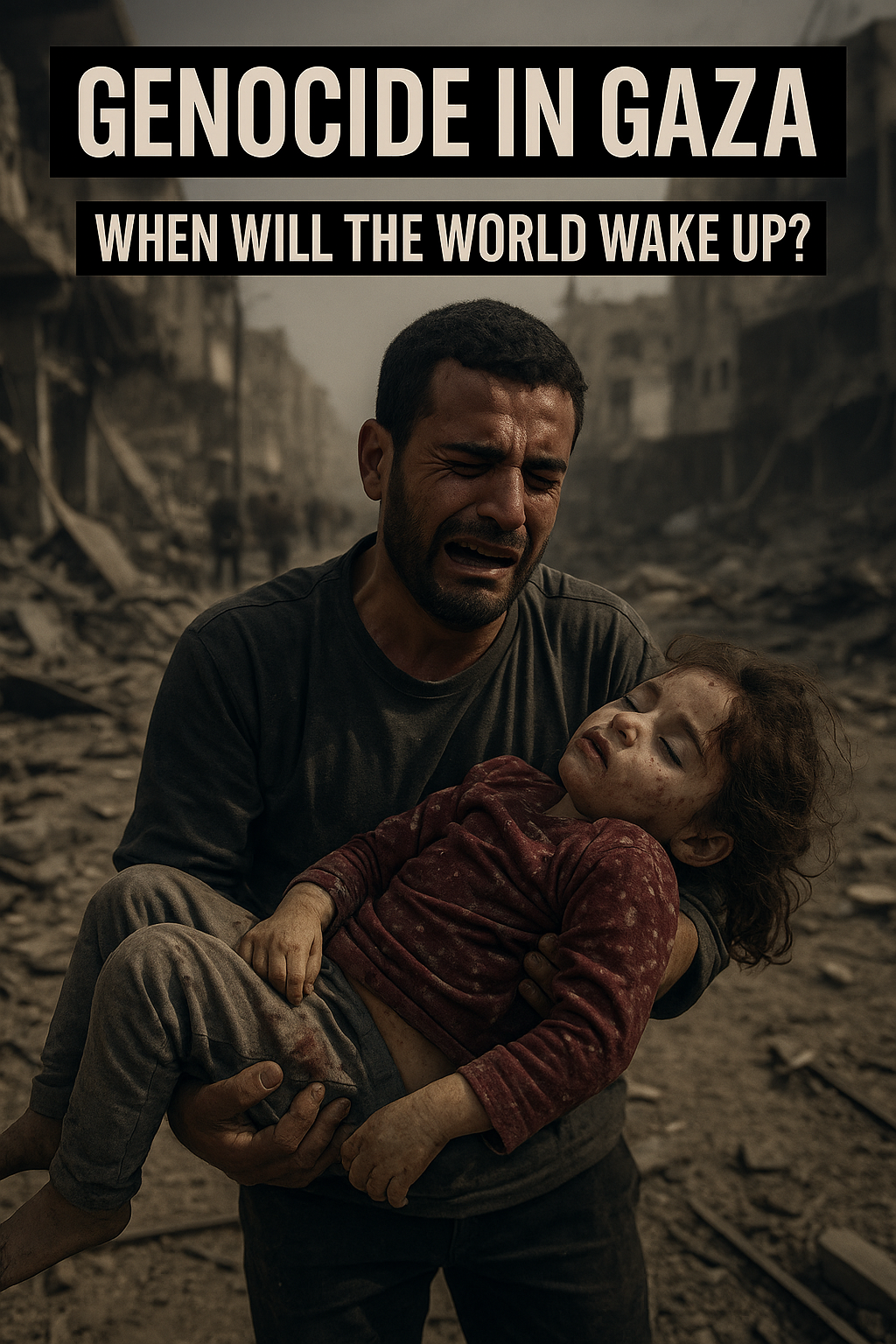
GENOCIDE IN GAZA: WHEN WILL THE WORLD WAKE UP?


With more Israeli forces than ever now deployed inside Gaza, and a fresh call-up of reservists, the situation has shifted from dire to devastating. Gaza is now under a relentless siege—cut off from food, water, medicine, and electricity for over six weeks. Despite warnings from the UN, WHO, and multiple human rights watchdogs about the imminent threat of mass starvation, the aid blockade remains firmly in place.

Bombings have escalated. Hospitals have been reduced to rubble. Entire neighborhoods flattened. Children are buried under debris, mothers clutch their lifeless babies, and doctors treat patients without anesthesia. And yet, world leaders stay silent—or worse, continue justifying it as “Israel’s right to defend itself.”

A Military Operation or Ethnic Cleansing?

Israel continues to claim its operation is focused on freeing the remaining hostages. But the facts on the ground tell another story. As journalist Mark Seddon wrote on X:

“Only 8 hostages have been rescued by the Israeli army. 33 have been killed by Israeli airstrikes. 148 were freed through negotiations. This isn’t about the hostages—it’s about the annihilation of the Palestinian people.”

The numbers speak for themselves. The cruelty cannot be overstated. Gaza’s children—over 18,000 of them, most under 10 years old—are already dead. The very same West that once vowed “Never Again” after the Holocaust is now watching history repeat itself. And doing nothing.

The Silence of the “Free” World

Despite its lofty claims of democracy, human rights, and journalistic freedom, the Western world has clearly picked a side—and it isn’t with the oppressed.

Mainstream media dehumanizes Palestinians. Every day, we see 50, 75, or 100 deaths reported as mere numbers. These are people. Children. Families. Journalists. Doctors. Yet their lives seem to matter less.

Meanwhile, foreign journalists have been barred from Gaza. Local journalists—every one of whom Israel claims is “Hamas”—have been systematically killed. This silence ensures that genocide can proceed without global outcry.

Images That Break the Soul

Who hasn’t seen the footage? A father carrying the broken body of his daughter. A mother screaming next to the shattered corpse of her son. Hospital corridors stained with blood. Entire families vaporized in seconds. Gaza looks less like a warzone and more like a mass graveyard.

Healthcare workers operate with no medicine, no supplies, no electricity—yet they continue, carrying out surgeries by flashlight. Many don’t survive the next airstrike.

Words fail. Adjectives feel useless. And still, we scroll past.

Is the World Finally Realizing?

Perhaps, just perhaps, the horrors are beginning to catch up with Western leaders. Maybe even their selective morality is starting to sting. When Donald Trump, Keir Starmer, and Emmanuel Macron start voicing concerns about the Gaza aid blockade, it’s not a shift in conscience—it’s political panic. Because people are waking up. Protesters are flooding the streets in London, Paris, New York, Berlin. Even under harsh repression.

But the real betrayal comes from the Arab world—silent, complicit, obedient. Some of the richest Muslim countries welcomed American presidents with red carpets and billion-dollar deals but failed to speak a single word for Gaza.

A Diabolical Plan: The Next Nakba?

According to an NBC report, a shocking plan is allegedly in the works: the forced relocation of up to one million Palestinians from Gaza to Libya. Yes, Libya—a nation already broken by Western intervention.

NBC says the U.S. would offer Libya billions of dollars in frozen assets as “incentives.” It’s a horrifying echo of 1948—a second Nakba. And it must alarm every Arab and European leader.

Because what happens when these Palestinians—angry, dispossessed, and desperate—refuse to stay in Libya? Europe, already seeing a surge in far-right extremism due to refugee fears, could face destabilizing consequences. The entire Mediterranean could become a humanitarian disaster zone.

When Terrorism Becomes an Excuse for Genocide

Western hypocrisy is no longer even subtle. Leaders who once refused to meet elected Palestinian officials now share handshakes with people like Syrian President Ahmed al-Sharaa—a former Al Qaeda leader with a $10 million bounty on his head.

This proves one chilling point: The problem was never Hamas. It’s the Palestinians themselves. It’s the idea of a free Palestine. It’s the dream of an independent, dignified life for people who have lived under siege for over 16 years.

The project is Greater Israel. And everything else is collateral damage.

A Choice the World Must Make

The world is standing at a crossroads. Do we let another genocide take place while hiding behind diplomatic language and meaningless press releases? Or do we finally raise our voices and demand accountability?

Humanity is not defined by how we treat the powerful, but how we respond to the cries of the powerless. Gaza has been crying for far too long.

It’s time for the world to listen.


✊ CALL TO ACTION

Don’t just read. Share. Speak up. Educate others. Support journalists risking their lives. Push for sanctions. Demand an arms embargo. Write to your representatives. Protest.

History is watching. So are the children of Gaza—if they survive.


Posted on Leave a comment

“The Venom Gold Rush: Big Pharma’s Secret Hunt in Australia’s Backyard”

Australia is renowned for its array of venomous creatures—from snakes and spiders to jellyfish. While these animals are often feared for their lethal potential, scientists are uncovering a fascinating paradox: the very venoms that pose threats to humans are now being harnessed to develop groundbreaking medical treatments.

From Venom to Vital Medicine

In Australia, venom research has evolved from a focus on antivenom production to exploring therapeutic applications for various diseases. Institutions like the University of Queensland’s Institute for Molecular Bioscience (IMB) and the Australian Venom Research Unit (AVRU) at the University of Melbourne are at the forefront of this transformation.

Funnel-Web Spider Venom: A Potential Heart Protector

One of the most promising discoveries comes from the venom of the K’gari funnel-web spider. Researchers have identified a peptide named Hi1a that shows potential in protecting heart cells during heart attacks. This peptide works by preventing cell death caused by oxygen deprivation, a common issue during cardiac events. The research team, led by Professor Glenn King, is preparing for human clinical trials to assess the efficacy of Hi1a in cardiac treatment. (The Australian, The University of Queensland, The Guardian)

Tarantula Venom: Exploring Epilepsy Treatments

Beyond cardiac care, venom is also being investigated for neurological applications. A study led by Professor Ernst Wolvetang at the University of Queensland is examining the effects of tarantula venom on epilepsy. By creating brain organoids from the blood of epilepsy patients, researchers can test how specific venom peptides influence neuronal activity. Preliminary findings suggest that certain venom components may reduce the hyperexcitability of neurons, offering hope for new epilepsy treatments. (ABC)

Antivenom Production: A Lifesaving Endeavor

Australia’s commitment to antivenom production has significantly reduced fatalities from venomous bites and stings. For instance, since the introduction of the funnel-web spider antivenom in 1981, there have been no recorded deaths from its bite. The process involves collecting venom, often by “milking” the creatures, and then using it to immunize animals like horses. The resulting antibodies are purified to create antivenoms that are distributed to hospitals nationwide. (School of Biomedical Sciences, BBC)

The Role of Venom Research Units

Institutions like the AVRU play a crucial role in understanding venomous creatures and developing treatments. Their research encompasses not only the biochemical analysis of venoms but also the development of first-aid protocols and public education to prevent envenomation incidents. (School of Biomedical Sciences)

Conclusion: Nature’s Lethal Compounds as Therapeutic Tools

The exploration of venom’s potential in medicine exemplifies how nature’s most dangerous compounds can be transformed into life-saving therapies. As research progresses, these natural toxins may offer solutions to some of the most challenging medical conditions, turning the tables on their deadly origins.

Posted on Leave a comment

UK’s New Immigration Rule Feels Like Betrayal, Say Migrants: What the 10-Year Settlement Change Really Means


By Remedy Talks Editorial Team
Real issues. Real voices. Real impact.


A Sudden Shift, A Deep Impact

The UK government’s decision to double the qualifying period for permanent settlement—from five years to ten—is being felt like a punch in the gut by thousands of migrants who had already begun building their lives in the country. It’s not just a policy change; to many, it’s a reversal of trust.

For foreign workers, students, and families who moved to the UK under one set of rules, this sudden shift—especially because it’s retroactively applied—feels like the rug has been pulled out from under them.


What Changed?

Previously, most migrants could apply for Indefinite Leave to Remain (ILR) after five years of legal residency. Under the new rule, they must wait ten years. This applies not only to new arrivals, but also to those who are already halfway through the process—people who have spent years contributing to the economy, paying taxes, and raising families.

The change affects an estimated 1.5 million migrants, most of whom arrived after 2020.


Why It Matters

Let’s be clear—this isn’t just about numbers on a government form. It’s about stability. It’s about people who:

  • Planned their futures based on the old timeline
  • Bought homes, enrolled their children in schools, or invested in businesses
  • Worked in critical sectors like healthcare, education, and technology

Now, they’re being told to wait five more years. No clarity. No compensation. No apology.


“We Built Our Lives Here, and Now They’re Moving the Goalposts”

Many affected migrants describe the decision as a “betrayal.” Advocacy groups are echoing their concerns, warning that this will not only hurt people on a personal level—but also damage the UK’s global reputation as a fair and welcoming country.

Imagine living somewhere for five years, building relationships, investing in your career, and feeling at home—only to be told the rules have changed, and your future is on hold.


Economic and Social Backlash

Beyond personal stories, there are real economic risks at play.

Migrants fill essential roles in an economy already struggling with skill shortages. Making the path to settlement harder could discourage future skilled workers from choosing the UK at all.

And let’s not forget—these same workers were called “essential” during the pandemic. They showed up when it was dangerous to do so. Now, they feel discarded.


A Blow to Trust in the System

One of the harshest aspects of this policy is its retroactive effect. It penalizes people who entered the UK legally, followed every rule, and structured their lives around a five-year pathway. Many now feel blindsided and betrayed.

Instead of offering predictability, the new rule injects uncertainty and stress into thousands of lives. It says: “The rules can change, even halfway through.”

That’s not a message that builds trust.


The Call for Compassion

Advocates are urging the government to rethink. A fair immigration system, they argue, must include:

  • Predictable and transparent rules
  • Recognition of contributions already made
  • Pathways to settlement that reflect real-life planning
  • Consultation with migrants and experts, not top-down decisions

A truly just system listens, adapts, and acts with compassion—not just caution.


What’s Next?

As legal and human rights organizations gear up to challenge the change, one thing is clear: migrants are not just numbers in a spreadsheet. They are people who chose the UK, invested in its future, and believed in its promises.

If the UK wants to maintain its status as a global hub of talent, diversity, and opportunity—it must do better.


Final Thoughts

Policy can be a tool for justice—or a weapon of exclusion. By extending the settlement period to ten years and applying it retroactively, the UK has chosen the latter. It’s a decision that may protect bureaucratic systems, but it threatens to harm real lives and lasting trust.

This moment calls for more than just government statements. It calls for listening, empathy, and urgent correction.

Because no one should feel like a stranger in the place they’ve come to call home.


Remedy Talks
We write what matters.


Would you like a Facebook/Instagram caption, blog thumbnail, or Reel script to help promote this article next?

Posted on Leave a comment

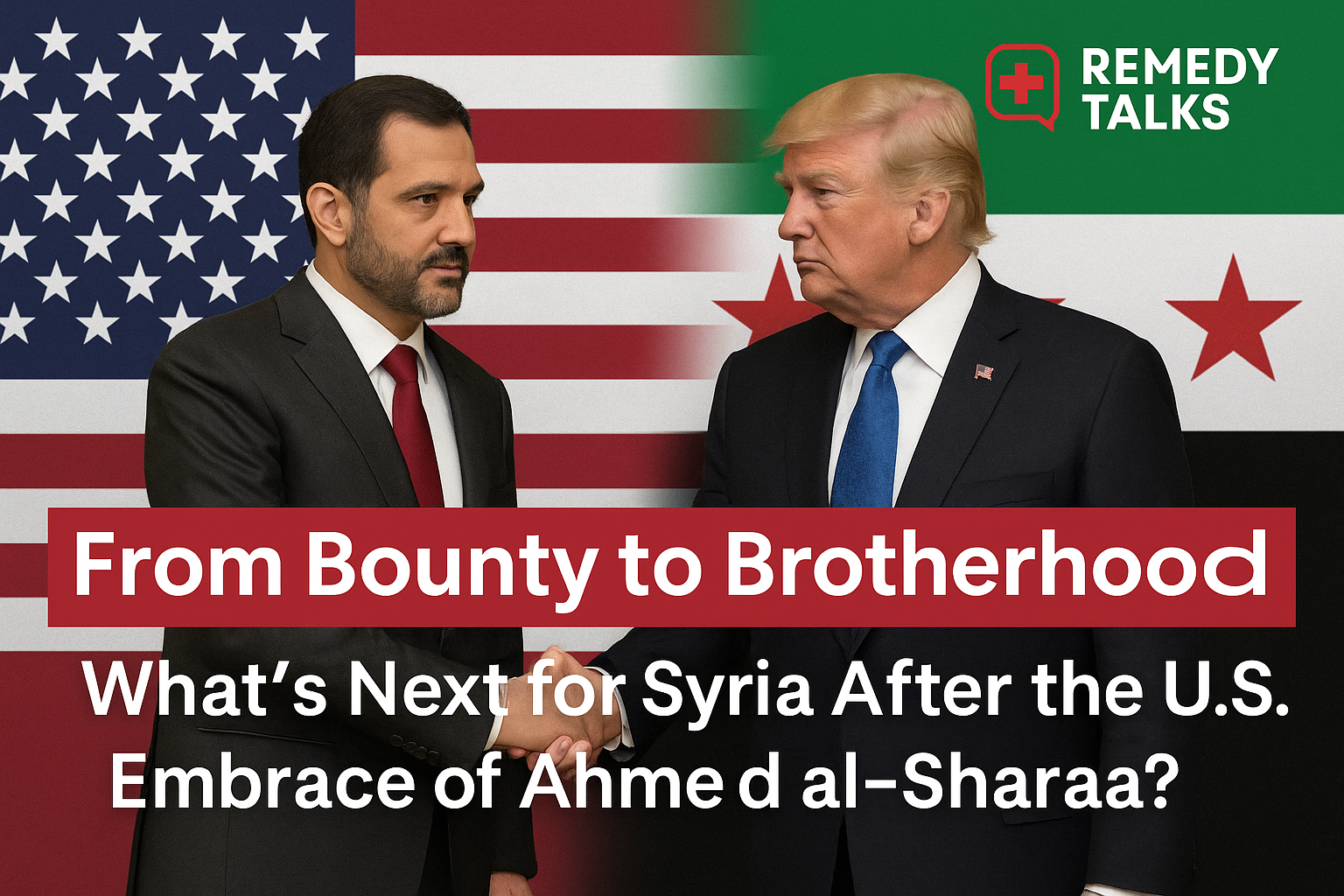
From Bounty to Brotherhood: What’s Next for Syria After the U.S Embrace of Ahmed al-Sharaa?


By Remedy Talks Editorial Team
Published on RemedyTalks.com


A Shift in Allegiances That History Won’t Forget

Geopolitics has always been a realm where alliances shift like sand in the wind, but few transformations have been as jarring as the one we just witnessed in Syria. The man once known to the world as Abu Mohammed al-Jolani, feared leader of the Al Qaeda-linked Al Nusra Front, has now stepped onto the global stage with a new identity: Ahmed al-Sharaa, interim leader of Syria—endorsed, welcomed, and legitimized by none other than former U.S. President Donald Trump in a formal meeting in Riyadh.

For Syrians who have endured more than a decade of civil war, displacement, and international isolation, this moment is a complicated one. On the one hand, the lifting of U.S. sanctions signals a potential opening for economic recovery. On the other, it raises deeply uncomfortable questions about morality, memory, and the future of governance in a war-torn nation.


From ‘Terrorist’ to Transitional Leader: A Calculated U-Turn

It wasn’t long ago that the United States placed a $10 million bounty on al-Sharaa’s head. He was then seen as a dangerous militant with ties to extremist ideology. His group, Al Nusra Front, was notorious for its brutal tactics and Islamist agenda.

So what changed?

Nothing about Sharaa’s past did. What shifted was his strategic value in the geopolitical chessboard. He played a crucial role in bringing down the Assad regime, a goal long pursued by the U.S., its European allies, and Gulf states. In doing so, he helped diminish the stronghold of Iranian and Russian influence in the Levant.

His reward? Legitimacy, a handshake, and the promise of reconstruction funding.


A Tale of Two Militants: Syria vs. Afghanistan

The irony is thick when comparing this development to how the world treats the Taliban in Afghanistan. Despite ending a two-decade occupation and taking control of Kabul, the Taliban remain under sanctions and globally isolated.

Ideologically, the Taliban and Sharaa’s previous circle are not dissimilar. But where one challenged Western dominance, the other aligned with it to achieve mutual goals. The message is clear: in the eyes of major powers, militancy is acceptable—if it serves their interests.

This kind of selective political hygiene—where one extremist is rehabilitated and another condemned—does little to build global trust or long-term peace.


The Golan Question and the Price of Recognition

During the Riyadh meeting, President Trump reportedly asked Sharaa to recognize Israel. Yet there was no mention of Israel returning Syrian territory it has occupied for decades, including the strategic Golan Heights.

This puts Syria’s new rulers in a precarious position. Recognition of Israel without territorial restitution could fracture internal unity even further and alienate important regional actors. It might also weaken Sharaa’s domestic legitimacy, especially among nationalists and minority communities already skeptical of his leadership.


Old Fears, New Faces: Will Extremism Simply Change Hands?

The hope—at least on paper—is that this new chapter brings stability and inclusion. Sharaa has spoken of building an “inclusive state.” But early signs are troubling.

Recent reports from within Syria speak of sectarian clashes, especially involving the Alawi and Druze minorities. These communities fear being sidelined or persecuted by a government with deep roots in jihadist ideology.

The risk is that Syria could move from autocracy under Assad to ideological rigidity under Sharaa, replacing one form of oppression with another. The world must avoid being lulled into complacency by the narrative of progress while the reality on the ground deteriorates further.


What Syria Needs — And Deserves

The Syrian people have suffered enough. Over 500,000 lives lost, millions displaced, and an entire generation born into war. What they need now is not another power shift dictated by outside interests but a genuinely inclusive, homegrown process of rebuilding.

That includes:

  • Minority protections, including legal and political safeguards
  • Free and fair elections, not appointments based on militant resumes
  • Economic recovery that lifts communities from poverty, not just elite circles
  • A truth and reconciliation process, to reckon with war crimes on all sides

If these steps aren’t taken, Syria risks falling back into the very cycle of rebellion and repression that tore it apart in the first place.


Looking Ahead: What Future Awaits Syria?

With U.S. sanctions lifted, international investors may begin circling once again. Gulf nations could funnel in aid and contracts. There might even be a diplomatic push to normalize Syria’s relations with the West under its new leadership.

But the path forward will not be smooth. Sharaa’s past will continue to haunt him. Civil society groups, international watchdogs, and disillusioned Syrians will demand accountability, not just economic development.

Syria stands at a crossroads. This could be the beginning of true rehabilitation—if it is led with humility, inclusivity, and a break from past cycles of violence. Or it could simply be a rebranding of authoritarianism, draped in the cloak of international approval.


Final Thoughts

This isn’t just a Syrian story. It’s a cautionary tale of how power works on the global stage—how definitions of “terrorist,” “leader,” and “ally” change not based on morality, but on utility.

The world may have rebranded Ahmed al-Sharaa, but Syrians will judge him not by meetings in Riyadh or endorsements from Washington, but by whether he brings peace, justice, and dignity back to their homes.

And for their sake, the world should hold him to that standard.


Author:
Remedy Talks Team
Truth beyond headlines. Context behind conflict.


Posted on Leave a comment

 “Trump’s New Iran Sanctions Revealed: The Hidden Missile Threat That Could Change Everything”

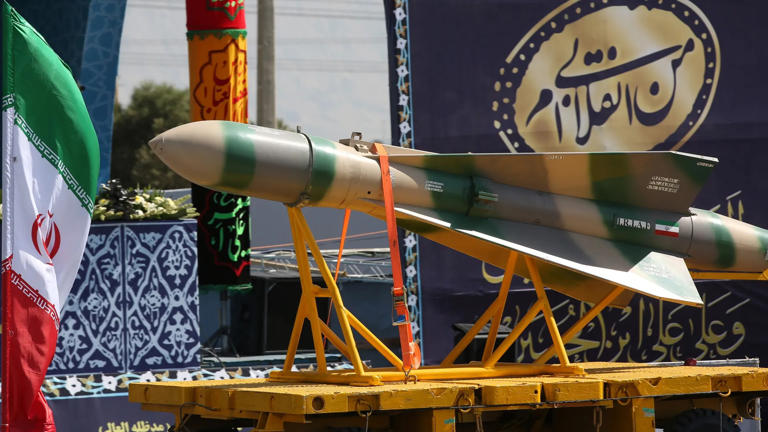
On May 14, 2025, the U.S. Treasury Department announced new sanctions targeting Iran’s ballistic missile program. These sanctions affect six individuals and twelve entities, primarily based in Iran and China, accused of aiding Iran’s efforts to domestically produce components for its missile program, including critical materials like carbon fiber used in manufacturing intercontinental ballistic missiles. (Reuters)

This move is part of President Donald Trump’s renewed “maximum pressure” campaign against Iran, which was reinstated in February 2025. The campaign aims to curb Iran’s missile development and oil exports amid broader geopolitical tensions. (Reuters, Reuters)

In addition to the missile-related sanctions, the U.S. has also sanctioned over 20 companies involved in exporting Iranian oil to China. These companies, including several based in Hong Kong, are accused of facilitating the shipment of Iranian crude oil worth billions to China, with proceeds allegedly supporting Iran’s ballistic missile programs and regional terrorist groups. (Reuters, Financial Times)

The sanctions come amid ongoing nuclear negotiations between the U.S. and Iran. Recent talks in Muscat, Oman, have shown cautious optimism, but major disagreements persist, particularly over Iran’s insistence on its right to domestically enrich uranium. (WSJ)

Iran has criticized the new sanctions as incompatible with negotiation efforts. Iran’s Foreign Minister Abbas Araqchi warned that reimposing United Nations sanctions on Tehran using the “snapback mechanism” could lead to irreversible tensions and end European involvement in the 2015 nuclear deal. (Reuters, Reuters)

The U.S. maintains that these sanctions are necessary to prevent Iran from developing intercontinental ballistic missiles and to ensure regional stability. Treasury Secretary Scott Bessent stated, “The Iranian regime’s relentless and irresponsible pursuit of advanced ballistic missile capabilities represents an unacceptable threat to the United States and the stability of the region.” (U.S. Department of the Treasury)

As the situation develops, the international community continues to monitor the unfolding events and their implications for regional and global security.