
Posted on Leave a comment

Trump’s Iran Strike: The End of Diplomacy in the Middle East?

Donald Trump’s military strikes on Iran mark a dangerous shift in U.S. foreign policy. As diplomacy collapses, tensions soar across the Middle East. What happens next?


Trump’s Iran Strike and the Collapse of Diplomacy in the Middle East

Keywords: Trump Iran strike, US-Iran conflict, Middle East tensions, nuclear diplomacy, Iran nuclear sites, UN Charter violation


🔥 A New War in the Middle East?

Despite repeated claims that he would avoid new wars, former U.S. President Donald Trump authorized a military strike on Iran’s nuclear facilities, dragging the United States into a direct confrontation with Iran—alongside Israel.

Targeting Fordow, Natanz, and Isfahan, the joint U.S.-Israeli operation marks a violation of the UN Charter and plunges the Middle East into dangerous new territory.


⚠️ A Historic First: Nuclear States Attack an NPT Member

This is the first time two nuclear-armed states have attacked a non-nuclear NPT member (Iran). Though diplomacy appeared to be in play days before the attack, the airstrikes exposed those talks as a strategic deception.

Trump claimed a decision was “two weeks away,” but his true intent was revealed through his coordinated actions with Israeli forces. In a televised address, he called the strikes a “spectacular success”, boasting that Iran’s nuclear capabilities were “completely obliterated.”


🇮🇷 Iran Responds: Caution, Not Capitulation

Iran’s Foreign Minister Abbas Araghchi condemned the strike, calling it a flagrant violation of international law. While Iran has vowed to continue its nuclear program, it is expected to halt cooperation with the International Atomic Energy Agency (IAEA) and has demanded an emergency UN Security Council meeting.

The UN Secretary-General António Guterres warned that the conflict risks spinning out of control and poses a direct threat to global peace.


⚔️ Strategic Calculations: Will Iran Retaliate?

So far, Iranian officials report limited damage and no civilian casualties, and much of their nuclear material was reportedly moved in advance. Rather than escalating the conflict, Iran may opt for diplomatic and non-kinetic responses, such as:

  • Closing the Strait of Hormuz (triggering global oil price spikes)
  • Cyber or proxy responses
  • International legal action

However, any retaliatory step could provoke further U.S. strikes, something Iran’s leadership seems keen to avoid—at least for now.


🎲 Trump’s Gamble: A Repeat of Iraq?

This is a high-risk foreign policy move for Trump. With no clear exit strategy, the U.S. could face a repeat of the Iraq war quagmire—a scenario involving endless conflict and rising global opposition.

Trump has signaled he will escalate unless Iran fully surrenders its nuclear program—a condition Tehran has firmly rejected.


💣 Diplomacy Betrayed

Perhaps the biggest casualty in this entire crisis is faith in diplomacy.

Despite engaging Iran in negotiations mediated by Oman and the EU, Trump was simultaneously planning and coordinating military operations with Israel. He later admitted to working with Israeli PM Benjamin Netanyahu in an “unmatched partnership.”

Iran’s Foreign Minister bluntly stated:

“Last week, we were in negotiations with the U.S. when Israel decided to blow up that diplomacy. This week, we held talks with the EU when the U.S. decided to blow up that diplomacy.”


🚨 What Happens Next?

If Iran emerges from this crisis intact, it may very well pursue nuclear weapons capabilities—not out of aggression, but survival. This would mark a historic failure of American and Israeli strategy and could trigger a nuclear arms race in the region.


📌 Conclusion: A Turning Point in U.S. Foreign Policy?

Trump’s actions have not only destabilized the Middle East but also eroded global trust in U.S.-led diplomacy. As tensions soar, and alliances fracture, the question remains: Can peace ever return to the region—or has the world entered a new era of nuclear brinkmanship?

Posted on Leave a comment

Israel Intensifies Gaza Offensive Amid Mounting Humanitarian Crisis

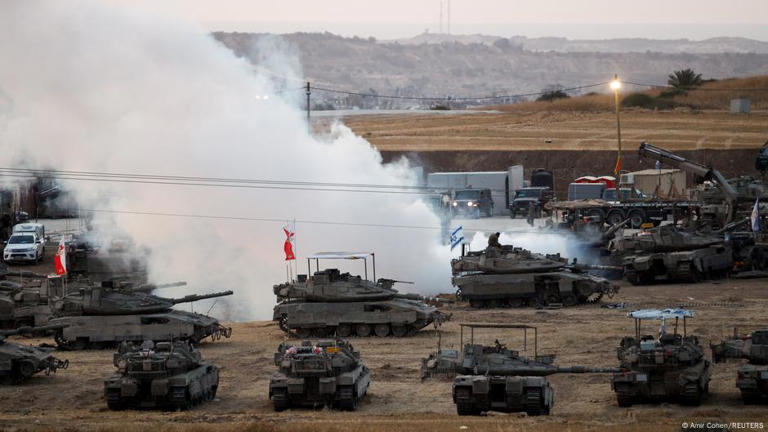
In a significant escalation of the ongoing conflict, Israel has launched a major offensive in the Gaza Strip, resulting in substantial casualties and widespread destruction. The operation, dubbed “Gideon’s Chariots,” aims to dismantle Hamas’s military infrastructure and secure the release of hostages taken during the October 2023 attacks.(The Guardian)

Operation “Gideon’s Chariots”: Objectives and Actions

The Israeli Defense Forces (IDF) have intensified air and ground operations across Gaza, targeting over 150 locations, including areas in northern Gaza such as Beit Lahiya and the Jabalia refugee camp. These strikes have resulted in the deaths of more than 250 Palestinians since Thursday, with many casualties being women and children .(Reuters)

The IDF states that the offensive is part of a broader strategy to:(www.ndtv.com)

The Israeli government has also indicated that if Hamas does not agree to a ceasefire and release the remaining hostages, it may consider reoccupying parts of the Gaza Strip .(BBC)

Humanitarian Crisis Deepens

The intensified military operations have exacerbated an already dire humanitarian situation in Gaza. The territory has been under a complete blockade, preventing the entry of food, water, and medical supplies. Over the past three days, more than 200 Palestinians have been killed, contributing to a death toll exceeding 53,000 since the conflict’s resurgence in March .(AP News)

Humanitarian organizations warn of an impending famine, with half a million people facing starvation. Children are disproportionately affected, with reports of severe malnutrition and lack of access to medical care. The United Nations and various NGOs have called for immediate and unrestricted humanitarian access to the affected areas.(AP News, The Guardian)

International Reactions and Diplomatic Efforts

U.S. President Donald Trump, following a regional tour, acknowledged the severe humanitarian crisis, stating that people in Gaza are “starving” and that the U.S. will address the situation . However, his visit did not include a stop in Israel, and his administration’s efforts to broker a ceasefire have yet to yield tangible results.(The Guardian)

Meanwhile, Israel has expanded its military operations beyond Gaza, conducting airstrikes on Houthi-controlled ports in Yemen, which it claims are used for weapon transfers. These actions have further complicated the regional dynamics and drawn criticism from various international actors .(WSJ)

Conclusion

The escalation of Israel’s military operations in Gaza has led to significant civilian casualties and a worsening humanitarian crisis. While the stated objectives focus on dismantling Hamas and securing the release of hostages, the broader implications raise concerns about long-term regional stability and the well-being of the civilian population. International actors continue to call for immediate humanitarian access and renewed diplomatic efforts to bring an end to the hostilities.(www.ndtv.com)

Posted on Leave a comment

Pakistan Downs 77 Indian Drones Amid Escalating Border Tensions

In a significant escalation of hostilities, Pakistan’s military has reported the downing of 77 Indian drones over a two-day period, marking a notable intensification in the ongoing conflict between the two nuclear-armed neighbors.

Unprecedented Drone Activity

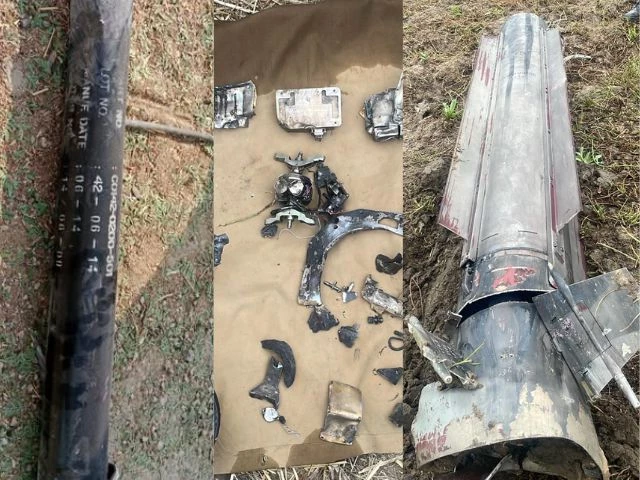
According to Pakistani security sources, the drones, identified as Israeli-made Harop loitering munitions, were intercepted between May 6 and May 8, with 29 drones shot down by the evening of May 8 and an additional 48 neutralized overnight into May 9 . These drones were reportedly targeting both civilian and military sites across various regions, including Vehari, Pakpattan, and Okara .(The Express Tribune, Daily Times)

Rising Civilian Casualties

The intensified drone activity has coincided with increased artillery exchanges along the Line of Control (LoC), leading to civilian casualties on both sides. Reports indicate that at least five civilians have been killed and seven others injured in Pakistan-administered Kashmir due to unprovoked Indian shelling on residential areas .(The Express Tribune)

Broader Context of Escalation

The recent surge in hostilities follows India’s launch of “Operation Sindoor,” a series of missile strikes targeting alleged terrorist infrastructure in Pakistan and Pakistan-administered Kashmir. India stated that these strikes were in retaliation for a deadly attack on Indian tourists in Pahalgam on April 22, which New Delhi attributes to Pakistan-based militant groups .(AP News)

In response, Pakistan has engaged in cross-border shelling and drone incursions, further exacerbating tensions. Both nations have accused each other of targeting civilian areas, leading to mass evacuations, school closures, and the suspension of major events, including the Indian Premier League .(AP News)

International Concerns and Calls for Restraint

The escalating conflict has drawn international concern. U.S. Vice President JD Vance has expressed hope for a resolution, while the European Union has called for restraint . Despite diplomatic efforts, the situation remains volatile, with both nations accusing each other of aggression.(The Express Tribune)

Conclusion

The downing of 77 Indian drones by Pakistan’s military underscores the fragile nature of peace along the India-Pakistan border. As civilian casualties mount and infrastructure suffers, the need for diplomatic engagement and de-escalation becomes increasingly urgent.

For the millions residing in the border regions, the hope is for a swift resolution to the hostilities, allowing for a return to normalcy and the resumption of daily life without the looming threat of conflict.