Posted on Leave a comment

Trump’s Iran Strike: The End of Diplomacy in the Middle East?

Donald Trump’s military strikes on Iran mark a dangerous shift in U.S. foreign policy. As diplomacy collapses, tensions soar across the Middle East. What happens next?


Trump’s Iran Strike and the Collapse of Diplomacy in the Middle East

Keywords: Trump Iran strike, US-Iran conflict, Middle East tensions, nuclear diplomacy, Iran nuclear sites, UN Charter violation


🔥 A New War in the Middle East?

Despite repeated claims that he would avoid new wars, former U.S. President Donald Trump authorized a military strike on Iran’s nuclear facilities, dragging the United States into a direct confrontation with Iran—alongside Israel.

Targeting Fordow, Natanz, and Isfahan, the joint U.S.-Israeli operation marks a violation of the UN Charter and plunges the Middle East into dangerous new territory.


⚠️ A Historic First: Nuclear States Attack an NPT Member

This is the first time two nuclear-armed states have attacked a non-nuclear NPT member (Iran). Though diplomacy appeared to be in play days before the attack, the airstrikes exposed those talks as a strategic deception.

Trump claimed a decision was “two weeks away,” but his true intent was revealed through his coordinated actions with Israeli forces. In a televised address, he called the strikes a “spectacular success”, boasting that Iran’s nuclear capabilities were “completely obliterated.”


🇮🇷 Iran Responds: Caution, Not Capitulation

Iran’s Foreign Minister Abbas Araghchi condemned the strike, calling it a flagrant violation of international law. While Iran has vowed to continue its nuclear program, it is expected to halt cooperation with the International Atomic Energy Agency (IAEA) and has demanded an emergency UN Security Council meeting.

The UN Secretary-General António Guterres warned that the conflict risks spinning out of control and poses a direct threat to global peace.


⚔️ Strategic Calculations: Will Iran Retaliate?

So far, Iranian officials report limited damage and no civilian casualties, and much of their nuclear material was reportedly moved in advance. Rather than escalating the conflict, Iran may opt for diplomatic and non-kinetic responses, such as:

  • Closing the Strait of Hormuz (triggering global oil price spikes)
  • Cyber or proxy responses
  • International legal action

However, any retaliatory step could provoke further U.S. strikes, something Iran’s leadership seems keen to avoid—at least for now.


🎲 Trump’s Gamble: A Repeat of Iraq?

This is a high-risk foreign policy move for Trump. With no clear exit strategy, the U.S. could face a repeat of the Iraq war quagmire—a scenario involving endless conflict and rising global opposition.

Trump has signaled he will escalate unless Iran fully surrenders its nuclear program—a condition Tehran has firmly rejected.


💣 Diplomacy Betrayed

Perhaps the biggest casualty in this entire crisis is faith in diplomacy.

Despite engaging Iran in negotiations mediated by Oman and the EU, Trump was simultaneously planning and coordinating military operations with Israel. He later admitted to working with Israeli PM Benjamin Netanyahu in an “unmatched partnership.”

Iran’s Foreign Minister bluntly stated:

“Last week, we were in negotiations with the U.S. when Israel decided to blow up that diplomacy. This week, we held talks with the EU when the U.S. decided to blow up that diplomacy.”


🚨 What Happens Next?

If Iran emerges from this crisis intact, it may very well pursue nuclear weapons capabilities—not out of aggression, but survival. This would mark a historic failure of American and Israeli strategy and could trigger a nuclear arms race in the region.


📌 Conclusion: A Turning Point in U.S. Foreign Policy?

Trump’s actions have not only destabilized the Middle East but also eroded global trust in U.S.-led diplomacy. As tensions soar, and alliances fracture, the question remains: Can peace ever return to the region—or has the world entered a new era of nuclear brinkmanship?

Posted on Leave a comment

Israel Launches “Operation Rising Lion”: Major Strike on Iran

Date: June 13, 2025
Platform: Remedytalks.com


🔴 Live Update Summary

  • What happened: Early on June 13, Israel launched airstrikes across Iran—dubbed Operation Rising Lion—targeting nuclear, missile, and military sites in cities including Tehran, Natanz, Khorramabad, and Khondab
  • Notable targets & casualties: The strikes reportedly killed several IRGC commanders—including Major General Hossein Salami—and Iran’s Armed Forces Chief of Staff, Mohammad Bagheri. Nuclear scientists and facilities were also hit
  • Scale & precision: Carried out by the Israeli Air Force and Mossad with dozens of jets and covert operations, Israel described the attack as precise and intelligence-driven
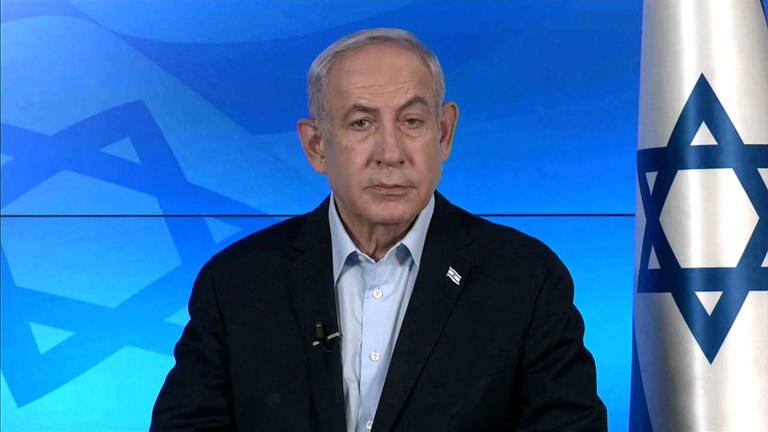
  • Israel’s justification: Prime Minister Netanyahu announced the strikes were preemptive to thwart an imminent Iranian nuclear threat—claims supported by intelligence findings of uranium enrichment nearing weapons‑grade levels
  • U.S. stance: The United States confirmed it was not involved but warned Iran against targeting American interests. Israel had notified U.S. officials beforehand
  • Regional escalation fears: Iran declared national emergency, sealed its airspace, and warned of “bitter and painful” retaliation. International concern is rising as oil markets and global aviation routes respon.

In-Depth Analysis

1. Background

Iran’s uranium enrichment exceeded limits set by the 2015 nuclear deal. The IAEA’s June 12 resolution, the first in two decades, found Iran non-compliant. Tehran quickly expanded enrichment and centrifuge installations, escalating tensions

2. Objectives of Operation Rising Lion

  • Nuclear prevention: To dismantle Iran’s nuclear capabilities before weapons-grade production became irreversible.
  • Targeted elimination: Aimed at IRGC leadership to degrade command structure and strategic capabilities
  • Deterrence: Sent a geopolitical signal to allies and adversaries in the region, resetting the balance of power.

3. Casualties & Damage

Both Sardars and civilians were reportedly killed, including women and children living near hit sites. Residential areas housing military personnel were among the targets .

4. International Reactions

  • United States: Distance maintained; bipartisan voices urged caution to prevent wider conflict.
  • Global leaders: Australia, China, and the EU expressed alarm over escalating violence. Iran sealed its borders and vowed retribution .
  • Oil and aviation impact: Oil prices jumped as airlines rerouted flights, anticipating regional instability .

What Comes Next?

WatchpointDescription
Iran’s retaliationTehran has promised severe response—likely via ballistic missiles or drone attacks. Israeli civil defense has activated nationwide alerts.
U.S. military postureWhile not complicit, Washington is preparing protective measures for assets in the region.
Regional responseGulf states, NATO, and EU are urging de-escalation; Iran may call for renewed sanctions.
Global marketsContinued global market sensitivity anticipated as stability in the Gulf is critical.

📌 Conclusion

Operation Rising Lion marks a historic shift—from proxy skirmishes to direct confrontation. Israel’s bold strike underscores deep fears of a nuclear-capable Iran. The world watches warily as both sides brace for a confrontation that could redraw Middle Eastern geopolitics.

Stay tuned to Remedytalks for ongoing coverage.

Posted on Leave a comment

Comparing the Leadership Structures of Iran and Turkey — And How They Shape National Policy


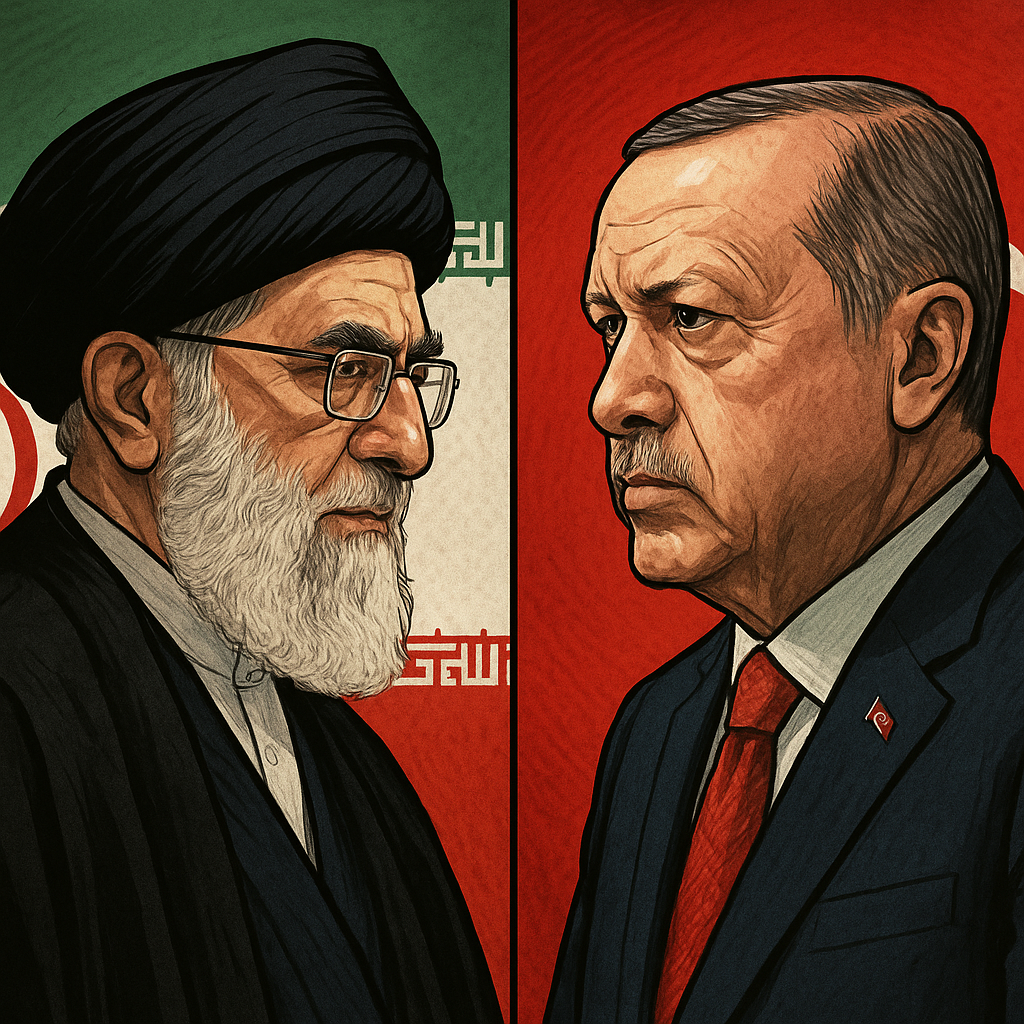
In the Middle East, two nations stand out for their political influence, distinct governance models, and bold foreign policies: Iran and Turkey. Both countries are regional powerhouses, rich in history, culture, and geopolitical importance. Yet their leadership structures couldn’t be more different, and those differences have a direct impact on how policies are made — from the economy and education to diplomacy and national security.

So how do these two systems function? And what can we learn by comparing their approaches to leadership and decision-making?


Iran: A Theocracy with Layers of Power

Iran’s political system is unique in the modern world — it combines republican elements (like elected officials) with deeply entrenched religious authority.

At the top of the hierarchy is the Supreme Leader, currently Ayatollah Ali Khamenei. He holds ultimate authority over all branches of government, the military, judiciary, media, and even foreign policy. Beneath him are:

  • The President, elected by the people every four years
  • The Guardian Council, which vets candidates and can veto laws
  • The Parliament (Majlis), which passes legislation
  • And the Assembly of Experts, which technically oversees the Supreme Leader — though in practice, this oversight is limited

What does this mean for policy? In Iran, no major decision bypasses religious oversight. Even if the elected president wants to pursue reforms — say, economic liberalization or improved Western relations — those efforts can be blocked or undone by unelected clerics.

This centralized, theocratic system ensures ideological consistency, but it also leads to friction between reformist and conservative factions. As a result, policies are often cautious, reactive, and shaped more by internal political balance than public demand.


Turkey: A Presidential Republic with Expanding Executive Power

Turkey, by contrast, is a secular republic — but one that has evolved dramatically in recent years under the leadership of President Recep Tayyip Erdoğan.

Historically, Turkey operated under a parliamentary system, with a prime minister serving as head of government. That changed in 2017, when a national referendum approved a shift to a presidential system. Now, the president is both head of state and government, with broad control over the cabinet, appointments, and the national budget.

Key players include:

  • The President, directly elected and extremely powerful
  • The Grand National Assembly, which passes laws but has limited power over the executive
  • The Judiciary, which is technically independent but often criticized for lacking autonomy under Erdoğan’s rule

This system has enabled fast and centralized decision-making, especially in areas like infrastructure development, military action, and regional diplomacy. But it’s also drawn criticism for weakening democratic checks and balances, silencing dissent, and shrinking media freedom.

Unlike Iran’s clerical dominance, Turkey’s leadership is driven by political ideology, nationalism, and increasingly personalist rule.


Policy in Practice: Where Structure Meets Strategy

To understand how these different systems affect real-world decisions, consider three key areas:


1. Foreign Policy

Iran’s foreign policy is heavily influenced by its religious identity and strategic priorities. The Supreme Leader sets the tone — often one of resistance to Western influence, strong ties with non-Western allies (like Russia and China), and support for regional proxies like Hezbollah.

Turkey, on the other hand, adopts a more pragmatic, transactional approach. Erdoğan’s policies often shift to suit short-term goals: negotiating with Russia and NATO simultaneously, balancing relations with the EU, and acting assertively in Syria and Libya.

In short: Iran’s foreign policy is doctrinal; Turkey’s is strategic.


2. Economic Strategy

Iran’s economy is heavily sanctioned, and its leaders often rely on self-sufficiency rhetoric. Policy shifts are slow, partly due to religious constraints and internal political tug-of-war.

Turkey faces no such religious oversight. It has adopted bold economic experiments, from rapid infrastructure expansion to unorthodox monetary policies (like Erdoğan’s preference for low interest rates despite high inflation). While these policies are risky, they also reflect the agility and dominance of the executive branch.

Iran’s policies are shaped by ideology and isolation. Turkey’s are shaped by ambition and central control.


3. Public Freedoms and Governance

In Iran, press freedom and civil liberties are restricted, particularly when it comes to criticizing religious authority. Elections are held, but candidates are pre-screened by religious bodies.

In Turkey, the space for opposition has shrunk, especially after the 2016 coup attempt. Erdoğan’s government has jailed journalists, purged civil servants, and used emergency powers to consolidate control. While technically a democracy, Turkey increasingly resembles a managed or illiberal democracy.

Both countries struggle with dissent — but for different reasons and under different banners.


Two Models, One Region

Both Iran and Turkey use centralized leadership to navigate regional instability and internal pressure. But while Iran’s system is built on religious legitimacy, Turkey’s power structure has evolved toward strongman politics under an executive presidency.

The impact on policy is clear:

  • Iran moves cautiously, with deep ideological roots guiding every step
  • Turkey moves fast, often reshaping policies to fit short-term goals or Erdoğan’s vision

Neither model is without flaws. But both demonstrate how leadership structure directly influences how a country governs, reforms, and engages with the world.


Final Thoughts

In an age of global crises — from economic shocks to regional conflict — leadership matters. And how leaders rise, rule, and respond is shaped not just by their personalities, but by the systems that empower them.

Whether it’s Iran’s religious hierarchy or Turkey’s presidential concentration of power, understanding these structures is key to understanding why these nations act the way they do — and where they might be heading next.


Author:
Remedy Talks Editorial Team
Analyzing global leadership, one structure at a time.