
Posted on Leave a comment

Trump’s Iran Strike: The End of Diplomacy in the Middle East?

Donald Trump’s military strikes on Iran mark a dangerous shift in U.S. foreign policy. As diplomacy collapses, tensions soar across the Middle East. What happens next?


Trump’s Iran Strike and the Collapse of Diplomacy in the Middle East

Keywords: Trump Iran strike, US-Iran conflict, Middle East tensions, nuclear diplomacy, Iran nuclear sites, UN Charter violation


🔥 A New War in the Middle East?

Despite repeated claims that he would avoid new wars, former U.S. President Donald Trump authorized a military strike on Iran’s nuclear facilities, dragging the United States into a direct confrontation with Iran—alongside Israel.

Targeting Fordow, Natanz, and Isfahan, the joint U.S.-Israeli operation marks a violation of the UN Charter and plunges the Middle East into dangerous new territory.


⚠️ A Historic First: Nuclear States Attack an NPT Member

This is the first time two nuclear-armed states have attacked a non-nuclear NPT member (Iran). Though diplomacy appeared to be in play days before the attack, the airstrikes exposed those talks as a strategic deception.

Trump claimed a decision was “two weeks away,” but his true intent was revealed through his coordinated actions with Israeli forces. In a televised address, he called the strikes a “spectacular success”, boasting that Iran’s nuclear capabilities were “completely obliterated.”


🇮🇷 Iran Responds: Caution, Not Capitulation

Iran’s Foreign Minister Abbas Araghchi condemned the strike, calling it a flagrant violation of international law. While Iran has vowed to continue its nuclear program, it is expected to halt cooperation with the International Atomic Energy Agency (IAEA) and has demanded an emergency UN Security Council meeting.

The UN Secretary-General António Guterres warned that the conflict risks spinning out of control and poses a direct threat to global peace.


⚔️ Strategic Calculations: Will Iran Retaliate?

So far, Iranian officials report limited damage and no civilian casualties, and much of their nuclear material was reportedly moved in advance. Rather than escalating the conflict, Iran may opt for diplomatic and non-kinetic responses, such as:

  • Closing the Strait of Hormuz (triggering global oil price spikes)
  • Cyber or proxy responses
  • International legal action

However, any retaliatory step could provoke further U.S. strikes, something Iran’s leadership seems keen to avoid—at least for now.


🎲 Trump’s Gamble: A Repeat of Iraq?

This is a high-risk foreign policy move for Trump. With no clear exit strategy, the U.S. could face a repeat of the Iraq war quagmire—a scenario involving endless conflict and rising global opposition.

Trump has signaled he will escalate unless Iran fully surrenders its nuclear program—a condition Tehran has firmly rejected.


💣 Diplomacy Betrayed

Perhaps the biggest casualty in this entire crisis is faith in diplomacy.

Despite engaging Iran in negotiations mediated by Oman and the EU, Trump was simultaneously planning and coordinating military operations with Israel. He later admitted to working with Israeli PM Benjamin Netanyahu in an “unmatched partnership.”

Iran’s Foreign Minister bluntly stated:

“Last week, we were in negotiations with the U.S. when Israel decided to blow up that diplomacy. This week, we held talks with the EU when the U.S. decided to blow up that diplomacy.”


🚨 What Happens Next?

If Iran emerges from this crisis intact, it may very well pursue nuclear weapons capabilities—not out of aggression, but survival. This would mark a historic failure of American and Israeli strategy and could trigger a nuclear arms race in the region.


📌 Conclusion: A Turning Point in U.S. Foreign Policy?

Trump’s actions have not only destabilized the Middle East but also eroded global trust in U.S.-led diplomacy. As tensions soar, and alliances fracture, the question remains: Can peace ever return to the region—or has the world entered a new era of nuclear brinkmanship?

Posted on Leave a comment

Between Ceasefire and Censorship: What Pakistan’s Media Must Learn from the India Crisis

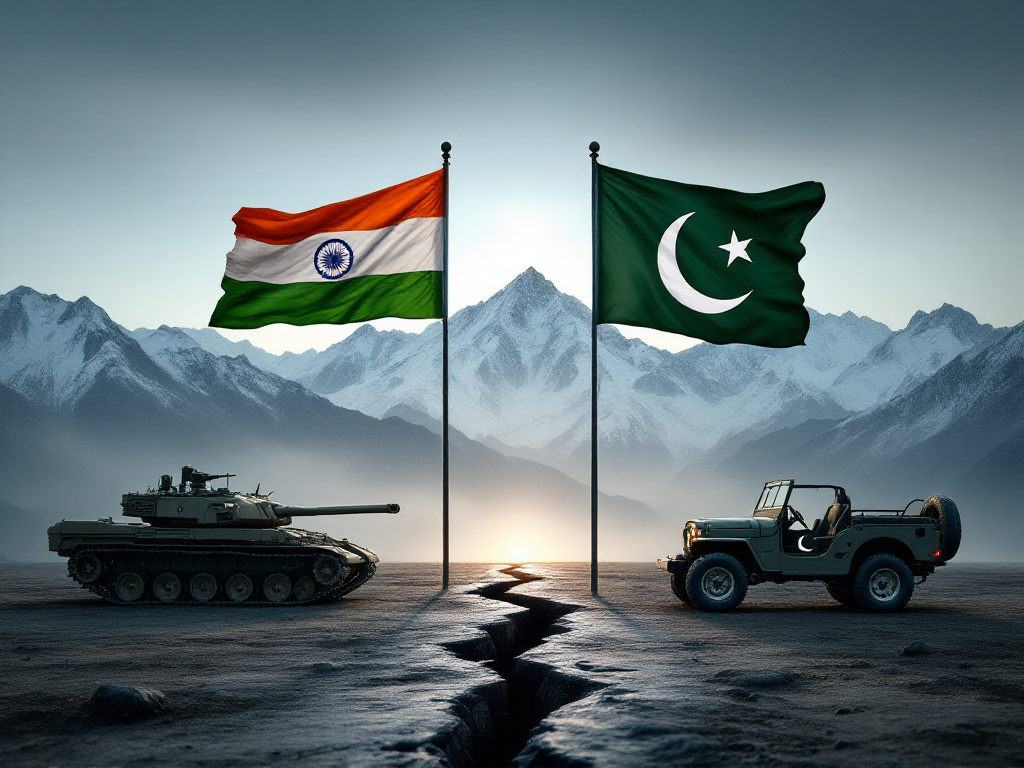
The recent ceasefire agreement between India and Pakistan is a welcome pause in a long and painful pattern of hostilities. While the guns have quieted along the Line of Control, what lingers behind is a deeper, more nuanced battlefield—one shaped by words, perceptions, and information. The role of the media during such times isn’t just to relay bulletins or report from frontlines; it is also to interrogate, reflect, and challenge the narratives we are too quick to accept.

In the brief but intense period of conflict, Pakistan’s media largely earned praise for its measured tone and responsible conduct. Compared to the bombast coming from across the border, local coverage felt grounded. Government officials, ministers, and commentators lauded this maturity. Yet ironically, this very praise raises a red flag.

In classic journalistic tradition, government approval is not typically a badge of honor. When officials cheer the media’s performance, it becomes necessary to ask: was the media simply doing its job—or was it playing along?

The Problem with Approval

In democratic systems, the independence of the press is not just a principle, it is a practical necessity. For the press to act as a counterweight to state narratives, a certain tension must exist. Approval suggests alignment, and alignment, in times of conflict, blurs the essential distinction between state communication and journalistic inquiry.

During this conflict, Indian media took an aggressive, jingoistic stance—amplifying nationalistic sentiment, reporting unverified attacks, and fueling public appetite for confrontation. In contrast, Pakistan’s press was comparatively subdued and careful. But here’s where nuance is needed: restraint is not the same as depth, and silence is not always strategic.

This is where the Pakistani media, despite its composure, may have faltered. There was little critical interrogation, even less diversity of opinion, and almost no engagement with alternative perspectives, especially from across the border. The result was a singular, predictable stream of commentary—calm, yes, but also limited.

Learning from the Other Side

Ironically, a richer diversity of perspectives emerged from India, not through its mainstream “godi media,” but from independent journalists and platforms. Karan Thapar, for example, conducted a remarkable series of interviews featuring voices both Indian and Pakistani. These discussions went beyond blame and noise. They dove into history, policy, military capability, and public perception. And they allowed viewers in both countries to consider the complexity of their neighbor’s position.

The fact that these interviews were well-received in Pakistan speaks volumes. It shows a public appetite for informed debate, even if it challenges national narratives. More importantly, it reveals a gap in our own media landscape. Where is the Pakistani equivalent of The Wire or Scroll.in—outlets that, even under pressure, create space for dissent and rigorous debate?

Our reluctance to broadcast or even host counter-views, especially during tense times, weakens our claim to maturity. A truly confident media doesn’t shy away from dissent; it embraces it, knowing that constructive criticism is a pillar of progress, not a threat to national security.

The Crisis of Platforms

Another dimension to this issue is the shrinking space for free expression online. The ban on X (formerly Twitter) in Pakistan, which persisted for over a year, was not just a technical blockade—it was a symbolic one. It signaled that control of the narrative is valued more than open discussion. Only when external pressure mounted did the government reconsider. And even now, public trust remains low, with users half-expecting another sudden blackout.

This inconsistency damages not only domestic dialogue but also our international credibility. In a global information war—especially one as sensitive as Indo-Pak relations—credibility is currency. Foreign analysts, diplomats, and media houses do not rely on official statements alone. They look for independent media signals to understand the internal discourse of a country. A landscape devoid of these signals suggests suppression, not stability.

The Illusion of Stability

It’s tempting to interpret this recent ceasefire as a turning point. But peace, if it’s to last, must be built on more than military restraint. It requires a cultural shift in how we engage with conflict, dissent, and the role of the press.

If journalists are to be more than mouthpieces, they need the freedom to ask uncomfortable questions. They need platforms that allow them to speak truth to power. And they need an audience willing to listen, even when it’s not easy.

In the past, private gatherings of retired ambassadors and defence analysts were where ideas circulated—terms like S-400 and PL-15 were debated, and strategic thinking evolved quietly behind the scenes. Now, the world is watching us in real time. The war of ideas is as public as any other battlefield. And in this space, state-sanctioned praise is no substitute for hard-earned trust.

The Way Forward

This ceasefire should serve as more than a breather from conflict. It must also be a mirror—reflecting both the strengths and shortcomings of our information systems.

Pakistan’s media, for all its recent composure, must ask hard questions. Can we foster independent platforms that explore the broader regional implications of conflict? Can we create space for dissenting voices, including those from India, not to endorse them but to understand the conversation across the border? Can we maintain our credibility without needing a crisis to remind us of its value?

Because when the next flashpoint comes—and history suggests it will—the stories we tell, the voices we platform, and the truths we choose to pursue will shape not just public opinion, but international understanding.

Peace on the ground is fragile. But peace of the mind—shaped by honest media and open debate—is what endures.

And that kind of peace is worth investing in.

Posted on Leave a comment

🚨 Tensions Escalate: Israel Issues Evacuation Warnings for Yemeni Ports After Ceasefire Deal Excludes It

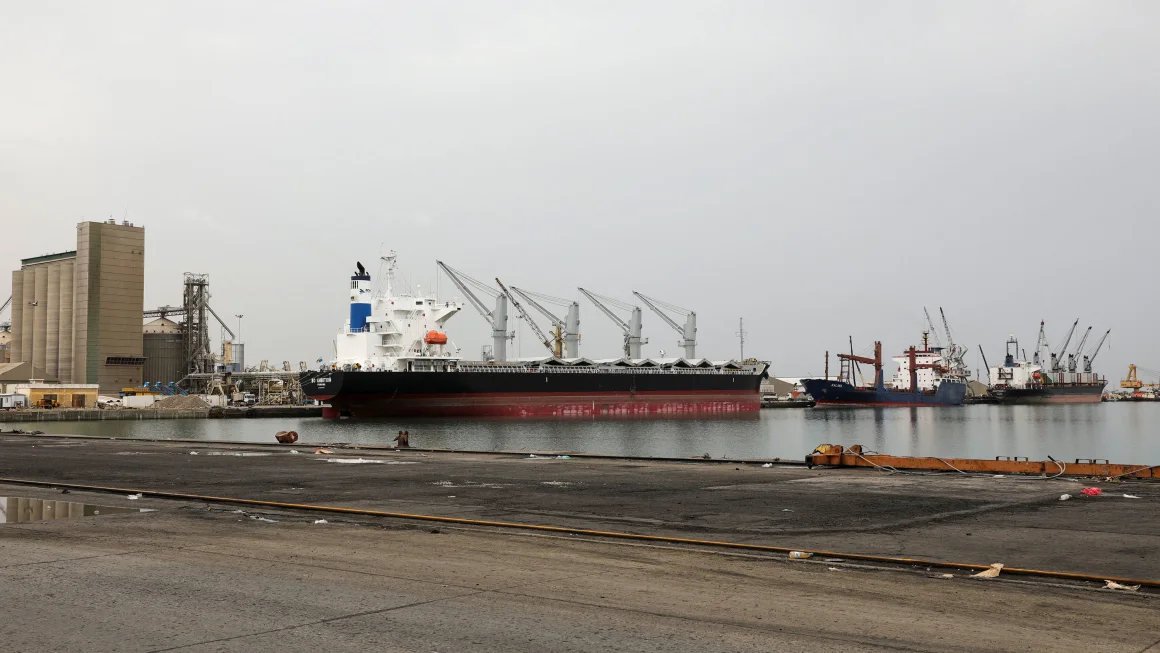
In a sharp escalation of Middle East tensions, the Israeli military has issued urgent evacuation warnings for three key ports in Yemen — Ras Isa, Hodeidah, and Salif — late Sunday night. The move follows Israel’s vow to act independently in defending itself after being excluded from a recent ceasefire agreement between the United States and Yemen’s Houthi rebels.

The warnings were broadcast via social media by IDF Arabic-language spokesperson Avichay Adraee, signaling potential Israeli airstrikes in Yemen in the coming hours.

🚀 Missile Attack Sparks Response

The evacuation notice comes just 48 hours after Israel intercepted a missile fired from Yemen — the first such attack since former U.S. President Donald Trump announced the US-Houthi ceasefire deal last week. The missile attack has been widely interpreted as a Houthi act of defiance and solidarity with Gaza, as the group continues to express support for Palestinians amid the ongoing Israel-Gaza conflict.

Despite the ceasefire, the Houthis declared they would not cease attacks against Israel, stating that their actions are in support of the Palestinian cause.

🛡️ Israel: “We Will Defend Ourselves Alone”

Reacting strongly to being left out of the agreement, Israeli Defense Minister Israel Katz made a bold statement last week:

“Israel must be able to defend itself by itself against any threat and any enemy. This has been true in the face of many past challenges, and it will remain true in the future.”

This is the second evacuation alert issued by the IDF within a week. Last Tuesday, Israel warned civilians to leave Sana’a International Airport, Yemen’s main airport, before launching airstrikes that reportedly disabled the airport’s functionality.

⚠️ Regional Instability on the Rise

The situation raises fresh concerns over the fragility of ceasefires in the Middle East, as well as the potential for a broader regional conflict. While the US-Houthi ceasefire was intended to de-escalate violence in Yemen, Israel’s exclusion from the deal and the Houthis’ continued aggression signal that peace in the region remains elusive.

International observers are watching closely as Israel weighs its next steps. With tensions high and military movements underway, the risk of a new front opening in the conflict is growing by the day.

📰 Stay tuned to RemedyTalks.com for continuous updates on the Israel-Yemen conflict, ceasefire developments, and real-time coverage of Middle East security issues.