Posted on Leave a comment

“Water Wars Begin? India’s Indus Treaty Suspension Puts 240 Million Lives at Risk”

India’s recent decision to suspend the Indus Waters Treaty (IWT) has ignited significant international concern, with Pakistan warning the United Nations that this move threatens the survival of over 240 million people and violates international law.

Background: The Indus Waters Treaty

The IWT, signed in 1960 and brokered by the World Bank, governs the distribution of water from the Indus River system between India and Pakistan. Under the treaty, India controls the eastern rivers (Beas, Ravi, and Sutlej), while Pakistan has rights over the western rivers (Indus, Chenab, and Jhelum). The treaty has been a cornerstone of water-sharing between the two nations for decades.(The Guardian, Wikipedia, Arab News)

Escalation Following the Pahalgam Attack

On April 22, 2025, a deadly attack in Indian-administered Kashmir resulted in the deaths of 26 individuals, primarily Hindu tourists. India attributed the attack to Pakistan-backed militants, a claim Islamabad denies. In response, India suspended the IWT, citing national security concerns. Prime Minister Narendra Modi declared that Pakistan would no longer receive water from rivers over which India holds rights, emphasizing that Pakistan would face severe consequences for supporting terrorism .(Reuters, Wikipedia)

Pakistan’s Appeal to the United Nations

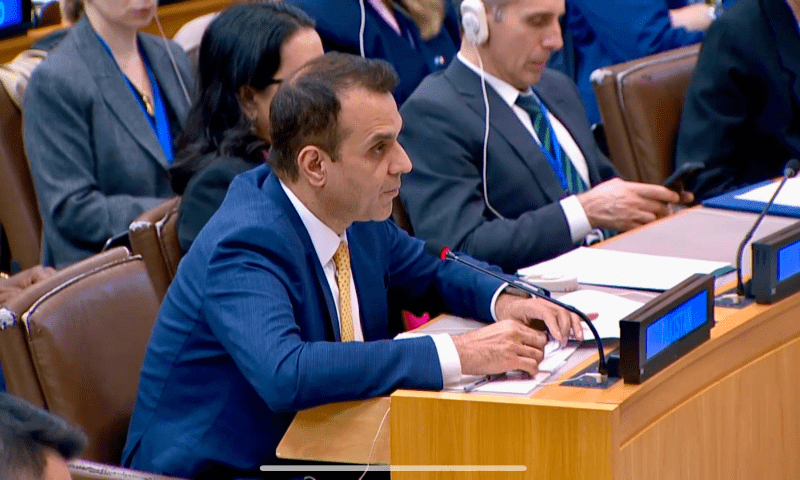
At a UN meeting on May 23, 2025, Pakistan’s Deputy Permanent Representative, Ambassador Usman Jadoon, condemned India’s unilateral suspension of the IWT. He described the move as a “dangerous escalation” and a “grave violation of international law,” including human rights and treaty laws. Ambassador Jadoon highlighted that India’s actions threaten the livelihoods of over 240 million Pakistanis who depend on the Indus River system .(Arab News, Dawn)

Legal and Humanitarian Implications

Pakistan emphasized that India’s suspension of the IWT contravenes international humanitarian law, which prohibits the use of water resources as a weapon in conflicts. Ambassador Jadoon urged the UN Security Council to monitor the situation closely and take preemptive action to prevent a humanitarian catastrophe. He also criticized statements from Indian leadership suggesting intentions to “starve the people of Pakistan,” describing such rhetoric as dangerous and perverse .(Arab News)

Global Reactions and Regional Stability

The international community has expressed concern over the potential for increased tensions between the nuclear-armed neighbors. Analysts warn that the suspension of the IWT could destabilize the region and set a precedent for the weaponization of water resources. The World Bank, which facilitated the original treaty, has yet to comment on the suspension.(Reuters, en.bd-pratidin.com)

Impact on Pakistan’s Agriculture and Economy

Pakistan’s agriculture sector heavily relies on the Indus River system, which supports 80% of the country’s agricultural activities. Any disruption in water flow could have devastating effects on food security and the economy. Farmers in Pakistan have expressed fears that India’s actions could lead to droughts or floods, further exacerbating the country’s challenges .(Reuters, The Guardian)

Conclusion

India’s suspension of the Indus Waters Treaty marks a significant escalation in Indo-Pakistani relations, with far-reaching implications for regional stability and humanitarian concerns. Pakistan’s appeal to the United Nations underscores the urgency of addressing this issue through diplomatic channels to prevent a potential crisis affecting millions.(Arab News)
Posted on Leave a comment

Between Ceasefire and Censorship: What Pakistan’s Media Must Learn from the India Crisis

The recent ceasefire agreement between India and Pakistan is a welcome pause in a long and painful pattern of hostilities. While the guns have quieted along the Line of Control, what lingers behind is a deeper, more nuanced battlefield—one shaped by words, perceptions, and information. The role of the media during such times isn’t just to relay bulletins or report from frontlines; it is also to interrogate, reflect, and challenge the narratives we are too quick to accept.

In the brief but intense period of conflict, Pakistan’s media largely earned praise for its measured tone and responsible conduct. Compared to the bombast coming from across the border, local coverage felt grounded. Government officials, ministers, and commentators lauded this maturity. Yet ironically, this very praise raises a red flag.

In classic journalistic tradition, government approval is not typically a badge of honor. When officials cheer the media’s performance, it becomes necessary to ask: was the media simply doing its job—or was it playing along?

The Problem with Approval

In democratic systems, the independence of the press is not just a principle, it is a practical necessity. For the press to act as a counterweight to state narratives, a certain tension must exist. Approval suggests alignment, and alignment, in times of conflict, blurs the essential distinction between state communication and journalistic inquiry.

During this conflict, Indian media took an aggressive, jingoistic stance—amplifying nationalistic sentiment, reporting unverified attacks, and fueling public appetite for confrontation. In contrast, Pakistan’s press was comparatively subdued and careful. But here’s where nuance is needed: restraint is not the same as depth, and silence is not always strategic.

This is where the Pakistani media, despite its composure, may have faltered. There was little critical interrogation, even less diversity of opinion, and almost no engagement with alternative perspectives, especially from across the border. The result was a singular, predictable stream of commentary—calm, yes, but also limited.

Learning from the Other Side

Ironically, a richer diversity of perspectives emerged from India, not through its mainstream “godi media,” but from independent journalists and platforms. Karan Thapar, for example, conducted a remarkable series of interviews featuring voices both Indian and Pakistani. These discussions went beyond blame and noise. They dove into history, policy, military capability, and public perception. And they allowed viewers in both countries to consider the complexity of their neighbor’s position.

The fact that these interviews were well-received in Pakistan speaks volumes. It shows a public appetite for informed debate, even if it challenges national narratives. More importantly, it reveals a gap in our own media landscape. Where is the Pakistani equivalent of The Wire or Scroll.in—outlets that, even under pressure, create space for dissent and rigorous debate?

Our reluctance to broadcast or even host counter-views, especially during tense times, weakens our claim to maturity. A truly confident media doesn’t shy away from dissent; it embraces it, knowing that constructive criticism is a pillar of progress, not a threat to national security.

The Crisis of Platforms

Another dimension to this issue is the shrinking space for free expression online. The ban on X (formerly Twitter) in Pakistan, which persisted for over a year, was not just a technical blockade—it was a symbolic one. It signaled that control of the narrative is valued more than open discussion. Only when external pressure mounted did the government reconsider. And even now, public trust remains low, with users half-expecting another sudden blackout.

This inconsistency damages not only domestic dialogue but also our international credibility. In a global information war—especially one as sensitive as Indo-Pak relations—credibility is currency. Foreign analysts, diplomats, and media houses do not rely on official statements alone. They look for independent media signals to understand the internal discourse of a country. A landscape devoid of these signals suggests suppression, not stability.

The Illusion of Stability

It’s tempting to interpret this recent ceasefire as a turning point. But peace, if it’s to last, must be built on more than military restraint. It requires a cultural shift in how we engage with conflict, dissent, and the role of the press.

If journalists are to be more than mouthpieces, they need the freedom to ask uncomfortable questions. They need platforms that allow them to speak truth to power. And they need an audience willing to listen, even when it’s not easy.

In the past, private gatherings of retired ambassadors and defence analysts were where ideas circulated—terms like S-400 and PL-15 were debated, and strategic thinking evolved quietly behind the scenes. Now, the world is watching us in real time. The war of ideas is as public as any other battlefield. And in this space, state-sanctioned praise is no substitute for hard-earned trust.

The Way Forward

This ceasefire should serve as more than a breather from conflict. It must also be a mirror—reflecting both the strengths and shortcomings of our information systems.

Pakistan’s media, for all its recent composure, must ask hard questions. Can we foster independent platforms that explore the broader regional implications of conflict? Can we create space for dissenting voices, including those from India, not to endorse them but to understand the conversation across the border? Can we maintain our credibility without needing a crisis to remind us of its value?

Because when the next flashpoint comes—and history suggests it will—the stories we tell, the voices we platform, and the truths we choose to pursue will shape not just public opinion, but international understanding.

Peace on the ground is fragile. But peace of the mind—shaped by honest media and open debate—is what endures.

And that kind of peace is worth investing in.

Posted on Leave a comment

Pakistan-India Standoff: Strategic Deterrence, Diplomatic Fallout, and the Battle for Global Perception


In the recent military standoff between India and Pakistan, the region was once again on the brink of a full-blown war. While New Delhi sought to reshape the strategic landscape in its favor, Islamabad’s measured yet forceful kinetic response not only thwarted India’s escalation plans but also re-established Pakistan’s conventional deterrence as a credible force under the nuclear overhang. The standoff sent a clear message: Pakistan will respond decisively if provoked, and the costs for India could outweigh the gains in any future conflict.

Conventional Deterrence vs. Escalation: A Strategic Reset

Pakistan’s military response is seen by many defense analysts as a successful check on India’s attempt to broaden the spectrum of conventional war under the assumption of nuclear deterrence. According to reports, the loss of multiple Rafale aircraft by India and Pakistan’s demonstrated ability to target strategic sites across the Indian mainland forced a recalibration of India’s aggressive posture. Islamabad’s show of force effectively neutralized India’s bid for a “limited war” doctrine, a concept that has increasingly dominated Indian military thinking in recent years.

New Delhi’s assumption that it could carry out precision strikes under the umbrella of nuclear deterrence without triggering broader consequences backfired. In reality, India’s military objectives were left unachieved, its strategic calculations misfired, and its international credibility suffered.

Modi’s “New Normal” Falls Apart

Indian Prime Minister Narendra Modi’s rhetoric about having destroyed “terrorist infrastructure” in Pakistan proved hollow when contrasted with ground realities. Despite bold claims, India failed to create any tangible shift in its favor. In fact, the assertion of setting a new military norm was met with harsh realities that India could not ignore. Rather than establishing a precedent for future military responses to cross-border terror attacks, New Delhi found itself boxed in, wary of an even more punishing reprisal from Pakistan if it attempted a similar strategy again.

Pakistan, by reaffirming its conventional strength and political will, has effectively reshaped the regional security equation, turning India’s so-called “new normal” into a strategic liability.

A Fragile Ceasefire and the Risk of Miscalculation

Today, the situation remains precarious. A tenuous ceasefire agreement is in place, but the broader diplomatic framework between the two nuclear neighbors remains broken. The Directors General of Military Operations (DGMOs) continue to engage at a technical level, but meaningful political dialogue remains absent.

This lack of sustained communication increases the risk of future miscalculations, especially in a crisis-prone environment where even a minor incident could spiral into another major military confrontation. Modi’s declaration that India had “only suspended” military operations adds to the uncertainty, suggesting that the door to renewed escalation remains open.

Diplomatic Damage: India’s Global Standing Takes a Hit

Perhaps the most significant fallout of this crisis was diplomatic. India’s militaristic approach alienated several key global players and shifted international attention away from terrorism to the risks of nuclear war in South Asia. What was intended to be a show of strength instead revealed strategic recklessness. The international community began to question the wisdom of New Delhi’s aggressive policies, and for the first time in years, Kashmir returned to the global agenda.

In a particularly stinging development for India, former U.S. President Donald Trump offered to mediate the Kashmir conflict, a move that India publicly rejected but one that effectively re-hyphenated India and Pakistan in the eyes of the global community—something Indian diplomacy had long tried to avoid. Read more on Trump’s Kashmir mediation

India’s decision to suspend the Indus Waters Treaty also backfired. Even U.S. officials, in private communications, reportedly urged India to maintain its obligations under the treaty. Learn more about the Indus Waters Treaty and its history

US Intervention and China’s Strategic Alignment with Pakistan

The Trump administration played a decisive role in diffusing tensions, with Secretary of State Marco Rubio and Vice President J.D. Vance engaging both sides to urge de-escalation. Multiple diplomatic calls and backchannel efforts culminated in Trump announcing the ceasefire—an announcement India conspicuously ignored, refusing to publicly acknowledge the American role in ending the standoff.

In stark contrast, Pakistan and China maintained robust coordination throughout the crisis. Intelligence sharing, strategic alignment, and diplomatic synergy between the two countries strengthened their position while exposing the strategic isolation of India on the global stage.

Domestic Reactions: A Tale of Two Nations

Domestically, the political consequences of the conflict were equally revealing. In India, Modi’s Operation Sindoor drew criticism from opposition parties and even from within his traditional base. The right-wing was disillusioned by the decision to agree to a ceasefire, while the opposition painted the operation as a strategic failure.

In Pakistan, however, the narrative was starkly different. There was a surge of national unity, a renewal of confidence in the military, and widespread public approval of the government’s handling of the crisis. The military’s image soared, and the political leadership benefited from the perception of strength and success in repelling Indian aggression.

The Road Ahead: Uncertainty and Unfinished Business

While some confidence-building measures are underway, and the ceasefire is holding, long-term peace between India and Pakistan remains elusive. Both countries have emerged from the crisis with diametrically opposed interpretations. India believes it set a precedent, while Pakistan is convinced it neutralized that precedent entirely.

Without a meaningful diplomatic roadmap, these conflicting narratives only heighten the risk of future escalations. Any new incident—be it cross-border firing, a terrorist attack, or misinformation—could ignite another confrontation. With nuclear weapons in play, the margin for error is razor-thin.


Final Thoughts

The recent Pakistan-India military crisis underscores the fragility of peace in South Asia. It has shattered the illusion that conventional strikes can occur under a nuclear umbrella without grave consequences. The geopolitical fallout, domestic repercussions, and diplomatic aftershocks show that military adventurism comes with heavy costs.

For long-term stability, sustained dialogue, mutual recognition of red lines, and international engagement are essential. Otherwise, the region will remain one misstep away from disaster.


Posted on Leave a comment

“Nuclear Brinkmanship Exposed: The Untold Story Behind Trump’s Ceasefire Deal”

In May 2025, South Asia witnessed a rapid escalation of tensions between India and Pakistan, culminating in a brief but intense military confrontation. The conflict, rooted in longstanding disputes and recent provocations, has sparked divergent narratives from both nations, each claiming moral and strategic superiority.

Genesis of the Conflict: The Pahalgam Attack

The immediate trigger for the confrontation was a terrorist attack on April 22 in Pahalgam, Indian-administered Kashmir, resulting in the deaths of 26 civilians, predominantly Hindu tourists. India attributed the attack to Pakistan-based militant groups, specifically Lashkar-e-Taiba, alleging state sponsorship from Islamabad. Pakistan, however, denied any involvement, labeling the accusations as baseless. (Wikipedia, The Guardian)

India’s Response: Operation Sindoor

In retaliation, India launched “Operation Sindoor” on May 7, targeting what it described as terrorist infrastructure within Pakistan. The operation involved missile strikes aimed at dismantling militant camps, with India asserting that no Pakistani military facilities were targeted. (www.ndtv.com, Wikipedia)

Prime Minister Narendra Modi, in a national address, emphasized India’s resolve against terrorism, stating that the country would not tolerate “nuclear blackmail” and that any future dialogue with Pakistan would focus solely on terrorism and Pakistan-occupied Kashmir. (Indiatimes)

Pakistan’s Counter-Narrative: Operation Bunyan-e-Marsous

Pakistan responded with its own military operation, “Operation Bunyan-e-Marsous,” claiming to have successfully repelled Indian aggression. According to Pakistani sources, their forces conducted precision strikes on Indian air bases and executed significant cyberattacks, which they described as the largest in history. Pakistan’s leadership portrayed this as a decisive victory, asserting that India was forced to seek a ceasefire. (Daily Times)

Deputy Prime Minister and Foreign Minister Ishaq Dar led a diplomatic offensive to present Pakistan’s case internationally. However, Dar faced criticism for citing a fabricated article purportedly from a UK newspaper praising the Pakistani Air Force, which was later debunked by local media and fact-checkers. (Daily Times, www.ndtv.com)

Ceasefire and International Mediation

Amid escalating hostilities, a ceasefire was brokered on May 10, reportedly facilitated by U.S. President Donald Trump. While both nations agreed to halt military actions, the underlying tensions remained unresolved. Analysts suggest that the ceasefire was more a pause than a resolution, with both sides preparing for potential future confrontations. (Financial Times, www.ndtv.com)

Dueling Narratives and the Battle for Perception

The conflict has underscored the importance of narrative in modern warfare. India emphasized its stance against terrorism and portrayed its actions as measured responses to provocations. Conversely, Pakistan framed its response as a defense of sovereignty and a demonstration of military prowess.

Media outlets and political leaders in both countries have reinforced these narratives, aiming to shape domestic and international perceptions. The dissemination of unverified or fabricated information, such as the debunked UK newspaper article, highlights the challenges in discerning truth amid propaganda.

Conclusion: A Fragile Peace and Ongoing Tensions

The May 2025 conflict between India and Pakistan serves as a stark reminder of the volatility in South Asia. While open hostilities have ceased, the underlying issues—territorial disputes, accusations of state-sponsored terrorism, and competing national narratives—persist. The international community’s role in mediating and encouraging dialogue remains crucial to preventing future escalations.(The Guardian)

Posted on Leave a comment

 “Digital Patriotism or Digital Censorship? India’s War on Pakistani Flags”

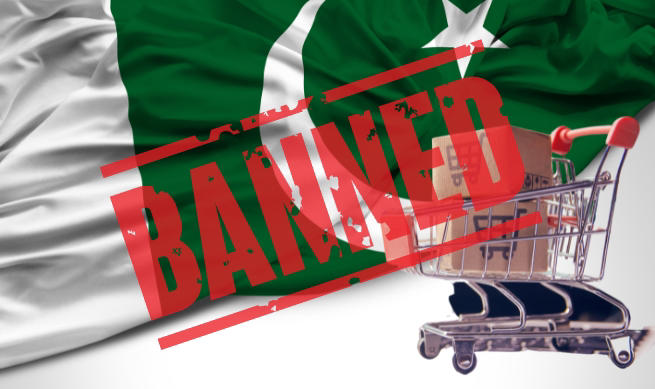
In a decisive move reflecting heightened national sentiment, the Indian government has issued formal notices to major e-commerce platforms, including Amazon India, Flipkart, Ubuy India, Etsy, The Flag Company, and The Flag Corporation, demanding the immediate removal of Pakistani flags and related merchandise from their platforms. This action, spearheaded by the Central Consumer Protection Authority (CCPA), underscores the government’s commitment to upholding national sensitivities and legal compliance in the digital marketplace.(@EconomicTimes, The Times of India)

Background: Operation Sindoor and National Sentiment

The crackdown follows the launch of “Operation Sindoor,” India’s retaliatory military operation targeting terror camps in Pakistan and Pakistan-occupied Kashmir. The operation was initiated in response to the April 22 Pahalgam terror attack, which claimed the lives of 26 civilians. In the wake of these events, national sentiment has surged, prompting authorities to scrutinize and regulate content perceived as insensitive or contrary to national interests.(Free Press Journal, NewsX World)

Government’s Stance and Directives

Union Minister of Consumer Affairs, Pralhad Joshi, took to social media to announce the issuance of notices, stating, “Such insensitivity will not be tolerated.” The CCPA has directed the aforementioned e-commerce platforms to:(Free Press Journal, Hindustan Times)

  • Immediately remove listings of Pakistani flags and related merchandise.(Business Standard)
  • Ensure strict adherence to Indian laws and regulations concerning the sale of national symbols.(Free Press Journal)

The government emphasized that the sale of such items not only violates national sentiment but also poses potential risks to national unity and security.(Business Standard)

E-Commerce Platforms’ Response

In response to the notices, Amazon India clarified that it operates as an online marketplace where independent third-party sellers offer products. The company stated that it relies on these sellers to comply with Indian laws and that non-compliant listings are removed upon notification from relevant authorities. Similarly, other platforms are expected to take corrective measures to align with the government’s directives.(Profit by Pakistan Today, Storyboard18)

Role of Trade Bodies and Public Sentiment

The Confederation of All India Traders (CAIT) played a pivotal role in bringing this issue to the government’s attention. In a formal letter to Union Ministers, CAIT highlighted concerns over the availability of Pakistani flags and related merchandise on Indian e-commerce platforms, describing it as a “grave matter that risks undermining national unity.” The traders’ body urged the government to impose an immediate ban on the sale of such items, reflecting the broader public sentiment against the promotion of foreign national symbols during times of heightened geopolitical tensions.(The Times of India, @EconomicTimes)

Implications for E-Commerce and National Policy

This development signals a broader shift in India’s approach to regulating digital marketplaces, especially concerning content that intersects with national identity and security. E-commerce platforms are now under increased scrutiny to ensure that their listings do not contravene national laws or sentiments. The incident also underscores the importance of proactive content monitoring and compliance mechanisms within these platforms to prevent similar issues in the future.(NewsX World)

Conclusion

The Indian government’s action against the online sale of Pakistani flags serves as a stark reminder of the delicate balance between commerce and national sentiment. As digital marketplaces continue to expand, the onus is on e-commerce platforms to navigate this landscape responsibly, ensuring that their operations align with the legal and cultural frameworks of the regions they serve. This incident not only highlights the need for stringent compliance measures but also reflects the broader national mood in times of geopolitical strain.

Posted on Leave a comment

“100 Killed, No Proof: Was Operation Sindoor Just a Propaganda Victory?”

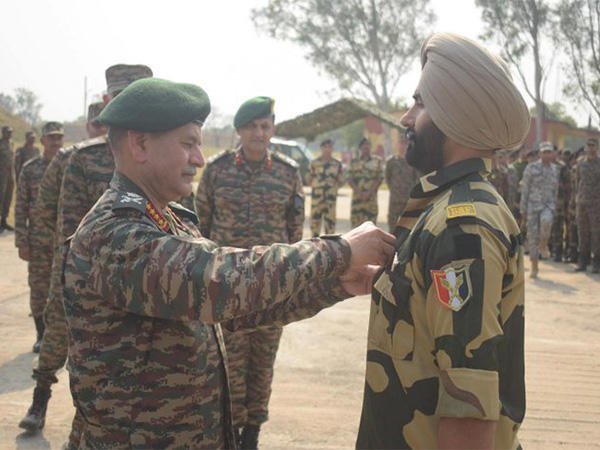
On May 15, 2025, Chief of Army Staff General Upendra Dwivedi honored Constable Harvinder Singh of the Border Security Force (BSF) Jammu with a Commendation Disc for his exceptional diligence during the preparation phase of Operation Sindoor. (SAMBA TIMES)

Operation Sindoor, launched on May 7, 2025, was a decisive military response to the April 22 Pahalgam terror attack, which claimed 26 lives. The operation targeted terrorist infrastructure across Pakistan and Pakistan-occupied Jammu and Kashmir, resulting in the elimination of over 100 terrorists affiliated with groups like Jaish-e-Mohammed, Lashkar-e-Taiba, and Hizbul Mujahideen. (Northeast Live, SAMBA TIMES)

During his visit to forward locations in Baramulla on May 16, General Dwivedi also awarded a Commendation Disc to Head Constable (General Duty) Rantana Ram of the 185 Battalion BSF for his gallant action during the operation. He commended the joint efforts of the Army and BSF personnel for their valor and vigilant actions in dominating the Line of Control (LoC) during Operation Sindoor. (SAMBA TIMES, Northeast Live)

These commendations underscore the critical role of BSF personnel in India’s defense strategy and highlight the successful coordination between the Indian Army and BSF in counter-terrorism operations.(SAMBA TIMES).

Posted on Leave a comment

Peace with Dignity: A Turning Point in South Asia

In a world already burdened with global conflicts and uncertainty, the recent India-Pakistan ceasefire has brought a much-needed pause to escalating military tensions. The standoff, marked by missile strikes and high-alert defence postures, had the region bracing for another crisis. But thanks to a timely US-mediated truce, the situation has cooled — at least for now.

This development, described as “Peace with Dignity,” isn’t just another truce. It signals the possibility of real peace talks in South Asia, a region long plagued by hostility, nationalism, and unresolved disputes.

The Build-Up: India Pakistan Border Tensions

Over the past several weeks, India Pakistan border tensions reached a dangerous peak. Indian forces reportedly launched missile strikes on non-military targets within Pakistan. In retaliation, the Pakistan Air Force response was swift and strategic — hitting military sites across the border with precision.

These actions had analysts deeply worried about another full-scale war between the two nuclear-armed nations.

Military Showdown: J-10C vs Rafale

One of the most notable moments during this escalation was the performance comparison of J-10C vs Rafale fighter jets. The Pakistan Air Force response featured the Chinese-supplied J-10C, a cost-effective and technologically capable aircraft. Surprisingly, it matched up well against India’s more expensive French-made Rafale jets, proving that strategic use of airpower matters more than just budget.

This added a new layer of analysis in global defense discussions, with many rethinking how cost-efficient air dominance can impact warfare.

Diplomatic Breakthrough: US-Mediated Truce

At the peak of rising tension, global powers stepped in. The US-mediated truce, initiated by President Donald Trump with support from Secretary of State Marco Rubio, helped calm the situation. Through back-channel diplomacy and direct talks with both Prime Ministers, the U.S. helped orchestrate an agreement for an immediate ceasefire.

Key points of the truce include:

  • Full and immediate ceasefire
  • Dialogue between India and Pakistan at a neutral location
  • A mutual agreement to avoid further escalation

This development renewed hope in international diplomacy and the ability of powerful mediators to prevent conflict.

Why This Ceasefire Is Different

What sets this India-Pakistan ceasefire apart is its tone and timing. Unlike previous shaky truces, this one opens the door to actual negotiations. Both sides have agreed to engage in peace talks in South Asia to address key issues — including Kashmir, terrorism, water disputes, and border management.

This may be the first meaningful attempt at establishing long-term peace, and possibly normalizing relations between the two arch-rivals.

The Media’s Role and Global Support

Balanced reporting and pressure from the international community — including China, the UK, and the UN — helped steer the conversation away from war and toward dialogue. Responsible media coverage played a vital role in calming panic and encouraging both sides to de-escalate.

Can This Truce Withstand the Test of Time?

Challenges remain. For this ceasefire to evolve into permanent peace:

  • Political leadership must resist populist war rhetoric
  • Future incidents (especially in Kashmir) must be handled through diplomacy
  • Both nations must avoid military posturing in the media

The threat of renewed violence or provocation lingers. However, if both sides stay committed to progress, they can avoid reigniting India Pakistan border tensions.

For the People: What This Means

For millions of people on both sides of the border — especially in Kashmir and border regions — this truce offers more than political victory. It means:

  • Relief from daily fear
  • Continued access to education, healthcare, and markets
  • A chance at cross-border connectivity in the future

Avoiding war means preserving lives, families, and futures. And that’s where the true value of this India-Pakistan ceasefire lies

A New Hope: Peace with Dignity

Peace with Dignity is not just a symbolic phrase — it’s a real opportunity. If sustained, this ceasefire could mark a long-awaited shift from military confrontation to constructive diplomacy.

For long-term peace to become reality, regional leaders must stay committed, media must be responsible, and international allies must support honest dialogue.

The nuclear threat in South Asia is real. But so is the hope for peace — if we nurture it.

Posted on Leave a comment

BSF Sub-Inspector Md Imteyaz Killed in Cross-Border Firing in Jammu

On May 10, 2025, Sub-Inspector Md Imteyaz of the Border Security Force (BSF) was killed during cross-border firing by Pakistani forces in the RS Pura sector of Jammu. Seven other BSF personnel were injured in the incident. Imteyaz was leading his unit from the front when the firing occurred. (Hindustan Times, www.ndtv.com, mint)

The BSF paid tribute to Imteyaz, stating, “We salute the supreme sacrifice made by BSF braveheart Sub-Inspector Md Imteyaz in service of the nation on May 10, 2025, during cross-border firing along the International Boundary in RS Pura area, District Jammu.” A wreath-laying ceremony with full honors was scheduled at the BSF’s Jammu frontier headquarters in Paloura on May 11. (www.ndtv.com, OrissaPOST)

The incident occurred just hours after India and Pakistan agreed to a ceasefire, effective from 5 PM IST on May 10. However, the ceasefire was violated shortly after its implementation, leading to multiple casualties among Indian security forces, including Imteyaz. (mint)

India’s Foreign Secretary Vikram Misri condemned the violations, stating that the Indian Armed Forces have been instructed to respond strongly to any further breaches along the border. (The Economic Times)

The loss of Sub-Inspector Md Imteyaz underscores the fragile nature of the ceasefire and the ongoing tensions along the India-Pakistan border.

Posted on Leave a comment

Pakistan Downs 77 Indian Drones Amid Escalating Border Tensions

In a significant escalation of hostilities, Pakistan’s military has reported the downing of 77 Indian drones over a two-day period, marking a notable intensification in the ongoing conflict between the two nuclear-armed neighbors.

Unprecedented Drone Activity

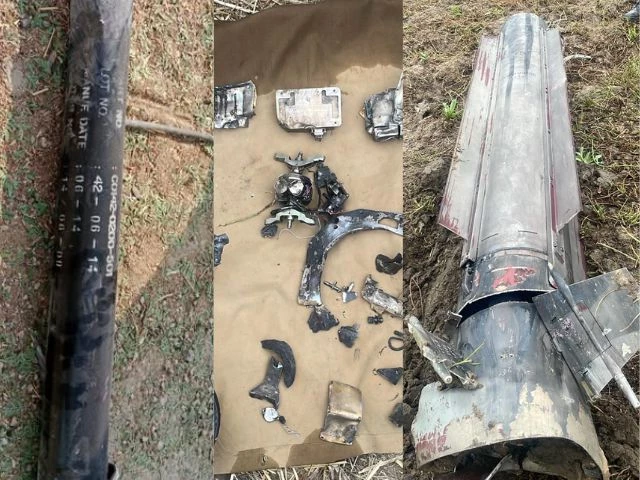
According to Pakistani security sources, the drones, identified as Israeli-made Harop loitering munitions, were intercepted between May 6 and May 8, with 29 drones shot down by the evening of May 8 and an additional 48 neutralized overnight into May 9 . These drones were reportedly targeting both civilian and military sites across various regions, including Vehari, Pakpattan, and Okara .(The Express Tribune, Daily Times)

Rising Civilian Casualties

The intensified drone activity has coincided with increased artillery exchanges along the Line of Control (LoC), leading to civilian casualties on both sides. Reports indicate that at least five civilians have been killed and seven others injured in Pakistan-administered Kashmir due to unprovoked Indian shelling on residential areas .(The Express Tribune)

Broader Context of Escalation

The recent surge in hostilities follows India’s launch of “Operation Sindoor,” a series of missile strikes targeting alleged terrorist infrastructure in Pakistan and Pakistan-administered Kashmir. India stated that these strikes were in retaliation for a deadly attack on Indian tourists in Pahalgam on April 22, which New Delhi attributes to Pakistan-based militant groups .(AP News)

In response, Pakistan has engaged in cross-border shelling and drone incursions, further exacerbating tensions. Both nations have accused each other of targeting civilian areas, leading to mass evacuations, school closures, and the suspension of major events, including the Indian Premier League .(AP News)

International Concerns and Calls for Restraint

The escalating conflict has drawn international concern. U.S. Vice President JD Vance has expressed hope for a resolution, while the European Union has called for restraint . Despite diplomatic efforts, the situation remains volatile, with both nations accusing each other of aggression.(The Express Tribune)

Conclusion

The downing of 77 Indian drones by Pakistan’s military underscores the fragile nature of peace along the India-Pakistan border. As civilian casualties mount and infrastructure suffers, the need for diplomatic engagement and de-escalation becomes increasingly urgent.

For the millions residing in the border regions, the hope is for a swift resolution to the hostilities, allowing for a return to normalcy and the resumption of daily life without the looming threat of conflict.