Posted on Leave a comment

🛑 Breaking News: National Assembly Passes Resolution to Extend CSS Age Limit and Attempts


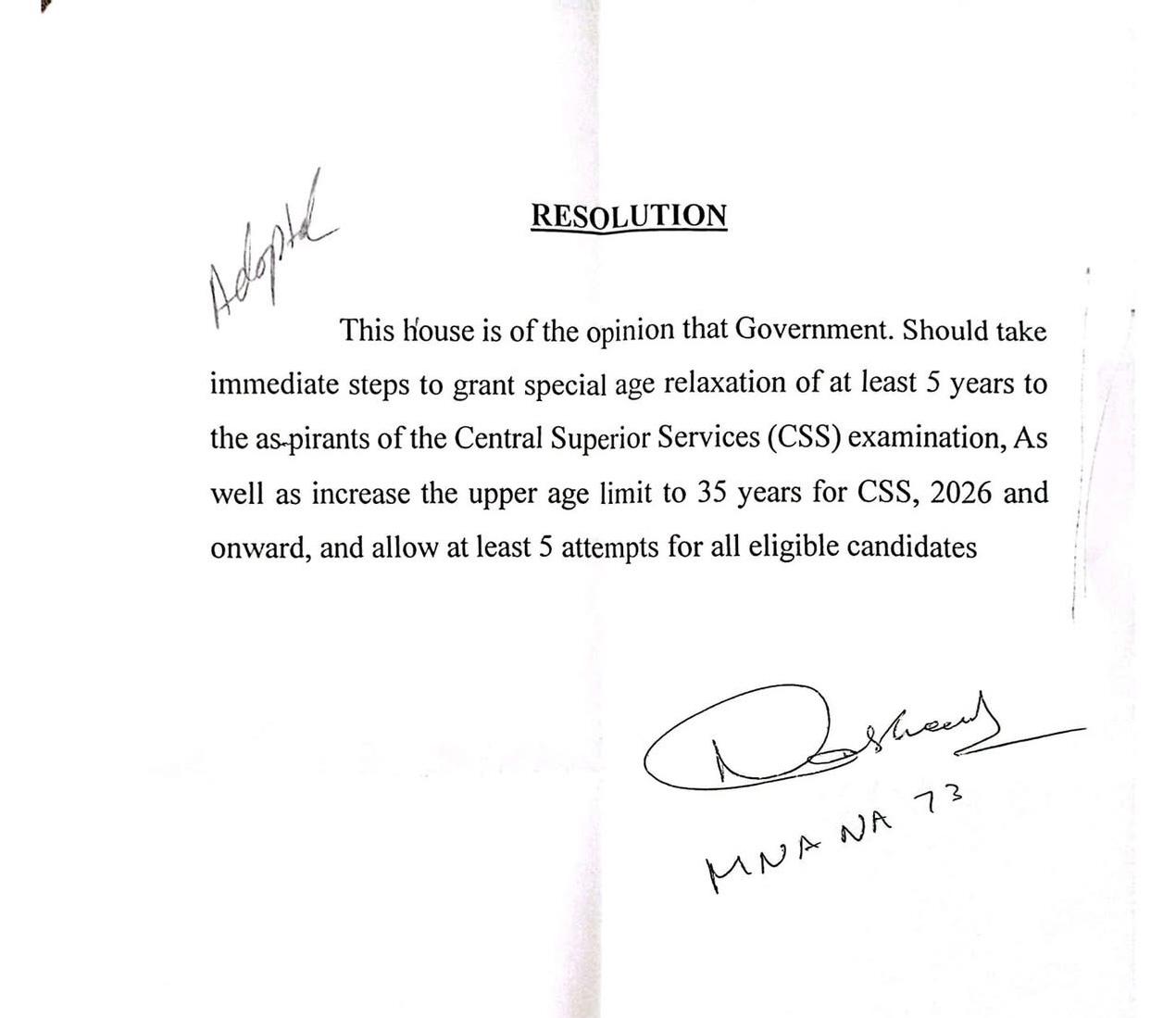
In a significant development that could reshape the future of Pakistan’s civil services, the National Assembly has officially passed a resolution calling for major reforms in the Central Superior Services (CSS) examination criteria.

✅ Key Highlights of the Resolution:

  • The upper age limit for CSS applicants will now be extended to 35 years, effective from the CSS 2026 exam onward.
  • Candidates will be allowed up to 5 attempts at the CSS examination—an increase from the current limit.
  • The resolution has been adopted and signed by National Assembly members, signalling strong parliamentary backing.

This move is seen as a response to the growing demand from students and civil service aspirants across Pakistan, who have long argued that the current age and attempt limits are too restrictive—especially for those from remote or underserved regions.

A Victory for Aspirants Nationwide

The resolution emphasizes the need for equal opportunities in civil service recruitment and acknowledges the diverse socio-economic challenges faced by candidates. If implemented, these reforms will offer greater flexibility and access to thousands of young professionals seeking to serve the nation.

What Happens Next?

While the resolution has been adopted, it now awaits formal implementation by the Establishment Division and Federal Public Service Commission (FPSC). If enacted into policy, it will apply to CSS 2026 and beyond.


📌 Stay updated with Remedy Talks for the latest on CSS reforms, public policy shifts, and education news in Pakistan.
📰 Because when policy changes, lives change.


Posted on Leave a comment

How Public Opinion and the Press Shape Pakistan’s Foreign Policy

Whether it’s outrage over a drone strike, admiration for a new foreign alliance, or emotional support for a cause abroad, public sentiment matters. And so does the media’s framing of that sentiment. Together, these forces play a growing role in shaping how Pakistan engages with the world.

Foreign policy decisions are often seen as elite-level strategies, crafted behind closed doors by diplomats, generals, and career bureaucrats. But in countries like Pakistan, foreign relations don’t exist in isolation. They’re shaped, pressured, and sometimes redirected by the people—and the press that informs them.

So, how exactly do public opinion and press influence foreign policy in Pakistan? And what does that say about the evolving relationship between democracy, diplomacy, and information?


The Public Voice in Foreign Affairs

It’s easy to think that the average citizen has little to do with international negotiations. After all, what influence could a protester in Lahore have over trade talks with Beijing or border policy with India?

But in reality, public opinion in Pakistan has repeatedly proven to be a quiet force with loud consequences.

Issues like Kashmir, Palestine, the U.S.-Pakistan relationship, and regional ties with Iran or Afghanistan have historically been more than just diplomatic concerns—they’re social touchpoints. They appear in classrooms, mosques, dinner table conversations, and trending hashtags. These aren’t just foreign policy issues; they’re national identity markers.

When the public feels strongly, governments are forced to respond. Often, public pressure leads to symbolic gestures—strong statements in the UN, state-sponsored solidarity events, or diplomatic warnings. Sometimes, it goes further, influencing real policy shifts, halting cooperation, or pushing back against allies.


Kashmir, Palestine, and the Pulse of the People

Two of the clearest examples of this are Pakistan’s policies on Kashmir and Palestine. Both issues have deeply emotional roots in Pakistani society. The media plays them heavily. Political parties reference them constantly. And the public responds—loudly.

When violence escalates in Kashmir or Gaza, social media floods with prayers, anger, and calls for government action. It’s not uncommon to see protests outside embassies, public rallies, or viral campaigns demanding diplomatic retaliation or humanitarian assistance.

These movements don’t just express national solidarity—they compel the government to take action, even when those actions risk international backlash. Public emotion becomes political pressure, and policy is shaped accordingly.


The Role of the Press: Informer, Influencer, Amplifier

In a democratic setting—or even a semi-democratic one like Pakistan—the press becomes the middleman between the state and the public. It doesn’t just report policy; it frames it, questions it, and sometimes reshapes it.

Pakistani media, particularly television news and Urdu-language papers, hold immense power in how the public understands foreign events. How the media frames China’s investment, India’s military moves, or U.S. diplomatic statements directly shapes public opinion—and, by extension, government action.

At times, the press functions as an ally to the state, reinforcing narratives and defending policy decisions. Other times, especially during scandals or crises, it becomes a source of accountability, spotlighting diplomatic failures or missteps.

But it’s not always neutral. Political bias, editorial pressure, and censorship do influence coverage. Sensitive topics—especially those involving powerful allies like China or Saudi Arabia—are often handled with caution. Even so, the media’s overall impact remains undeniable.


Social Media: The New Age Foreign Policy Forum

While mainstream media still holds sway, social media has become a rising force in shaping foreign policy discourse. Twitter storms, viral TikTok videos, and Facebook posts now set the tone for national debates.

Hashtags like #BoycottFrance, #StandWithKashmir, or #FreePalestine have trended across Pakistan, mobilizing thousands—sometimes millions—within hours. These online campaigns often spill into real-world pressure, influencing how politicians frame their statements and what steps ministries take next.

Social media has also amplified diaspora voices. Pakistanis abroad often weigh in on policy with force and visibility, making the state more conscious of how its decisions play not just domestically but globally.


When Policy and Public Pressure Clash

However, public sentiment isn’t always aligned with strategic goals. In fact, one of the biggest challenges in modern diplomacy is managing the gap between what’s popular and what’s practical.

Take U.S.-Pakistan relations. While there’s long-standing public suspicion of American motives, Pakistan continues to cooperate with Washington due to economic, military, and regional security reasons. Balancing this cooperation with public distrust is a diplomatic tightrope—and the press only sharpens that tension.

Similarly, Pakistan’s closeness with China is often celebrated in the media, but criticisms of Chinese labor conditions, local displacements under CPEC, or environmental concerns are muted. Here, press narratives limit public discourse, creating a different kind of policy challenge—one where lack of criticism leads to unchecked decision-making.


Press Freedom and the Foreign Policy Debate

A free press is vital to a well-informed public, and a well-informed public is vital to thoughtful policy. But Pakistan’s press, despite being lively and competitive, still faces barriers when it comes to covering foreign policy honestly.

Military influence, political pressure, and self-censorship mean that not all foreign issues are debated with equal openness. Criticism of certain allies, or of the military’s behind-the-scenes role in diplomacy, often hits a wall.

Despite this, many journalists continue to push boundaries. Investigative reports, sharp op-eds, and alternative media voices are expanding the space for meaningful dialogue. And as the press grows more sophisticated, so does the public it serves.


Conclusion: Democracy’s Foreign Policy Toolkit

Foreign policy in Pakistan is no longer shaped solely in government offices. It’s forged in TV studios, protest rallies, online forums, and newsroom debates. It’s influenced by the passions of the people, and filtered through the power of the press.

While the process is messy, emotional, and sometimes reactive, it’s also proof that foreign relations are not above democracy. They are part of it. And in countries like Pakistan, that democratic influence is only growing.

As the world becomes more connected, and as the Pakistani public becomes more informed, we can expect a more engaged—and more demanding—citizenry. The challenge for policymakers will be to listen to that voice without being overwhelmed by it.

And the responsibility for the press? To make sure that voice is based not just on emotion—but on truth, depth, and perspective.


Written by:
Remedy Talks Editorial Team
Real Issues. Real Conversations. Real Impact.

Posted on Leave a comment

Comparing the Leadership Structures of Iran and Turkey — And How They Shape National Policy


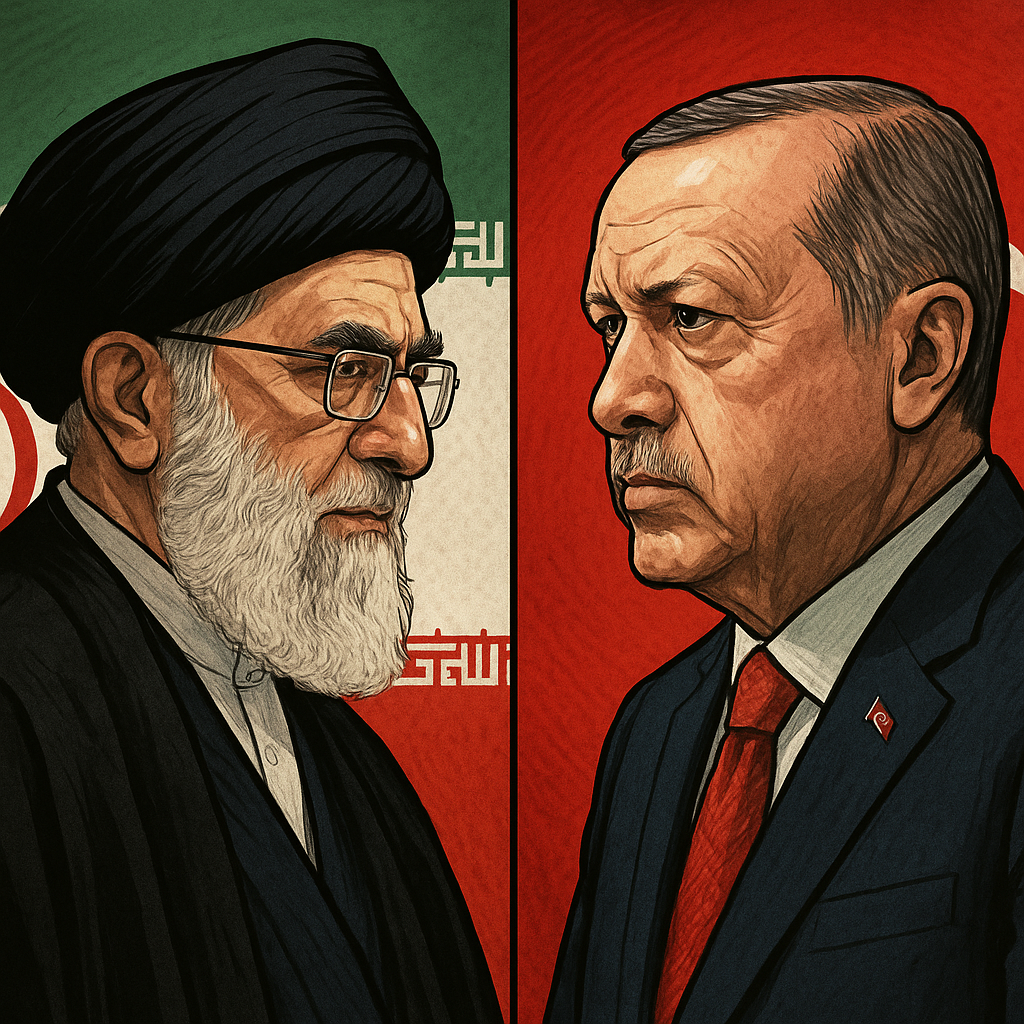
In the Middle East, two nations stand out for their political influence, distinct governance models, and bold foreign policies: Iran and Turkey. Both countries are regional powerhouses, rich in history, culture, and geopolitical importance. Yet their leadership structures couldn’t be more different, and those differences have a direct impact on how policies are made — from the economy and education to diplomacy and national security.

So how do these two systems function? And what can we learn by comparing their approaches to leadership and decision-making?


Iran: A Theocracy with Layers of Power

Iran’s political system is unique in the modern world — it combines republican elements (like elected officials) with deeply entrenched religious authority.

At the top of the hierarchy is the Supreme Leader, currently Ayatollah Ali Khamenei. He holds ultimate authority over all branches of government, the military, judiciary, media, and even foreign policy. Beneath him are:

  • The President, elected by the people every four years
  • The Guardian Council, which vets candidates and can veto laws
  • The Parliament (Majlis), which passes legislation
  • And the Assembly of Experts, which technically oversees the Supreme Leader — though in practice, this oversight is limited

What does this mean for policy? In Iran, no major decision bypasses religious oversight. Even if the elected president wants to pursue reforms — say, economic liberalization or improved Western relations — those efforts can be blocked or undone by unelected clerics.

This centralized, theocratic system ensures ideological consistency, but it also leads to friction between reformist and conservative factions. As a result, policies are often cautious, reactive, and shaped more by internal political balance than public demand.


Turkey: A Presidential Republic with Expanding Executive Power

Turkey, by contrast, is a secular republic — but one that has evolved dramatically in recent years under the leadership of President Recep Tayyip Erdoğan.

Historically, Turkey operated under a parliamentary system, with a prime minister serving as head of government. That changed in 2017, when a national referendum approved a shift to a presidential system. Now, the president is both head of state and government, with broad control over the cabinet, appointments, and the national budget.

Key players include:

  • The President, directly elected and extremely powerful
  • The Grand National Assembly, which passes laws but has limited power over the executive
  • The Judiciary, which is technically independent but often criticized for lacking autonomy under Erdoğan’s rule

This system has enabled fast and centralized decision-making, especially in areas like infrastructure development, military action, and regional diplomacy. But it’s also drawn criticism for weakening democratic checks and balances, silencing dissent, and shrinking media freedom.

Unlike Iran’s clerical dominance, Turkey’s leadership is driven by political ideology, nationalism, and increasingly personalist rule.


Policy in Practice: Where Structure Meets Strategy

To understand how these different systems affect real-world decisions, consider three key areas:


1. Foreign Policy

Iran’s foreign policy is heavily influenced by its religious identity and strategic priorities. The Supreme Leader sets the tone — often one of resistance to Western influence, strong ties with non-Western allies (like Russia and China), and support for regional proxies like Hezbollah.

Turkey, on the other hand, adopts a more pragmatic, transactional approach. Erdoğan’s policies often shift to suit short-term goals: negotiating with Russia and NATO simultaneously, balancing relations with the EU, and acting assertively in Syria and Libya.

In short: Iran’s foreign policy is doctrinal; Turkey’s is strategic.


2. Economic Strategy

Iran’s economy is heavily sanctioned, and its leaders often rely on self-sufficiency rhetoric. Policy shifts are slow, partly due to religious constraints and internal political tug-of-war.

Turkey faces no such religious oversight. It has adopted bold economic experiments, from rapid infrastructure expansion to unorthodox monetary policies (like Erdoğan’s preference for low interest rates despite high inflation). While these policies are risky, they also reflect the agility and dominance of the executive branch.

Iran’s policies are shaped by ideology and isolation. Turkey’s are shaped by ambition and central control.


3. Public Freedoms and Governance

In Iran, press freedom and civil liberties are restricted, particularly when it comes to criticizing religious authority. Elections are held, but candidates are pre-screened by religious bodies.

In Turkey, the space for opposition has shrunk, especially after the 2016 coup attempt. Erdoğan’s government has jailed journalists, purged civil servants, and used emergency powers to consolidate control. While technically a democracy, Turkey increasingly resembles a managed or illiberal democracy.

Both countries struggle with dissent — but for different reasons and under different banners.


Two Models, One Region

Both Iran and Turkey use centralized leadership to navigate regional instability and internal pressure. But while Iran’s system is built on religious legitimacy, Turkey’s power structure has evolved toward strongman politics under an executive presidency.

The impact on policy is clear:

  • Iran moves cautiously, with deep ideological roots guiding every step
  • Turkey moves fast, often reshaping policies to fit short-term goals or Erdoğan’s vision

Neither model is without flaws. But both demonstrate how leadership structure directly influences how a country governs, reforms, and engages with the world.


Final Thoughts

In an age of global crises — from economic shocks to regional conflict — leadership matters. And how leaders rise, rule, and respond is shaped not just by their personalities, but by the systems that empower them.

Whether it’s Iran’s religious hierarchy or Turkey’s presidential concentration of power, understanding these structures is key to understanding why these nations act the way they do — and where they might be heading next.


Author:
Remedy Talks Editorial Team
Analyzing global leadership, one structure at a time.


Posted on Leave a comment

Barcelona’s Youth Revolution: How Hansi Flick Resurrected a Club in Crisis


By Remedy Talks Sports Desk
When financial ruin forced change, Barcelona’s future was built on youth, grit, and a German mastermind.


In football, legends are often born out of desperation.
In 1995, pundits scoffed when Sir Alex Ferguson fielded a team full of kids—only to watch the Class of ’92 dominate English football. Now, nearly three decades later, a similar youth-driven storm is sweeping through Spain, and its epicenter is Camp Nou.

Barcelona, a club once drowning in debt and uncertainty, is now riding a new high. With La Liga and Copa del Rey already in the bag and an electrifying Champions League run, the world is watching as Hansi Flick’s fearless generation tears through football with style, swagger, and surprising maturity.


From Chaos to Chemistry: The Flick Effect

When Hansi Flick, former Bayern Munich and Germany boss, took over a struggling Barcelona side, he inherited more than just low morale—he inherited a fractured dressing room, financial chaos, and a generation of young players who were used to being benched, ignored, or overused.

What Flick brought wasn’t just tactics. He brought belief, balance, and brutal honesty.

Players like Robert Lewandowski, Frenkie de Jong, and Raphinha had lost their spark under Xavi. Flick lit it again—starting with one-on-one conversations, honest role clarity, and above all, trust. The result? Lewandowski is back to scoring regularly, Raphinha is leading from the front, and De Jong is the glue in midfield.


The Rise of the Young Musketeers

While the veterans found their rhythm again, it’s the youngsters who have stolen the show.
Meet the new faces of Barcelona:

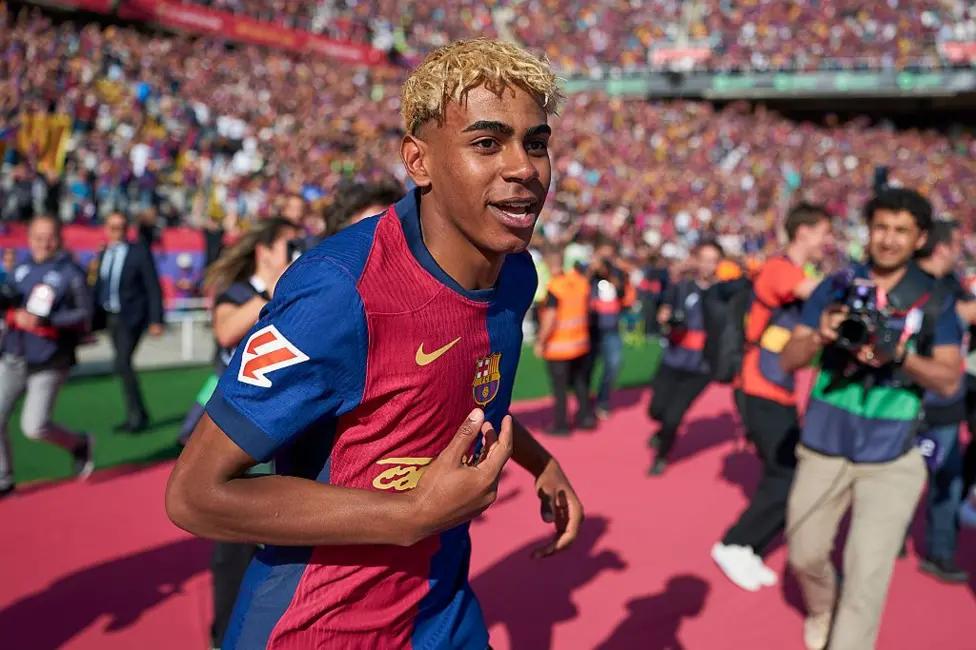
  • Lamine Yamal (17) – A winger with the mind of a veteran and the feet of a magician.
  • Pau Cubarsi (18) – Calm as ice, aggressive as fire. A future defensive rock.
  • Gavi, Alejandro Balde, Marc Casado (all 21) – Already leaders on and off the pitch.
  • Pedri (22) – The midfield heartbeat of this new-look Barcelona.

With an average squad age of just 25, Barcelona are now La Liga’s youngest side—and arguably the most dangerous.

But their rise isn’t accidental. Financial crisis forced Barcelona to abandon big-money signings and look inward. With no room for mega transfers, youth became the club’s lifeline.


Flick’s Winning Philosophy: Discipline, Detail & Unity

Flick didn’t just give minutes to the young guns—he gave them responsibility. He let them pick the dressing room music, demanded punctuality, and treated their feedback as valuable input. Even rest decisions for stars like Yamal were made with the player’s input—creating an atmosphere of mutual respect.

That trust showed on the pitch.
Barcelona now play with fearless attacking intensity, willing to press high and take risks. It’s thrilling—and sometimes reckless—but always entertaining.

Take the 5-4 Champions League thriller against Benfica. It was messy, chaotic, but full of heart. That game didn’t just prove their resilience—it revealed their soul.


Challenges Still Remain

It’s not all smooth sailing.
Barcelona conceded 24 goals in 14 Champions League matches, ultimately falling short of the final. Flick knows his team needs to add more control and defensive consistency to match their explosive offense.

But unlike many managers, Flick doesn’t hide from flaws—he embraces them as part of the process.

And he has no interest in signing a long-term contract. He wants to stay focused, season by season, building something sustainable, not hype-driven.


The Bigger Picture: A Blueprint for Modern Football?

What Barcelona is doing under Flick isn’t just exciting—it’s potentially revolutionary. In a football world obsessed with transfer fees and instant results, Barcelona is proving that youth, trust, and long-term thinking still work.

They aren’t just winning—they’re making people fall in love with the beautiful game again.

With Yamal leading the charge, Pedri dictating play, and Flick pulling the strings, this Barcelona side may just be writing the first chapter of a new golden era.

Too early to compare them to Guardiola’s 2008–2011 dynasty? Perhaps. But one thing is certain: Barcelona are back—and they’ve brought the joy with them.


Final Whistle: Why You Should Care

Whether you’re a die-hard Culer or a neutral fan, this version of Barcelona is worth your time. It’s more than trophies—it’s about passion, progression, and proving that the youth aren’t just the future—they’re the present.

So, if you miss watching football with flair, emotion, and stories that matter—keep your eyes on Camp Nou.

This team isn’t just building wins.
They’re building history.


Posted on Leave a comment

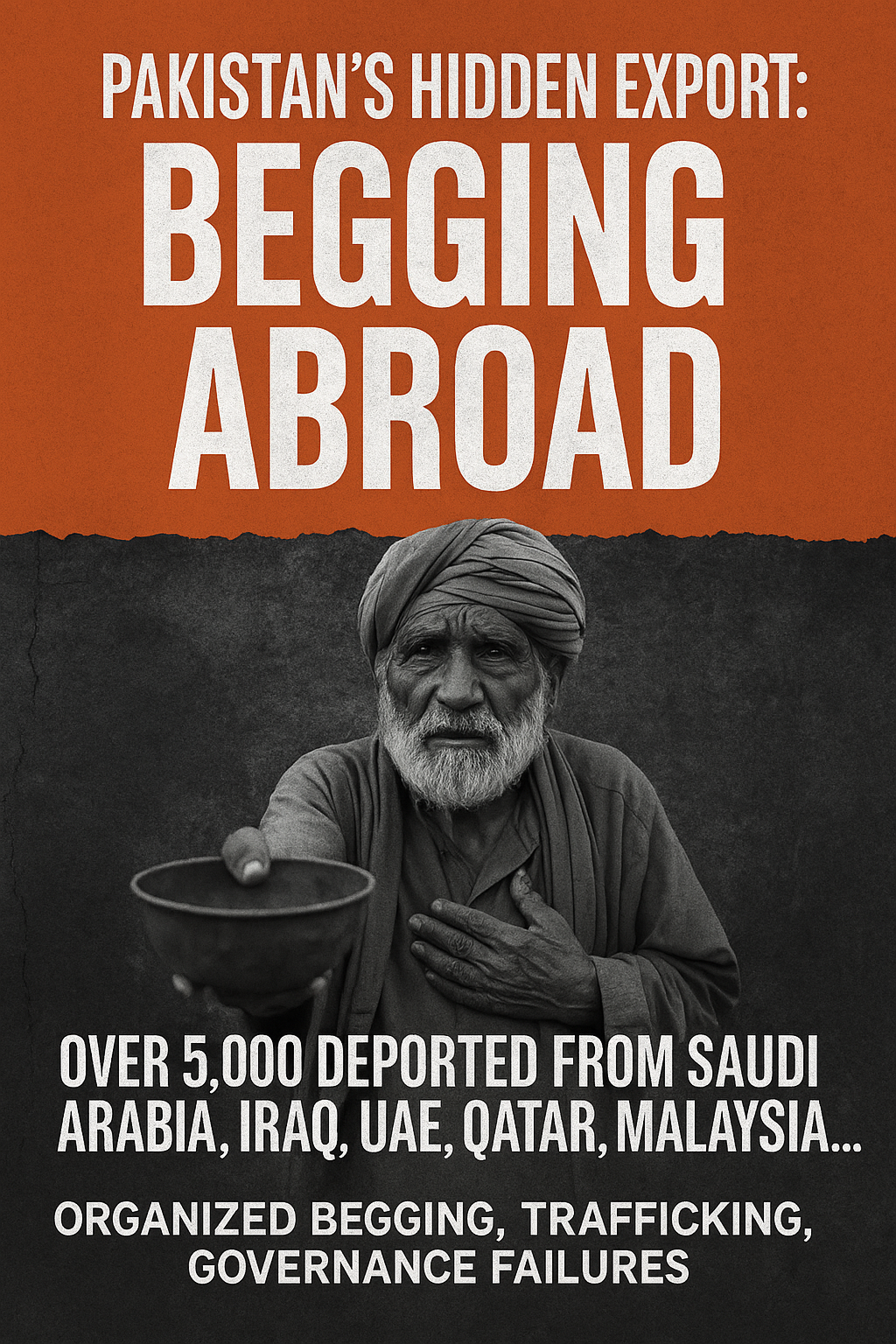
Pakistan’s Hidden Export: The Shameful Economy of Begging Abroad


By Remedy Talks Editorial Team
When poverty becomes a business model and shame is shipped overseas.


There’s no easy way to say it: Pakistan is now exporting beggars.
Over 5,000 Pakistani nationals have been deported from countries like Saudi Arabia, Iraq, the UAE, Qatar, and Malaysia in just the past 16 months. The revelation came straight from the country’s interior minister—publicly admitted in parliament. What should’ve sparked national outrage has instead been met with silence.

This isn’t just another headline. It’s a damning reflection of how deep poverty, human trafficking, and state neglect have intertwined to form an industry of exploitation—and it’s turning Pakistan into a global embarrassment.


Beyond Poverty: The Rise of the Begging Mafia

Let’s be clear: not every deported person was a desperate soul looking for food or shelter. Many were part of organized begging rings—a full-fledged, cross-border racket that sends individuals abroad under false pretenses, only to exploit them on foreign streets.

And it’s not a small operation either. Reports estimate that this “industry” within Pakistan pulls in billions of rupees annually, operating in broad daylight with the help of trafficking agents, fake visa handlers, and local enablers.

The sad truth? Begging is no longer just a symptom of poverty; it has become a profitable economy—one that thrives on the backs of society’s most vulnerable.


Deportation Stats: The Shame in Numbers

According to official data:

  • 52% of those deported for begging hail from Sindh,
  • followed by Punjab and Khyber Pakhtunkhwa.
  • Thousands are now on the Exit Control List (ECL), banned from traveling abroad.

But let’s not kid ourselves. Adding names to a no-fly list doesn’t address the core issue. That’s like bandaging a bullet wound while ignoring the gunfire.


Who’s Really at Fault?

The begging crisis in Pakistan isn’t just about those holding out their hands—it’s about the systems failing them:

  • Governance breakdown has allowed trafficking rings to operate without fear.
  • Weak employment policies offer no alternatives to those pushed to the margins.
  • Lack of vocational education and rehabilitation programs means there’s no way back for many once they’re on the streets.
  • Charity culture, while noble, is often unregulated—fueling exploitation by rewarding beggars without questioning who’s behind them.

So when foreign governments crack down and publicly shame us by deporting thousands, we have to ask:
Where is our shame at home?


The International Fallout

The diplomatic implications are serious. Countries that once offered Pakistanis employment opportunities are now tightening visa restrictions. This doesn’t just hurt those involved in begging networks—it punishes hardworking migrants, laborers, and professionals who now face suspicion, stigma, and rejection at every border.

Imagine losing the moral and legal standing to defend your citizens abroad—because the world has started associating your passport not with talent or trade, but with organized begging.


The Way Out: Fixing the Root, Not Just the Rot

If the state can track down and detain thousands of undocumented Afghans, it can certainly dismantle domestic trafficking and begging mafias. The question isn’t “how”—it’s whether there’s political will to go beyond surface-level solutions.

Real steps must include:

  • Cracking down on human trafficking networks that facilitate illegal travel for begging.
  • Rehabilitating beggars through job training, microfinance, and skill development, particularly in high-risk regions like Karachi, interior Sindh, and south Punjab.
  • Launching widespread awareness campaigns to expose the exploitation behind “charitable” street begging.
  • Strengthening child protection units to stop the recruitment of children into these criminal operations.
  • Punishing ringleaders with real legal consequences, not just public shaming.

And perhaps most importantly—educating the public. Your loose change might feel like compassion, but it could be fueling an underground economy of abuse.


A National Wake-Up Call

This is not just a story of deportation—it’s a warning sign.
When a nation becomes known for sending its poor to beg abroad, when children are trafficked for sympathy, and when poverty is weaponized as profit—we have lost more than just our international dignity. We’ve lost our moral compass.

There is no quick fix. But ignoring it will only make it worse. Pakistan must recognize that this isn’t just about optics or reputation—it’s about reclaiming human dignity, at home and abroad.


Final Word:
You can’t solve begging with a blacklist.
You can only solve it by giving people a life where they don’t have to beg to survive.


Posted on Leave a comment

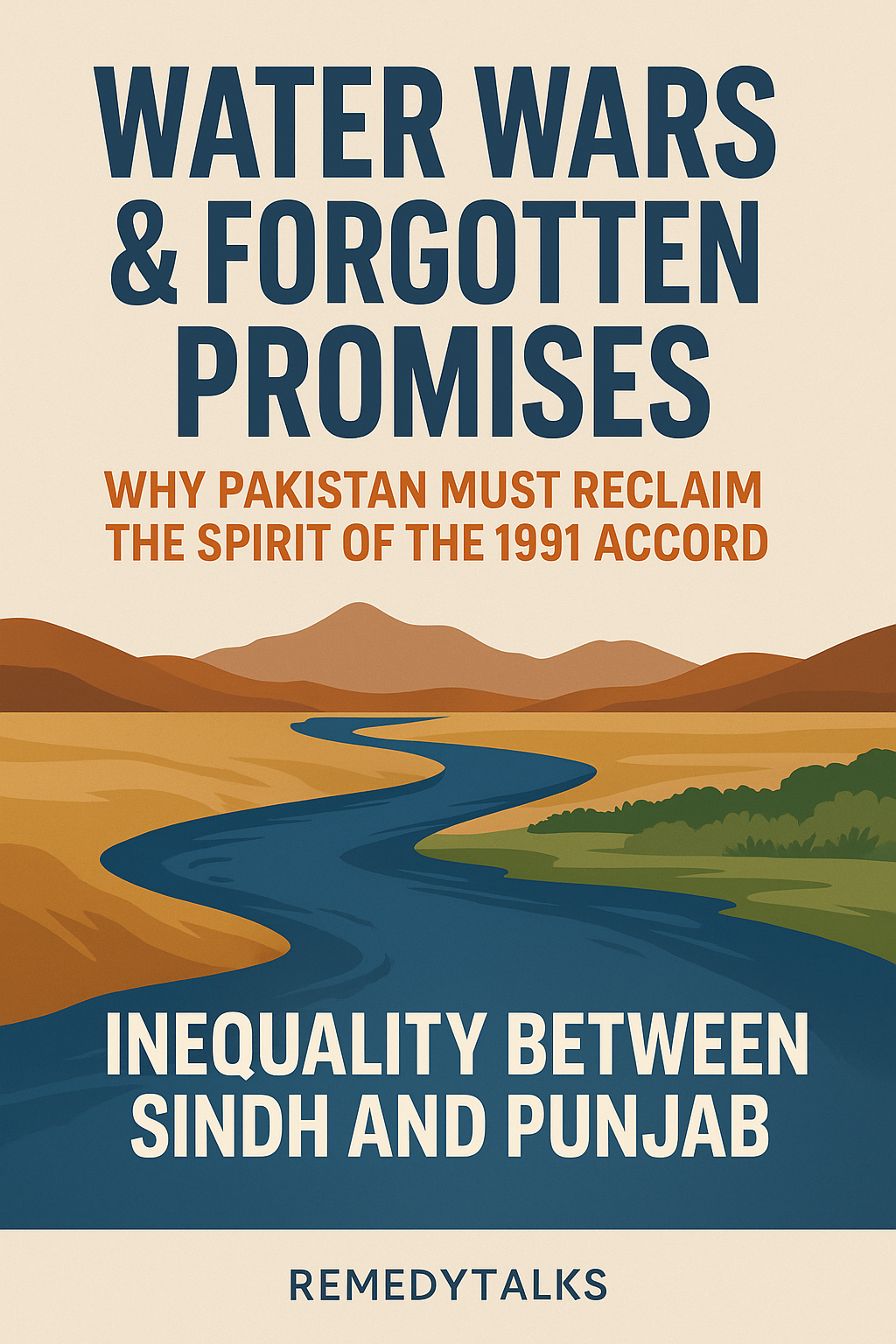
Water Wars & Forgotten Promises: Why Pakistan Must Reclaim the Spirit of the 1991 Accord


By Remedy Talks Editorial Team

Water is not just a natural resource in Pakistan—it’s a lifeline. It flows through our farmlands, fuels our economy, and sustains over 240 million lives. Yet, the country’s most essential asset has repeatedly become a source of division rather than unity. The recent debate over the proposed Cholistan canal project once again highlighted the deep-rooted tensions between Sindh and Punjab, forcing the Council of Common Interests (CCI) to intervene.

But this isn’t just about one project. It’s about a pattern of broken agreements, ignored policies, and inequitable practices that have put Pakistan’s water future at risk.


A Crisis That Was Already Written

More than three decades ago, Pakistan’s provinces agreed to a formula to divide river water fairly. Known as the Water Apportionment Accord of 1991, it was supposed to prevent exactly the kind of conflicts we’re seeing today. But that promise was never fully kept.

Instead, what emerged in 2003 was the three-tier formula—an arrangement never legally approved but frequently used by the Indus River System Authority (IRSA). This formula has led to Sindh receiving less water than its rightful share, violating not just the 1991 Accord but also the National Water Policy of 2018.

What’s most troubling? These decisions were made without the consent of all stakeholders, defying the core principle of participatory and consultative water planning set out in the policy itself.


The Disappearing Rights of the Lower Riparian

In water law, the concept of “lower riparian rights” is simple: downstream regions have a legitimate claim to water flow. But in Pakistan, that principle has been quietly eroded.

Sindh’s concerns about upstream diversions—such as the Cholistan project—are not unfounded. History supports them. From the 1945 Sindh-Punjab agreement to the 1991 Accord, the right of the lower riparian has always been acknowledged. Yet today, it is being overridden by administrative shortcuts and unapproved formulas.

The National Water Policy (2018) clearly reaffirms this right. Clause 5.2 states that lower riparian rights must be “scrupulously respected.” But respect means nothing without action.


When Water Disappears Before the Farm

The crisis doesn’t end with unjust sharing. Even the water that is diverted often fails to reach the end-user: the farmer. According to the National Water Policy, out of 104 million acre feet (MAF) of annual canal water, only 58.3 MAF actually reaches the farm gate. The remaining 46.7 MAF is lost—mostly due to seepage from unlined canals.

This is not just inefficiency; it’s an economic disaster.

With growing climate stress, rising demand, and urban expansion, Pakistan cannot afford to waste half of its irrigation water. The policy recommends a nationwide “crash programme” to line water courses and reduce losses by at least a third by 2030.

That goal remains far from reality.


Sea Intrusion: The Silent Killer of Sindh’s Coast

One of the most devastating and overlooked consequences of upstream water diversion is sea intrusion. When less freshwater reaches the Indus Delta, seawater pushes inland, poisoning land and freshwater aquifers.

Clause 8.1.5 of the water policy acknowledges this growing threat. It notes that over 2 million acres of land have already been lost in Thatta, Badin, and Sujawal—devastating local agriculture and displacing communities.

What was once fertile coastline is now a salinated wasteland. Without urgent intervention, this trend could destroy Pakistan’s coastal agriculture and fisheries, pushing thousands into climate-driven poverty.


Environmental Flows Aren’t Optional

Another key but often ignored aspect of water governance is environmental flow—the amount of water that must be left in rivers to maintain their ecology and health. Clause 6.1 of the National Water Policy emphasizes this, stating that environmental flows are essential to conserve river ecosystems, delta morphology, and fisheries.

Yet, in practice, these flows are often sacrificed for irrigation and storage. In doing so, we’re trading short-term gain for long-term collapse.


A Policy That Could Change Everything—If Followed

The National Water Policy of 2018 isn’t just a bureaucratic document. It’s a blueprint for fair and sustainable water management. It includes:

  • Fair distribution based on the 1991 Accord
  • Clear targets for efficiency and conservation
  • Commitments to protect lower riparian rights
  • Goals for improved irrigation methods (“more crop per drop“)
  • Strategic responses to environmental threats

But good policy means nothing without implementation. Unless all provinces—and the federal government—commit to following it in both letter and spirit, Pakistan’s water crises will only deepen.


Why This Matters to Every Pakistani

Water is more than an interprovincial issue. It’s a national survival issue. From the wheat fields of Punjab to the rice paddies of Sindh, from the fishing boats in Sujawal to the tube wells of Balochistan—every region depends on the fair and efficient use of water.

If we continue to politicize water, delay reforms, and ignore environmental limits, we won’t just face droughts and protests. We’ll face food insecurity, economic instability, and mass displacement.

The Council of Common Interests has taken a positive step by emphasizing consensus. But that consensus must be rooted in respecting existing accords, listening to all provinces, and putting long-term sustainability above short-term politics.


Final Thoughts: A Shared Future, A Shared Responsibility

Water doesn’t belong to one province, one government, or one generation. It belongs to all of us—and it belongs to the future.

The National Water Policy already gives us a map. The 1991 Accord already gives us a fair baseline. What’s needed now is political will, transparent governance, and a commitment to collective good.

Pakistan’s future depends on water. And water depends on justice.


Posted on Leave a comment

UK’s New Immigration Rule Feels Like Betrayal, Say Migrants: What the 10-Year Settlement Change Really Means


By Remedy Talks Editorial Team
Real issues. Real voices. Real impact.


A Sudden Shift, A Deep Impact

The UK government’s decision to double the qualifying period for permanent settlement—from five years to ten—is being felt like a punch in the gut by thousands of migrants who had already begun building their lives in the country. It’s not just a policy change; to many, it’s a reversal of trust.

For foreign workers, students, and families who moved to the UK under one set of rules, this sudden shift—especially because it’s retroactively applied—feels like the rug has been pulled out from under them.


What Changed?

Previously, most migrants could apply for Indefinite Leave to Remain (ILR) after five years of legal residency. Under the new rule, they must wait ten years. This applies not only to new arrivals, but also to those who are already halfway through the process—people who have spent years contributing to the economy, paying taxes, and raising families.

The change affects an estimated 1.5 million migrants, most of whom arrived after 2020.


Why It Matters

Let’s be clear—this isn’t just about numbers on a government form. It’s about stability. It’s about people who:

  • Planned their futures based on the old timeline
  • Bought homes, enrolled their children in schools, or invested in businesses
  • Worked in critical sectors like healthcare, education, and technology

Now, they’re being told to wait five more years. No clarity. No compensation. No apology.


“We Built Our Lives Here, and Now They’re Moving the Goalposts”

Many affected migrants describe the decision as a “betrayal.” Advocacy groups are echoing their concerns, warning that this will not only hurt people on a personal level—but also damage the UK’s global reputation as a fair and welcoming country.

Imagine living somewhere for five years, building relationships, investing in your career, and feeling at home—only to be told the rules have changed, and your future is on hold.


Economic and Social Backlash

Beyond personal stories, there are real economic risks at play.

Migrants fill essential roles in an economy already struggling with skill shortages. Making the path to settlement harder could discourage future skilled workers from choosing the UK at all.

And let’s not forget—these same workers were called “essential” during the pandemic. They showed up when it was dangerous to do so. Now, they feel discarded.


A Blow to Trust in the System

One of the harshest aspects of this policy is its retroactive effect. It penalizes people who entered the UK legally, followed every rule, and structured their lives around a five-year pathway. Many now feel blindsided and betrayed.

Instead of offering predictability, the new rule injects uncertainty and stress into thousands of lives. It says: “The rules can change, even halfway through.”

That’s not a message that builds trust.


The Call for Compassion

Advocates are urging the government to rethink. A fair immigration system, they argue, must include:

  • Predictable and transparent rules
  • Recognition of contributions already made
  • Pathways to settlement that reflect real-life planning
  • Consultation with migrants and experts, not top-down decisions

A truly just system listens, adapts, and acts with compassion—not just caution.


What’s Next?

As legal and human rights organizations gear up to challenge the change, one thing is clear: migrants are not just numbers in a spreadsheet. They are people who chose the UK, invested in its future, and believed in its promises.

If the UK wants to maintain its status as a global hub of talent, diversity, and opportunity—it must do better.


Final Thoughts

Policy can be a tool for justice—or a weapon of exclusion. By extending the settlement period to ten years and applying it retroactively, the UK has chosen the latter. It’s a decision that may protect bureaucratic systems, but it threatens to harm real lives and lasting trust.

This moment calls for more than just government statements. It calls for listening, empathy, and urgent correction.

Because no one should feel like a stranger in the place they’ve come to call home.


Remedy Talks
We write what matters.


Would you like a Facebook/Instagram caption, blog thumbnail, or Reel script to help promote this article next?

Posted on Leave a comment

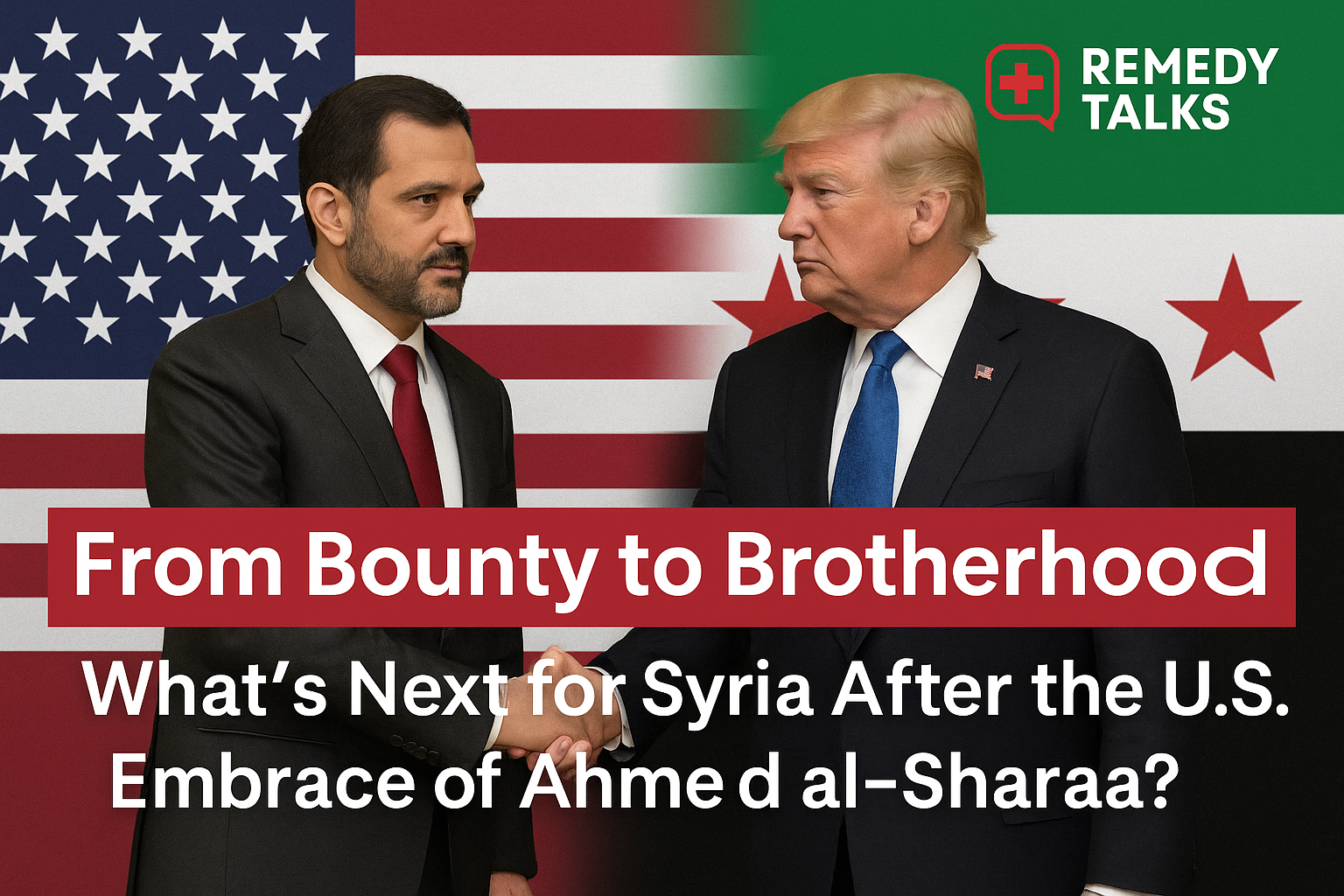
From Bounty to Brotherhood: What’s Next for Syria After the U.S Embrace of Ahmed al-Sharaa?


By Remedy Talks Editorial Team
Published on RemedyTalks.com


A Shift in Allegiances That History Won’t Forget

Geopolitics has always been a realm where alliances shift like sand in the wind, but few transformations have been as jarring as the one we just witnessed in Syria. The man once known to the world as Abu Mohammed al-Jolani, feared leader of the Al Qaeda-linked Al Nusra Front, has now stepped onto the global stage with a new identity: Ahmed al-Sharaa, interim leader of Syria—endorsed, welcomed, and legitimized by none other than former U.S. President Donald Trump in a formal meeting in Riyadh.

For Syrians who have endured more than a decade of civil war, displacement, and international isolation, this moment is a complicated one. On the one hand, the lifting of U.S. sanctions signals a potential opening for economic recovery. On the other, it raises deeply uncomfortable questions about morality, memory, and the future of governance in a war-torn nation.


From ‘Terrorist’ to Transitional Leader: A Calculated U-Turn

It wasn’t long ago that the United States placed a $10 million bounty on al-Sharaa’s head. He was then seen as a dangerous militant with ties to extremist ideology. His group, Al Nusra Front, was notorious for its brutal tactics and Islamist agenda.

So what changed?

Nothing about Sharaa’s past did. What shifted was his strategic value in the geopolitical chessboard. He played a crucial role in bringing down the Assad regime, a goal long pursued by the U.S., its European allies, and Gulf states. In doing so, he helped diminish the stronghold of Iranian and Russian influence in the Levant.

His reward? Legitimacy, a handshake, and the promise of reconstruction funding.


A Tale of Two Militants: Syria vs. Afghanistan

The irony is thick when comparing this development to how the world treats the Taliban in Afghanistan. Despite ending a two-decade occupation and taking control of Kabul, the Taliban remain under sanctions and globally isolated.

Ideologically, the Taliban and Sharaa’s previous circle are not dissimilar. But where one challenged Western dominance, the other aligned with it to achieve mutual goals. The message is clear: in the eyes of major powers, militancy is acceptable—if it serves their interests.

This kind of selective political hygiene—where one extremist is rehabilitated and another condemned—does little to build global trust or long-term peace.


The Golan Question and the Price of Recognition

During the Riyadh meeting, President Trump reportedly asked Sharaa to recognize Israel. Yet there was no mention of Israel returning Syrian territory it has occupied for decades, including the strategic Golan Heights.

This puts Syria’s new rulers in a precarious position. Recognition of Israel without territorial restitution could fracture internal unity even further and alienate important regional actors. It might also weaken Sharaa’s domestic legitimacy, especially among nationalists and minority communities already skeptical of his leadership.


Old Fears, New Faces: Will Extremism Simply Change Hands?

The hope—at least on paper—is that this new chapter brings stability and inclusion. Sharaa has spoken of building an “inclusive state.” But early signs are troubling.

Recent reports from within Syria speak of sectarian clashes, especially involving the Alawi and Druze minorities. These communities fear being sidelined or persecuted by a government with deep roots in jihadist ideology.

The risk is that Syria could move from autocracy under Assad to ideological rigidity under Sharaa, replacing one form of oppression with another. The world must avoid being lulled into complacency by the narrative of progress while the reality on the ground deteriorates further.


What Syria Needs — And Deserves

The Syrian people have suffered enough. Over 500,000 lives lost, millions displaced, and an entire generation born into war. What they need now is not another power shift dictated by outside interests but a genuinely inclusive, homegrown process of rebuilding.

That includes:

  • Minority protections, including legal and political safeguards
  • Free and fair elections, not appointments based on militant resumes
  • Economic recovery that lifts communities from poverty, not just elite circles
  • A truth and reconciliation process, to reckon with war crimes on all sides

If these steps aren’t taken, Syria risks falling back into the very cycle of rebellion and repression that tore it apart in the first place.


Looking Ahead: What Future Awaits Syria?

With U.S. sanctions lifted, international investors may begin circling once again. Gulf nations could funnel in aid and contracts. There might even be a diplomatic push to normalize Syria’s relations with the West under its new leadership.

But the path forward will not be smooth. Sharaa’s past will continue to haunt him. Civil society groups, international watchdogs, and disillusioned Syrians will demand accountability, not just economic development.

Syria stands at a crossroads. This could be the beginning of true rehabilitation—if it is led with humility, inclusivity, and a break from past cycles of violence. Or it could simply be a rebranding of authoritarianism, draped in the cloak of international approval.


Final Thoughts

This isn’t just a Syrian story. It’s a cautionary tale of how power works on the global stage—how definitions of “terrorist,” “leader,” and “ally” change not based on morality, but on utility.

The world may have rebranded Ahmed al-Sharaa, but Syrians will judge him not by meetings in Riyadh or endorsements from Washington, but by whether he brings peace, justice, and dignity back to their homes.

And for their sake, the world should hold him to that standard.


Author:
Remedy Talks Team
Truth beyond headlines. Context behind conflict.


Posted on Leave a comment

What the IMF and WTO Can’t Fix: The Struggle Against Inequality in Developing Countries


International financial institutions like the International Monetary Fund (IMF) and the World Trade Organization (WTO) are often presented as global safety nets—designed to stabilize economies, promote trade, and reduce poverty. But for many developing countries, these institutions feel more like tightropes than safety nets. They come with conditions, restrictions, and expectations that often make it harder—not easier—to overcome deep-rooted economic inequality.

So what are the real limitations of the IMF and WTO, and why do they struggle to address economic disparities in the Global South?


The Myth of Neutrality

On paper, the IMF and WTO are neutral global organizations. But in practice, their policies often reflect the interests of powerful, wealthy nations. For example, voting power at the IMF is based on financial contributions. That means the United States and European countries hold disproportionate influence over lending decisions.

This imbalance isn’t just technical—it’s political. When crisis hits a low-income country, the loans that follow often come with harsh conditions. Governments are told to cut spending, open up markets, and privatize state assets. These might sound like modern economic prescriptions, but for struggling nations, they often mean:

  • Fewer public services
  • Job losses
  • Cuts in healthcare and education
  • Increased reliance on foreign imports

That’s not a recipe for long-term development—it’s a cycle of dependency.


One Formula, Many Failures

The IMF’s famous “structural adjustment programs” were introduced with the aim of stabilizing economies and encouraging growth. But instead of creating opportunity, they often undermined local industries and widened the gap between rich and poor.

Countries like Tanzania, Bolivia, and Nigeria followed IMF prescriptions to the letter. What they got in return was economic contraction, rising unemployment, and increased poverty. Meanwhile, essential services like water, electricity, and public transportation were handed over to private companies that prioritized profits over people.

It raises a troubling question: Whose development are these institutions really serving?


Trade Rules That Don’t Play Fair

The WTO is supposed to be a global referee, ensuring that countries play by the same trade rules. But in reality, the playing field is anything but level.

Developed nations continue to heavily subsidize their own agriculture and industries, while pressuring developing countries to remove tariffs and open markets. This puts local farmers and small businesses in the Global South at a crushing disadvantage. They simply can’t compete with the prices of imported goods dumped into their markets by wealthier nations.

And when developing countries try to protect their industries, they face accusations of protectionism—even though richer nations do the same under different names.


Ignoring the Human Factor

One of the biggest blind spots in the IMF and WTO’s approach is the near-exclusive focus on macroeconomic indicators. They track GDP growth, inflation, and trade volume—but rarely account for real human outcomes.

How many children dropped out of school due to budget cuts?
How many people lost access to healthcare after privatization?
How did income inequality shift after a country opened its markets?

These are questions that rarely make it into policy discussions, yet they define the lived experience of millions in developing nations.


Crisis Response: Too Little, Too Late

During the COVID-19 pandemic, the weaknesses of these institutions were exposed even further. While the IMF announced emergency lending facilities, many low-income countries found themselves burdened with even more debt. The WTO, meanwhile, failed to ensure equitable vaccine distribution as rich countries secured most of the global supply.

These failures aren’t just technical—they’re moral. When the world’s poorest are left behind during a global emergency, the promise of “international cooperation” starts to sound hollow.


The Challenge of Reform

To their credit, both the IMF and WTO have acknowledged the need for change. The IMF has recently spoken about “inclusive growth,” and the WTO has launched initiatives to support small economies and reduce trade barriers for least developed countries.

But talk is cheap. Real reform means shifting power, listening to voices from the Global South, and letting go of outdated economic dogma. It means understanding that development isn’t just about open markets and budget surpluses—it’s about people.


Moving Toward a Fairer Global Economy

What would a fairer system look like?

  • Debt cancellation for countries trapped in endless repayment cycles
  • Flexible policy options, rather than rigid austerity mandates
  • Trade rules that protect local industries, especially in agriculture and manufacturing
  • Decision-making power shared equally, not concentrated in the hands of the wealthy
  • Programs aligned with real human development, not just economic metrics

None of this is radical. It’s simply what justice and dignity demand.


Final Thoughts

The IMF and WTO were built with a vision of global cooperation. But unless that cooperation becomes genuinely inclusive, these institutions will continue to fail the people who need them most.

Economic inequality isn’t just a technical problem—it’s a human one. And solving it requires more than financial tools. It requires empathy, accountability, and a new way of thinking about development—one that puts people before profits, and justice before convenience.


Author:
Remedy Talks Editorial Team
Helping you make sense of global economics, one issue at a time.