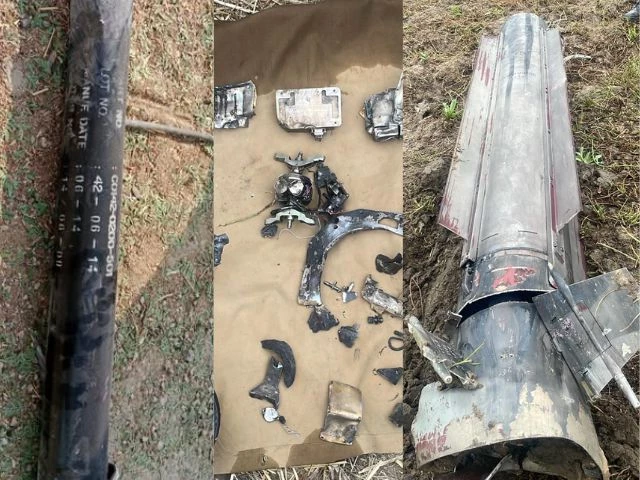
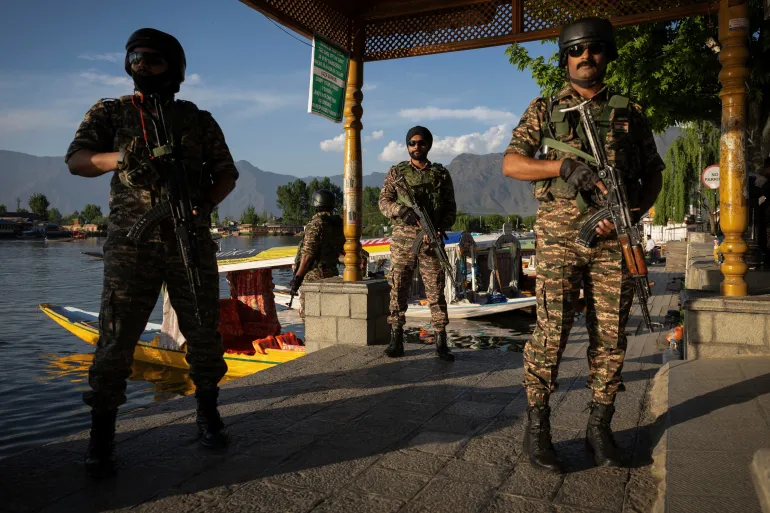
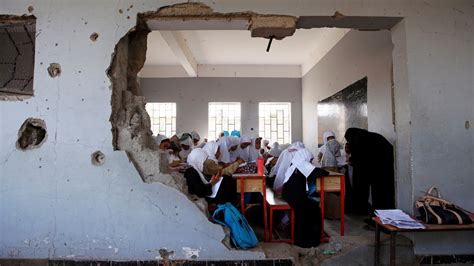
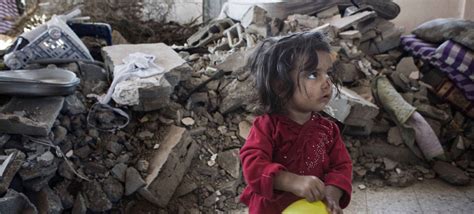
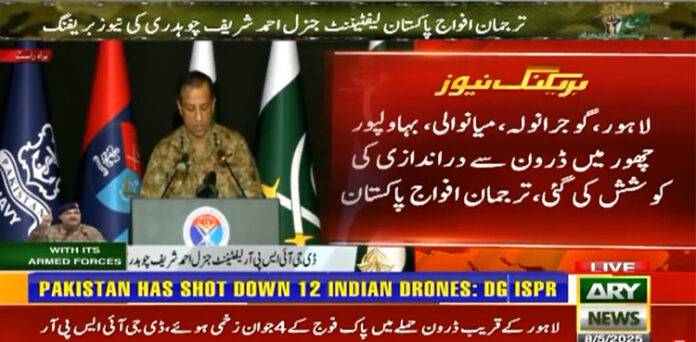
In a significant escalation of hostilities, Pakistan’s military has reported the downing of 77 Indian drones over a two-day period, marking a notable intensification in the ongoing conflict between the two nuclear-armed neighbors.
Unprecedented Drone Activity
According to Pakistani security sources, the drones, identified as Israeli-made Harop loitering munitions, were intercepted between May 6 and May 8, with 29 drones shot down by the evening of May 8 and an additional 48 neutralized overnight into May 9 . These drones were reportedly targeting both civilian and military sites across various regions, including Vehari, Pakpattan, and Okara .(The Express Tribune, Daily Times)
Rising Civilian Casualties
The intensified drone activity has coincided with increased artillery exchanges along the Line of Control (LoC), leading to civilian casualties on both sides. Reports indicate that at least five civilians have been killed and seven others injured in Pakistan-administered Kashmir due to unprovoked Indian shelling on residential areas .(The Express Tribune)
Broader Context of Escalation
The recent surge in hostilities follows India’s launch of “Operation Sindoor,” a series of missile strikes targeting alleged terrorist infrastructure in Pakistan and Pakistan-administered Kashmir. India stated that these strikes were in retaliation for a deadly attack on Indian tourists in Pahalgam on April 22, which New Delhi attributes to Pakistan-based militant groups .(AP News)
In response, Pakistan has engaged in cross-border shelling and drone incursions, further exacerbating tensions. Both nations have accused each other of targeting civilian areas, leading to mass evacuations, school closures, and the suspension of major events, including the Indian Premier League .(AP News)
International Concerns and Calls for Restraint
The escalating conflict has drawn international concern. U.S. Vice President JD Vance has expressed hope for a resolution, while the European Union has called for restraint . Despite diplomatic efforts, the situation remains volatile, with both nations accusing each other of aggression.(The Express Tribune)
Conclusion
The downing of 77 Indian drones by Pakistan’s military underscores the fragile nature of peace along the India-Pakistan border. As civilian casualties mount and infrastructure suffers, the need for diplomatic engagement and de-escalation becomes increasingly urgent.
For the millions residing in the border regions, the hope is for a swift resolution to the hostilities, allowing for a return to normalcy and the resumption of daily life without the looming threat of conflict.
In a significant development affecting the 2025 Indian Premier League (IPL), the United Arab Emirates (UAE) has declined a request from the Board of Control for Cricket in India (BCCI) to host the tournament’s remaining matches. This decision stems from a prior commitment by the Emirates Cricket Board (ECB) to host the concluding fixtures of the Pakistan Super League (PSL) 2025.
The decision comes amid heightened military tensions between India and Pakistan, which have disrupted major cricket tournaments in both countries. The IPL was suspended for a week following security concerns, including a missile and drone attack near a military base close to a match venue in Dharamsala . Simultaneously, the PSL faced similar disruptions, prompting the Pakistan Cricket Board (PCB) to relocate its remaining matches to the UAE .(AP News, The Guardian)
UAE’s Prior Commitment to PSL
The ECB’s decision to decline the IPL hosting request is rooted in its existing agreement with the PCB. The PCB had finalized arrangements to shift the remaining PSL matches, including playoffs and the final, to Dubai on May 8, 2025. This move was necessitated by security concerns in Pakistan, particularly after an alleged drone incident near the Rawalpindi Cricket Stadium .(Cricket Pakistan, AP News)
Upon receiving the BCCI’s request, the ECB informed the Indian board that the venues were already reserved for the PSL, leaving the IPL’s plans in uncertainty .(The News International)
Implications for IPL 2025
With the UAE unavailable, the BCCI is exploring alternative options to resume the IPL. One possibility under consideration is hosting the remaining matches in England or South Africa later in the year. However, this could lead to scheduling conflicts with other international cricket events, such as the Asia Cup and India’s tour of Bangladesh .(Cricket Pakistan, The Times, Geo Super)
The IPL’s suspension has also impacted players and franchises, with many foreign players returning home amid the uncertainty. The BCCI has emphasized that any decision regarding the tournament’s resumption will prioritize the safety and well-being of all stakeholders .(The Times, Geo Super)
Conclusion
The UAE’s refusal to host the remaining IPL 2025 matches underscores the complexities of organizing international sporting events amid geopolitical tensions. As the BCCI evaluates alternative venues and schedules, the future of the current IPL season remains uncertain. Meanwhile, the PCB’s successful relocation of the PSL to the UAE highlights the importance of contingency planning in ensuring the continuity of major sports tournaments.(Facebook, Geo Super, The Stadium Business)
For fans and stakeholders, the hope is for a de-escalation of regional tensions, allowing cricket to resume its role as a unifying force in the subcontinent.
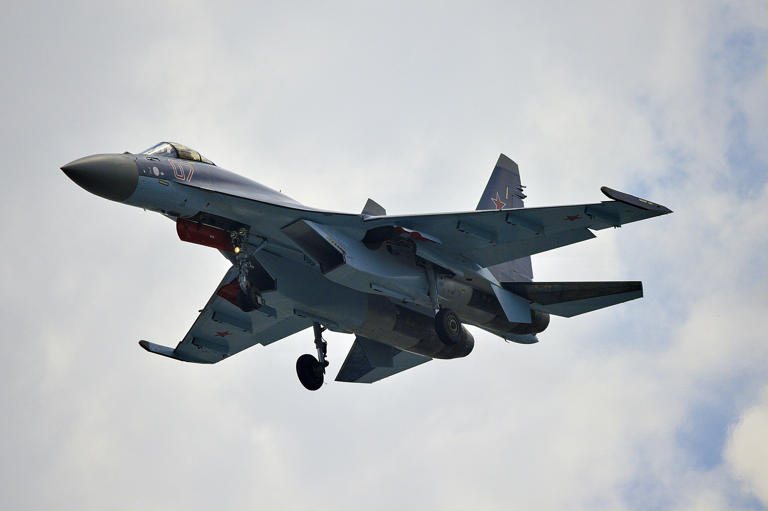
In a significant development in South Asian military affairs, Pakistan has confirmed the deployment of Chinese-made J-10C fighter jets in response to recent Indian military actions. This marks a notable moment in the region’s defense dynamics, highlighting the evolving alliances and military capabilities of both nations.(Daily Times)
Background: Escalating Tensions Between India and Pakistan
The longstanding rivalry between India and Pakistan has seen numerous flashpoints, with Kashmir often at the center. Recent events have intensified this tension, leading to military engagements that have drawn international attention.
The J-10C: A New Player in Pakistan’s Air Defense
The Chengdu J-10C is a fourth-generation, multirole fighter aircraft developed by China. Equipped with advanced avionics, radar systems, and capable of carrying a variety of missiles, the J-10C enhances Pakistan’s aerial combat capabilities.(Wikipedia)
Deployment in Recent Conflict
According to statements from Pakistani officials, the J-10C jets were utilized to counter Indian air incursions. Reports suggest that these aircraft were instrumental in intercepting and neutralizing multiple Indian fighter jets, including the French-made Rafale. While India has not officially confirmed these losses, the incident underscores the J-10C’s operational effectiveness.(Army Recognition, Business Insider, Reuters)
Implications for Regional Security
The use of the J-10C by Pakistan signifies a deepening military collaboration between Islamabad and Beijing. This partnership not only alters the strategic balance in South Asia but also introduces advanced Chinese military technology into active conflict zones, providing real-world performance data.
International Reactions and Concerns
The international community has expressed concern over the escalating military engagements between the two nuclear-armed neighbors. The introduction of advanced fighter jets into the conflict raises the stakes and potential for broader regional instability.
Conclusion
Pakistan’s confirmation of deploying Chinese J-10C fighter jets in its recent military engagements with India marks a pivotal moment in South Asian defense dynamics. As both nations continue to modernize their military capabilities, the international community watches closely, hoping for de-escalation and a return to diplomatic resolutions.
Note: This blog post is based on publicly available information and aims to provide an overview of recent developments in the India-Pakistan conflict concerning the deployment of Chinese-made J-10C fighter jets by Pakistan.
The Catholic Church has entered a new era with the election of Pope Leo XIV, marking a historic moment as the first American to ascend to the papacy. Born Robert Francis Prevost in Chicago, Pope Leo XIV brings a unique blend of American and Latin American perspectives to the Vatican, promising to continue the legacy of his predecessor, Pope Francis, while charting his own path for the future of the Church.
A Historic Moment
The election of Pope Leo XIV is a landmark event, not only because he is the first American pope but also because of his deep connections to Latin America. Having spent significant time as a missionary in Peru, Pope Leo XIV is seen as a bridge between the Americas, embodying a spirit of unity and inclusivity. His election has been met with widespread celebration and anticipation for the changes he may bring to the Church.
Continuing the Legacy of Pope Francis
Pope Leo XIV has expressed admiration for his predecessor, Pope Francis, and has indicated a desire to continue many of the reforms initiated during Francis’s papacy. This includes a focus on social justice, environmental stewardship, and outreach to marginalized communities. Pope Leo XIV’s commitment to these values suggests a continuation of the progressive path set by Pope Francis, with a renewed emphasis on building bridges and fostering dialogue within the Church and beyond.
Addressing Contemporary Challenges
As the new leader of the Catholic Church, Pope Leo XIV faces a range of contemporary challenges, from addressing the clergy sexual abuse crisis to navigating the Church’s role in a rapidly changing world. His background in both the United States and Latin America, along with his experience in missionary work, positions him well to tackle these issues with a global perspective.
A Vision for the Future
Pope Leo XIV’s vision for the future of the Catholic Church is one of unity, compassion, and engagement with the modern world. He has spoken about the importance of being a “missionary church” that is open to all, emphasizing the values of charity, dialogue, and love. His leadership is expected to focus on strengthening the Church’s mission while adapting to the needs and realities of the 21st century.
Conclusion
The election of Pope Leo XIV represents a significant moment in the history of the Catholic Church. As the first American pope, he brings a fresh perspective and a commitment to continuing the progressive reforms of his predecessor. With a focus on social justice, environmental care, and global unity, Pope Leo XIV is poised to lead the Church into a new era of hope and renewal.
As the world watches, the Catholic Church embarks on this new chapter with anticipation and optimism, guided by the leadership of Pope Leo XIV.
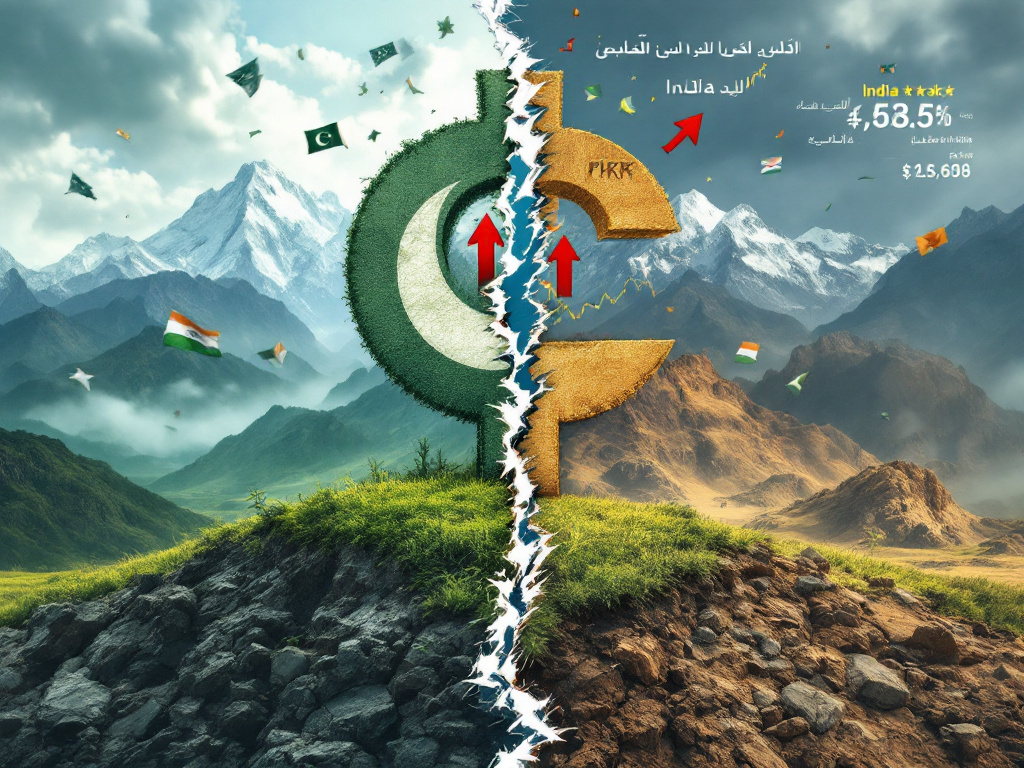
In May 2025, the long-standing tensions between India and Pakistan have escalated dramatically, leading to significant military confrontations. While the immediate focus is on the geopolitical ramifications, the economic consequences, particularly for Pakistan, are profound and potentially devastating. This blog delves into the unfolding crisis, examining the economic vulnerabilities of Pakistan amidst the escalating conflict.(Macrotrends)
The Current Conflict: A Brief Overview
The recent surge in hostilities was triggered by a deadly attack in Kashmir, resulting in the deaths of 26 Hindu tourists. India attributed the attack to militant groups based in Pakistan, leading to retaliatory strikes targeting what India described as “terrorist infrastructure” within Pakistan. Pakistan responded by downing Indian drones and conducting its own military operations. This exchange marks the most intense confrontation between the two nuclear-armed neighbors in nearly three decades .(Reuters, Reuters, Reuters)
Economic Fallout: Pakistan’s Fragile Economy Under Siege
Pakistan’s economy, already strained by years of fiscal mismanagement, political instability, and reliance on international bailouts, is now facing additional pressure from the escalating conflict.(The Times of India) (World Bank)
IMF Bailouts and Debt Dependency: As of March 31, 2025, Pakistan’s outstanding loans from the International Monetary Fund (IMF) stood at approximately $6.2 billion . The country has sought assistance from the IMF 25 times since joining in 1950, highlighting its chronic dependency on external financial support.(India Today)
Stalled Economic Growth: The Asian Development Bank forecasts a modest growth rate of 2.5% for Pakistan in the fiscal year 2025 . However, this projection is under threat due to the current geopolitical instability.(Asian Development Bank)
Foreign Exchange Reserves Depletion: The closure of airspace and suspension of trade routes have led to a significant loss in foreign exchange earnings. A similar airspace closure in 2019 cost Pakistan approximately $100 million .(India Today)
India’s Strategic Moves: Economic Isolation of Pakistan
India is leveraging its position to economically isolate Pakistan further:
IMF Loan Review Request: India has formally requested the IMF to review its loan programs to Pakistan, citing concerns over the latter’s alleged support for militant activities .(Reuters)
Suspension of Water-Sharing Treaty: India has suspended a key water-sharing treaty with Pakistan, exacerbating tensions and potentially impacting Pakistan’s agriculture-dependent economy .(Reuters)
Market Reactions: Investor Confidence Wanes
The financial markets have responded negatively to the escalating conflict:
Currency Depreciation: The Indian rupee experienced its worst single-day decline in over two years, reflecting regional instability .(Reuters)
Stock Market Volatility: Both Indian and Pakistani stock markets have seen increased volatility, with investors pulling back amid uncertainty.
Bond Yields Rise: Indian bond yields have risen, indicating increased borrowing costs and investor wariness.
The Humanitarian Angle: Civilian Impact and Displacement
Displacement: Border villages in India have been evacuated, and Pakistani cities like Karachi, Lahore, and Rawalpindi have been targeted, leading to civilian displacement .(Reuters)
Infrastructure Damage: The conflict has resulted in damage to critical infrastructure, further straining resources and hindering economic activity.(Wikipedia}
Conclusion: Navigating a Path Forward
The escalating conflict between India and Pakistan poses a significant threat to regional stability and economic prosperity. For Pakistan, the stakes are particularly high, with its fragile economy teetering on the brink. De-escalation, diplomatic engagement, and a focus on economic reforms are imperative to prevent a full-blown crisis.
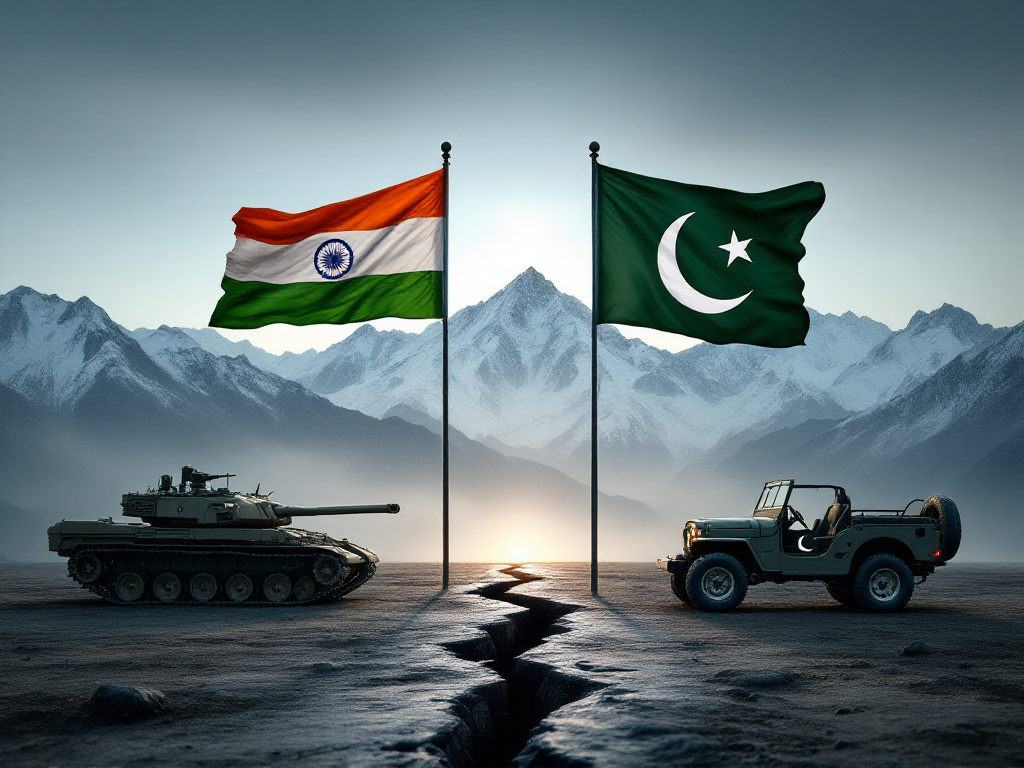
In a significant escalation of hostilities, India and Pakistan have exchanged accusations over military strikes, raising concerns about the potential for a broader conflict between the two nuclear-armed neighbors. The recent incidents have marked one of the most serious confrontations between the countries in over two decades.
Accusations and Denials
India has accused Pakistan of launching drone and missile attacks on three of its military bases located in Jammu, Udhampur in Indian-administered Kashmir, and Pathankot in Punjab. The Indian Army claims to have thwarted these attempts, which reportedly resulted in blasts and a subsequent blackout in Jammu city. Pakistan’s Defense Minister, Khawaja Asif, has categorically denied these allegations, stating that Pakistan was not involved in the attacks.
Retaliatory Strikes and International Reactions
The situation further intensified when India reported striking Pakistan’s air defenses, alleging that it had neutralized Pakistan’s attempts to target military installations in India. Pakistan has condemned this action as an “act of aggression,” following earlier Indian missile strikes on targets within Pakistan and Pakistani-administered Kashmir. The international community, including the United Nations and various world leaders, has called for de-escalation and restraint to prevent the situation from spiraling out of control.
Humanitarian Impact and Rising Tensions
The ongoing conflict has had a severe humanitarian impact, with casualties reported on both sides. Pakistan claims that Indian air strikes have resulted in 31 deaths and 57 injuries, while India reports 16 fatalities due to Pakistani firing in the disputed Kashmir region. The escalating tensions have also led to the displacement of civilians in border areas, who have been forced to seek shelter due to the cross-border shelling.
The Path Forward
As the situation remains volatile, there are growing concerns about the potential for further escalation. Both countries have a history of conflict over the Kashmir region, which has been a flashpoint since their independence in 1947. The recent events underscore the urgent need for diplomatic efforts to de-escalate tensions and prevent a full-blown conflict. The international community continues to monitor the situation closely, hoping for a peaceful resolution to the crisis.
In conclusion, the recent military exchanges between India and Pakistan highlight the fragile nature of their relationship and the ongoing challenges in the region. As both countries navigate this complex situation, the hope is that diplomatic channels will prevail, leading to a de-escalation of hostilities and a return to stability.
As Pakistan faces an education emergency and rising tensions with India, school closures, digital gaps, and conflict zones disrupt learning. Explore how contingency planning and digital education can protect the future.
Introduction
Pakistan is navigating a dual crisis: a persistent education emergency caused by recurring natural disasters and political instability, and a sharp rise in tensions along the India-Pakistan border. As schools close due to floods, smog, and now cross-border military action, the future of millions of children hangs in the balance. The current India-Pakistan conflict, marked by airspace closures, suspended flights, and ground military activity, adds a new layer of uncertainty to an already fragile education system.
This blog explores how emergencies and conflict affect education in Pakistan, what strategic actions are needed, and how the government and society can respond proactively.
The State of Emergency in Pakistan’s Education System
Even before the latest India-Pakistan military tensions, Pakistan had declared an education emergency due to poor literacy rates, outdated infrastructure, and a large population of out-of-school children. Floods in 2022 destroyed over 30,000 schools nationwide, leaving millions without access to learning environments.
Now, border clashes and escalating geopolitical conflict have led to new closures in sensitive zones like Punjab and Kashmir. The India Civil Aviation Authority recently closed 24 airports across its northern belt—including Amritsar and Srinagar—due to security threats. These events mirror the growing education disruptions in Pakistan, especially near the Line of Control (LoC).
How Conflict Disrupts Education
The impact of war and military conflict on schooling is both immediate and long-term. In areas close to the India-Pakistan border, many schools have either closed or are being used as emergency shelters. Students in conflict zones face interrupted studies, trauma, and forced displacement, while teachers are unable to safely conduct classes.
These disruptions have intensified the digital divide in Pakistan. Most students in rural areas lack internet access, computers, or even mobile devices that can support online learning. While urban private schools may switch to online classes, millions in public education have no such options.
COVID-19 Lessons Ignored
During the COVID-19 school closures, Pakistan failed to implement a nationwide digital learning strategy. This failure is repeating now amid war threats and natural disasters. With many schools closed again—either due to smog, floods, or fear of shelling—students are once again missing out on vital learning time.
The absence of a contingency plan for emergencies in schools is glaring. Schools and education boards across Pakistan operate in silos, with no centralized mechanism to shift to remote learning or hybrid models when crises hit.
The Psychological Toll on Students
Besides academic loss, the mental health effects of emergencies cannot be overlooked. Whether it’s fear of bombings near the border, anxiety from displacement, or trauma from environmental disasters, students are under constant stress. Without counseling or support systems, these issues often go unaddressed.
In the current climate of India-Pakistan military conflict, many children report feeling unsafe at school or unable to concentrate due to fear of violence. If not managed properly, this will lead to a generation affected not only academically, but emotionally and socially.
What Can Be Done? Strategic Contingency Planning
To address this multi-pronged crisis, Pakistan must develop a long-term education contingency plan with the following components:
1. Disaster-Resilient Infrastructure
Reconstruct schools using flood-proof and earthquake-resistant materials, especially in disaster-prone and border regions.
2. Nationwide Digital Learning Platforms
Develop public digital portals, like a “Pakistan Learning Hub,” that offer curriculum-aligned videos, quizzes, and notes in multiple languages—available online and offline.
3. Emergency School Closure Policy
Create a standardized policy for when schools should close and how students will continue learning during emergencies. This must apply to all provinces and regions, including AJK and Gilgit-Baltistan.
4. Teacher Training
Train teachers in digital tools and emergency classroom management. Encourage them to use platforms like Google Classroom, WhatsApp, and TV-based learning during crises.
5. Mental Health Support
Every district should have mobile mental health teams for trauma-affected students, especially in border areas and flood-hit zones.
Government Action: Too Little or Just in Time?
The federal government’s recent declaration of an education emergency is a step in the right direction, but it lacks funding, policy detail, and execution frameworks. Meanwhile, the rising India-Pakistan tensions are creating further uncertainty in policymaking, with national focus shifting from development to defense.
It is crucial that education is not sidelined in times of war. Even during armed conflict, education is a human right. The global community must pressure both India and Pakistan to respect humanitarian zones, including schools and hospitals.
Global Lessons & Support
Countries like Syria, Ukraine, and Sudan have shown how digital platforms and community schooling can continue during wars. Pakistan must learn from such examples and seek international funding for education in emergencies, especially from organizations like UNICEF, Education Cannot Wait, and UNESCO.
Conclusion: Preparing for the Unpredictable
Whether it’s floods, pandemics, or India-Pakistan cross-border hostilities, education in Pakistan is constantly at risk. We cannot predict the next emergency, but we can prepare for it.
To safeguard the next generation, Pakistan must adopt a resilient, inclusive, and tech-enabled education model that works even in conflict zones and natural disasters. A strategic, fully funded contingency plan is no longer optional—it is a necessity.
Amid growing conflict with Pakistan, India halts flight operations and closes 24 airports, including Amritsar and Srinagar. Major airlines cancel over 300 flights.
In a dramatic turn of events escalating regional tensions, India has suspended flight operations at 24 airports across its northern and western regions, following rising military conflict with Pakistan. This move comes after reports of cross-border airspace violations and the capture of a pilot — though these claims remain unverified by both sides.
According to a late-night update by India’s Civil Aviation Ministry, key domestic airports — including Amritsar, Srinagar, and others near the Pakistan border — are temporarily shut as a “precautionary measure.” The suspension will reportedly remain in effect until Saturday, severely disrupting both domestic and international air travel.
Flight Cancellations and Diversions: Airlines Respond
India’s largest domestic airline, IndiGo, has cancelled 165 flights, while Air India and Air India Express have reportedly cancelled a similar number. Two international Air India flights from Amritsar, near the Pakistan border, were diverted to New Delhi due to sudden airspace restrictions.
Passengers were informed through urgent advisories, with airlines requesting travelers to check for updates before heading to airports. This widespread disruption affects thousands of passengers and comes during a time of already heightened travel demand.
In response to Indian media narratives, Pakistan’s Foreign Office issued a firm rebuttal, labelling the accusations of cross-border attacks on Indian military bases as “baseless and irresponsible.” The FO emphasized Pakistan’s commitment to peace but reiterated its right to respond to any aggression.
As reported by The Washington Post, the international community has urged both nations to exercise restraint and avoid escalation that could destabilize the region.
India Issues Stern Warning to Pakistan Amid Escalating Tensions
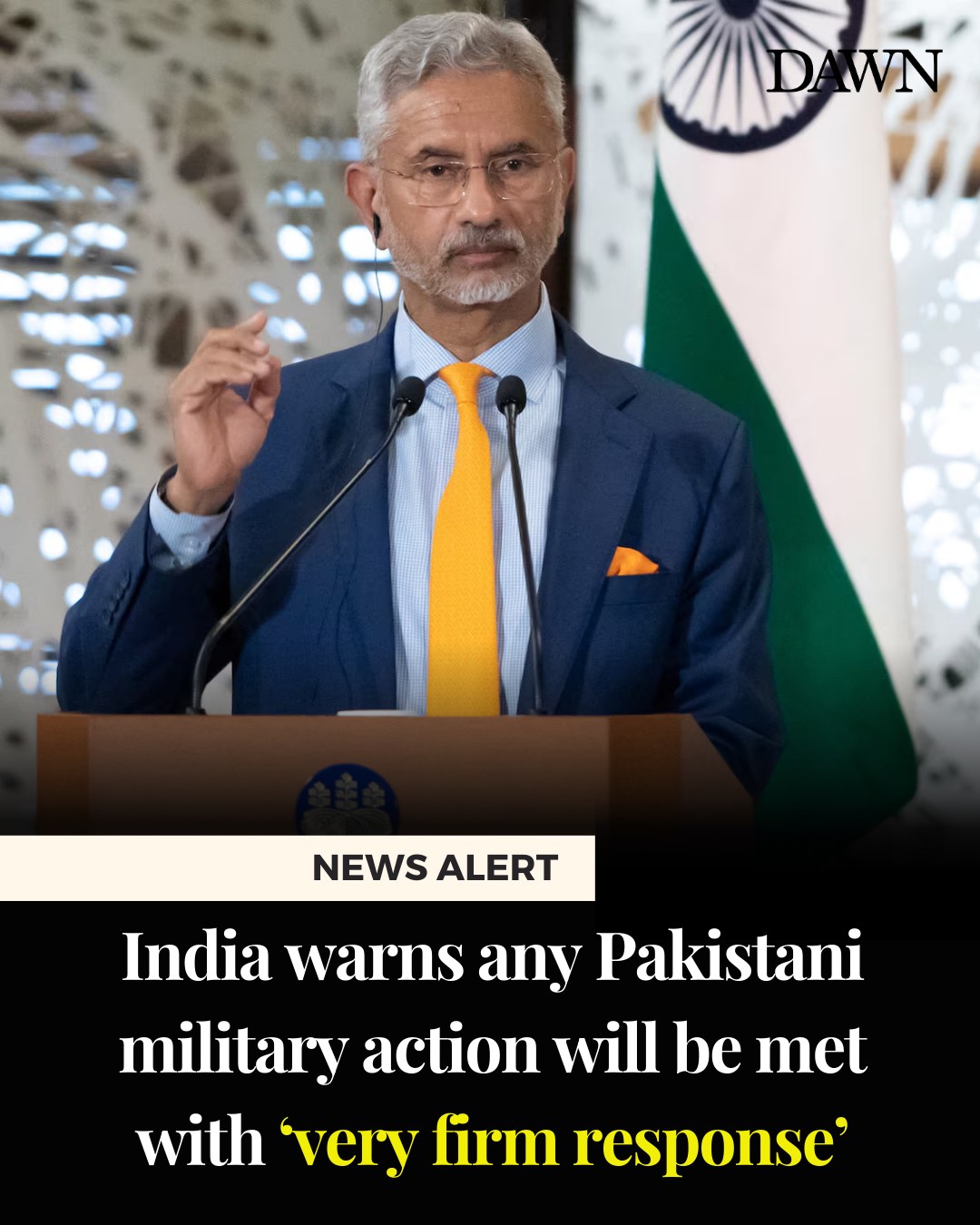
In a significant escalation of regional tensions, Indian Foreign Minister S. Jaishankar has issued a stern warning to Pakistan, asserting that any military aggression will be met with a “very, very firm response.” This declaration follows India’s recent missile strikes on multiple locations within Pakistan, targeting what it describes as terrorist infrastructure.(The Guardian)
Background of the Escalation
On May 6, 2025, India launched “Operation Sindoor,” a series of missile strikes aimed at nine sites in Pakistan and Pakistan-administered Kashmir. These strikes were in retaliation for a deadly terrorist attack on April 22 in Pahalgam, Indian-administered Kashmir, which resulted in the deaths of 26 Hindu tourists. India attributed the attack to Pakistan-based militant groups Jaish-e-Mohammed and Lashkar-e-Taiba.(New York Post, Reuters)
India maintains that the strikes were “targeted and measured,” focusing solely on terrorist camps and avoiding civilian areas. However, Pakistan has contested this claim, reporting that the strikes resulted in at least 31 civilian deaths and 46 injuries, including the destruction of mosques in Bahawalpur and Kotli .(The Guardian)
Pakistan’s Response
In the wake of the strikes, Pakistan has condemned India’s actions as an “act of war.” The Pakistani military claims to have shot down five Indian aircraft and a drone, though India disputes these assertions. Prime Minister Shehbaz Sharif has authorized “corresponding action,” indicating a potential for further military engagement .(The Guardian, Reuters, The Guardian)
Cross-border shelling has intensified along the Line of Control (LoC), leading to additional civilian casualties on both sides. The situation remains volatile, with both nations on high alert.(Reuters)
International Reactions
The international community has expressed deep concern over the escalating conflict between the two nuclear-armed neighbors. The United Nations has called for immediate de-escalation, emphasizing the need for restraint to prevent a larger conflict. U.S. President Donald Trump described the situation as a “shame” and urged both countries to avoid further escalation, offering to mediate if necessary .(The Guardian, Time)
Iranian Foreign Minister Abbas Araghchi is scheduled to meet with Jaishankar in New Delhi, following visits to both countries, in an effort to mediate and reduce tensions .(Malay Mail)
Current Status
As of now, both India and Pakistan have fortified their military positions along the border, with increased troop deployments and heightened surveillance. Airspace restrictions have been implemented, and several international flights have been canceled due to safety concerns. The situation remains tense, with the potential for further escalation if diplomatic efforts fail to yield results.
How Are Indian Drones Entering Pakistan Undetected? The Nation Demands Answers
In recent days, a wave of concern has swept across Pakistan following alleged drone attacks believed to have originated from Indian territory. These incidents have raised serious national security questions: How are Indian drones managing to breach Pakistani airspace? Why isn’t our defense system detecting and intercepting them? The public is demanding transparency, accountability, and immediate answers from the relevant authorities.
This blog explores the rising concerns, technical possibilities, and what the people of Pakistan deserve to know.
🚨 A Wake-Up Call for National Security
When drones can cross international borders and reach major Pakistani cities without being intercepted, it’s not just a security lapse—it’s a national emergency. Citizens from across the country are asking:
How are these drones slipping past Pakistan’s air defense radar?
Why are critical urban and military zones vulnerable?
Where are the official responses and reassurances?
The silence is deafening—and dangerous.
🇵🇰 Public Trust Shaken: What the People Are Saying
From social media threads to television talk shows, the topic of Indian drones in Pakistan is dominating public discourse. Trending hashtags like #DroneAttackPakistan, #WhereIsOurDefense, and #PakAirspaceBreach highlight the rising anxiety among citizens.
Many are questioning:
The role and readiness of our air surveillance systems
The performance of agencies like PAF, ISPR, and civil aviation
Whether modern drone warfare has outpaced our defense preparedness
This is not just about defending borders—it’s about restoring trust.
🤖 How Do Drones Cross Borders Undetected?
To understand how Indian drones may be entering Pakistan, we need to look at how drone technology works and why it’s so difficult to track:
1. Low Altitude Flying
Modern military drones can fly at extremely low altitudes, often below radar range. This allows them to avoid standard detection methods.
2. Small Radar Signature
Unlike fighter jets, drones—especially tactical or kamikaze drones—are often small and constructed with non-metallic parts, reducing their radar visibility.
3. Electronic Jamming and Stealth Tech
Advanced drones can use jamming signals to confuse radar systems or exploit gaps in coverage between radar zones.
4. Nighttime Infiltration
Drones often fly under the cover of darkness, when visibility is limited and response times are slower.
🛡️ Where Is Pakistan’s Air Defense?
Pakistan has a range of air defense tools including:
Long-range radar systems
Surface-to-air missile batteries
Early warning aircraft
Civilian and military surveillance coordination
So why did none of these detect or respond to recent drone incursions?
Analysts believe that either:
The drones used new or advanced stealth technology, or
There are blind spots in our radar coverage, especially in border areas
If true, these are vulnerabilities that need immediate fixing.
🇮🇳 Is India Using Drones as Provocation?
While there is official confirmation from the both sides that these drone intrusions could be part of India’s hybrid warfare strategy—using non-conventional methods to provoke or test Pakistan’s defenses.
This tactic aims to:
Trigger panic
Collect intelligence
Damage infrastructure without boots on the ground
The Indian media has largely cheering, adding to suspicions and anger.
📢 What Pakistanis Expect From Officials
The people are not asking for war—they’re asking for answers. Here’s what Pakistani citizens demand:
✅ 1. Clear Government Statement
No more vague updates. Citizens deserve a transparent and unified response from the Ministry of Defense, ISPR, and the Prime Minister’s Office.
✅ 2. Independent Investigation
A parliamentary or judicial commission should be formed to investigate the incidents and submit findings to the public and culprit should be punish.
✅ 3. Upgrade in Defense Systems
If existing radar and air defense systems are outdated, it’s time to invest in modern anti-drone technology, including:
Radar jammers
Laser interception systems
AI-powered drone detectors
✅ 4. Tougher Border Surveillance
The entire eastern border, especially near urban centers, must be reevaluated for air surveillance blind spots.
✅ 5. Diplomatic Accountability
If India is responsible, the Foreign Office must lodge a strong protest and take the matter to the United Nations or other global forums.
🗣️ Why This Matters to Every Pakistani
Drone attacks aren’t just military issues—they’re civilian issues. A single drone strike on a city hospital, power plant, or school could have devastating consequences.
If our skies aren’t safe, our homes, families, and futures aren’t either.
This isn’t fear-mongering. It’s a real and rising threat. And ignoring it only empowers those who want to test our limits.
📲 What Can You Do as a Citizen?
Until official channels respond, here’s how you can raise awareness and keep the pressure on:
Use your voice: Share posts, write blogs, tweet, and raise questions.
Tag responsible authorities: Let them know you expect answers.
Stay informed: Follow reputable defense analysts and journalists.
Demand transparency: Ask your local representatives to push for clarity.
🔚 Final Thoughts: Pakistan Deserves Straight Answers
In today’s world, drone warfare is no longer a future threat—it’s already here. If Indian drones are entering Pakistan without resistance, it’s not just a defense failure—it’s a leadership failure.
The people of Pakistan are not asking for military retaliation or war.
They’re asking for:
Truth over vague statements
Responsibility over excuses
Action over press releases
This is not about demanding aggression—it’s about demanding accountability.
The public has every right to know:
What exactly happened?
How did these drones go undetected?
Who is responsible for this failure?
What steps are being taken to make sure it never happens again?
Until clear answers are given, the trust gap will only widen.
The people aren’t looking for counterattacks. They’re looking for clarity, security, and leadership.