Posted on Leave a comment

Gaza Under Fire Again: What Israel’s New Offensive Means Amid Rising Global Pressure

As Gaza reels under yet another wave of deadly violence, the world watches with growing alarm. Israel’s newly launched military campaign—titled “Gideon’s Chariots”—has plunged the besieged Palestinian enclave into deeper turmoil, triggering condemnation and urgent warnings from key international players. The offensive, which began just days after former U.S. President Donald Trump’s visit to the region ended without a truce or hostage deal, marks a significant escalation in one of the most enduring and brutal conflicts of our time.

In the span of just a few days, hundreds have been killed. Entire families have been buried beneath the rubble of collapsed buildings, and humanitarian access has been pushed to a new breaking point. The violence, now shifting from airstrikes to an intensified ground invasion, is reigniting fears of a long-term war with devastating consequences for civilians.

The Operation: “Gideon’s Chariots”

The Israeli Security Cabinet gave its nod to the military operation on May 5, signaling an expansion of the war aims that have defined the conflict in Gaza. Officially, the stated objectives are clear: eliminate Hamas as a military and political force and recover the remaining Israeli hostages held in Gaza.

The Israel Defense Forces (IDF) swiftly executed the directive. Heavy aerial bombardments were launched across the strip, targeting what Israel claims are Hamas strongholds. But as is often the case in Gaza, the line between combatants and civilians is tragically blurred. Hospitals have reported an influx of civilian casualties, many of them women and children, with some entire families reportedly wiped out in a single strike.

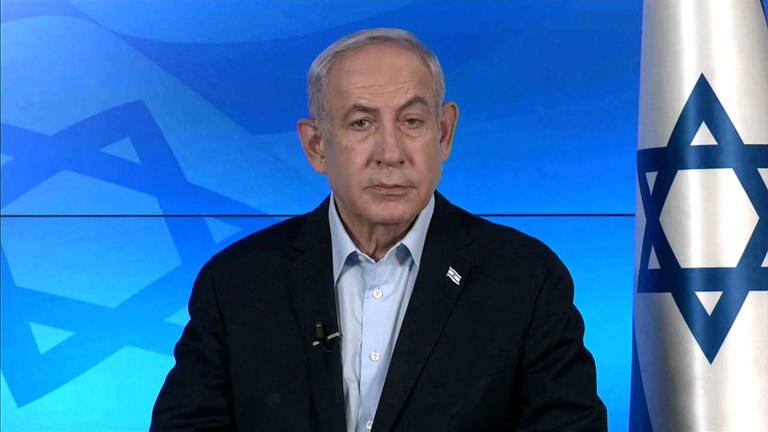
As the weekend gave way to Monday, the campaign intensified further with Israeli ground troops advancing simultaneously into both northern and southern Gaza. The push, according to military statements, is designed to dismantle what remains of Hamas’s infrastructure while asserting full territorial control—a goal Prime Minister Benjamin Netanyahu openly stated Israel now seeks.

Global Outcry and the Threat of Sanctions

This latest escalation has not gone unnoticed by the international community. For the first time since the war’s early days, staunch Western allies of Israel are expressing serious displeasure—and issuing direct warnings.

The United Kingdom, France, and Canada released a rare joint statement on Monday threatening “concrete actions” if Israel does not halt its assault and immediately allow unhindered humanitarian aid into Gaza. Among the measures under consideration are targeted sanctions, diplomatic freezes, and even potential arms review agreements.

The shift in tone is notable. Historically, these countries have maintained a largely supportive posture toward Israel, often citing its right to self-defense. But the scenes emerging from Gaza—mass civilian deaths, destroyed aid convoys, and blocked relief efforts—are testing that alignment.

Israel’s decision to allow five trucks of humanitarian aid into Gaza has done little to stem the criticism. UN aid chief Tom Fletcher called the effort “woefully insufficient,” noting that it represents only a fraction of what is needed to address the hunger, medical emergencies, and displacement within the enclave. “A drop in the ocean,” Fletcher said, capturing the sheer scale of the crisis.

The Stalled Ceasefire and Doha Talks

At the heart of this renewed violence is a failure in diplomacy. Hopes were briefly raised when Hamas and Israel entered indirect negotiations in Doha, Qatar over the weekend. However, those talks appear to have reached an impasse. Hamas has refused to accept Israel’s terms, especially those requiring unconditional surrender and no guarantees of Palestinian autonomy.

Former President Trump, who had positioned his visit as a chance to broker a deal, left the region without any tangible outcome. Soon after his departure, Israel moved forward with its military agenda—leaving little doubt that the operation was premeditated, and not merely a response to stalled talks.

The timing has raised questions about Israel’s long-term intentions. Is this offensive aimed at pressuring Hamas into submission, or is it part of a broader strategy to redraw the political map of Gaza? Netanyahu’s remarks about taking “complete control” over the territory suggest the latter.

Humanitarian Collapse and the Cost to Civilians

For Gazans, the price of this war continues to climb with unbearable speed. More than two million people live in the Gaza Strip, already suffering from years of blockade, power shortages, and crippled infrastructure. This new ground offensive, paired with sustained airstrikes, is compounding a humanitarian disaster that has few parallels in the modern world.

Reports from inside Gaza paint a grim picture. Hospitals are overwhelmed. Medical supplies are running out. Clean water is scarce. And families are being displaced for the third, fourth, or fifth time within just a few months. The situation is not only a tragedy; it is a breach of international humanitarian law, according to several rights organizations.

Meanwhile, aid agencies remain largely sidelined. Their convoys are blocked, their workers endangered, and their missions increasingly politicized. Even when aid is allowed through, it’s too little and too late.

What Comes Next?

As Israel pushes forward with its campaign, and global powers inch closer to imposing punitive measures, the question remains: what is the endgame?

Will this offensive truly eliminate Hamas, or will it deepen the cycles of violence and radicalization that have haunted the region for decades? Can Western governments follow through on their threats of sanctions, or will geopolitical calculations again override moral imperatives?

What’s increasingly clear is that the cost of inaction—both diplomatic and humanitarian—is unsustainable. The longer the war continues, the more it erodes regional stability, inflames public sentiment, and alienates Israel from its traditional allies.

But beyond the politics and the military strategies, it is the ordinary civilians—mothers, children, the elderly—who are paying the highest price.

This is not just a geopolitical story. It is a story of broken homes, shattered lives, and fading hope. And unless the world steps in with more than just statements, that story will only grow darker in the days to come.

Posted on Leave a comment

Between Ceasefire and Censorship: What Pakistan’s Media Must Learn from the India Crisis

The recent ceasefire agreement between India and Pakistan is a welcome pause in a long and painful pattern of hostilities. While the guns have quieted along the Line of Control, what lingers behind is a deeper, more nuanced battlefield—one shaped by words, perceptions, and information. The role of the media during such times isn’t just to relay bulletins or report from frontlines; it is also to interrogate, reflect, and challenge the narratives we are too quick to accept.

In the brief but intense period of conflict, Pakistan’s media largely earned praise for its measured tone and responsible conduct. Compared to the bombast coming from across the border, local coverage felt grounded. Government officials, ministers, and commentators lauded this maturity. Yet ironically, this very praise raises a red flag.

In classic journalistic tradition, government approval is not typically a badge of honor. When officials cheer the media’s performance, it becomes necessary to ask: was the media simply doing its job—or was it playing along?

The Problem with Approval

In democratic systems, the independence of the press is not just a principle, it is a practical necessity. For the press to act as a counterweight to state narratives, a certain tension must exist. Approval suggests alignment, and alignment, in times of conflict, blurs the essential distinction between state communication and journalistic inquiry.

During this conflict, Indian media took an aggressive, jingoistic stance—amplifying nationalistic sentiment, reporting unverified attacks, and fueling public appetite for confrontation. In contrast, Pakistan’s press was comparatively subdued and careful. But here’s where nuance is needed: restraint is not the same as depth, and silence is not always strategic.

This is where the Pakistani media, despite its composure, may have faltered. There was little critical interrogation, even less diversity of opinion, and almost no engagement with alternative perspectives, especially from across the border. The result was a singular, predictable stream of commentary—calm, yes, but also limited.

Learning from the Other Side

Ironically, a richer diversity of perspectives emerged from India, not through its mainstream “godi media,” but from independent journalists and platforms. Karan Thapar, for example, conducted a remarkable series of interviews featuring voices both Indian and Pakistani. These discussions went beyond blame and noise. They dove into history, policy, military capability, and public perception. And they allowed viewers in both countries to consider the complexity of their neighbor’s position.

The fact that these interviews were well-received in Pakistan speaks volumes. It shows a public appetite for informed debate, even if it challenges national narratives. More importantly, it reveals a gap in our own media landscape. Where is the Pakistani equivalent of The Wire or Scroll.in—outlets that, even under pressure, create space for dissent and rigorous debate?

Our reluctance to broadcast or even host counter-views, especially during tense times, weakens our claim to maturity. A truly confident media doesn’t shy away from dissent; it embraces it, knowing that constructive criticism is a pillar of progress, not a threat to national security.

The Crisis of Platforms

Another dimension to this issue is the shrinking space for free expression online. The ban on X (formerly Twitter) in Pakistan, which persisted for over a year, was not just a technical blockade—it was a symbolic one. It signaled that control of the narrative is valued more than open discussion. Only when external pressure mounted did the government reconsider. And even now, public trust remains low, with users half-expecting another sudden blackout.

This inconsistency damages not only domestic dialogue but also our international credibility. In a global information war—especially one as sensitive as Indo-Pak relations—credibility is currency. Foreign analysts, diplomats, and media houses do not rely on official statements alone. They look for independent media signals to understand the internal discourse of a country. A landscape devoid of these signals suggests suppression, not stability.

The Illusion of Stability

It’s tempting to interpret this recent ceasefire as a turning point. But peace, if it’s to last, must be built on more than military restraint. It requires a cultural shift in how we engage with conflict, dissent, and the role of the press.

If journalists are to be more than mouthpieces, they need the freedom to ask uncomfortable questions. They need platforms that allow them to speak truth to power. And they need an audience willing to listen, even when it’s not easy.

In the past, private gatherings of retired ambassadors and defence analysts were where ideas circulated—terms like S-400 and PL-15 were debated, and strategic thinking evolved quietly behind the scenes. Now, the world is watching us in real time. The war of ideas is as public as any other battlefield. And in this space, state-sanctioned praise is no substitute for hard-earned trust.

The Way Forward

This ceasefire should serve as more than a breather from conflict. It must also be a mirror—reflecting both the strengths and shortcomings of our information systems.

Pakistan’s media, for all its recent composure, must ask hard questions. Can we foster independent platforms that explore the broader regional implications of conflict? Can we create space for dissenting voices, including those from India, not to endorse them but to understand the conversation across the border? Can we maintain our credibility without needing a crisis to remind us of its value?

Because when the next flashpoint comes—and history suggests it will—the stories we tell, the voices we platform, and the truths we choose to pursue will shape not just public opinion, but international understanding.

Peace on the ground is fragile. But peace of the mind—shaped by honest media and open debate—is what endures.

And that kind of peace is worth investing in.

Posted on Leave a comment

Joe Biden Diagnosed with Aggressive Cancer, Receives Global Support Including Letter from King Charles


Washington, D.C. – Former U.S. President Joe Biden has revealed that he has been diagnosed with an aggressive form of prostate cancer that has spread to his bones. The announcement, made on Sunday by his office, sparked a wave of support and concern from around the globe.

On Monday morning, Biden addressed the public in a heartfelt social media post, expressing gratitude for the messages of solidarity he and his wife Jill have received.

Cancer touches us all,” Biden wrote. “Like so many of you, Jill and I have learned that we are strongest in the broken places. Thank you for lifting us up with love and support.”

Royal Support: King Charles Sends Private Letter

Among those who reached out was King Charles III of Britain, who reportedly sent a private letter to Biden. While the contents have not been disclosed, sources close to the Biden family describe the note as warm, personal, and deeply appreciated.

The gesture highlights the strong diplomatic ties between the United States and the United Kingdom, and also underscores the shared human experience of battling illness—even among global leaders.

Biden’s Health and Prostate Cancer Diagnosis

According to the official statement, Joe Biden’s prostate cancer diagnosis is serious. The cancer is reported to have metastasized to his bones, a condition classified as advanced metastatic prostate cancer. While treatment details have not been released, Biden’s spokesperson indicated he is undergoing medical care and “remains optimistic and in strong spirits.”

This development has reignited public discussion about Biden’s health during his presidency, particularly given his age and the physical demands of political leadership. Biden, now 81, served as the 46th President of the United States from 2021 to 2025, after serving as Vice President under Barack Obama.

What is Metastatic Prostate Cancer?

Prostate cancer is one of the most common cancers among men, but once it spreads beyond the prostate gland, it becomes significantly more difficult to treat. According to the American cancer society, bone metastases are the most frequent site of spread in advanced cases.

Treatment may involve hormone therapy, radiation, chemotherapy, or newer targeted therapies, depending on the progression and overall health of the patient.


Global Reaction and Political Implications

Biden’s announcement has prompted a wave of public and international responses. Leaders across the globe, advocacy groups, and citizens have offered messages of hope, healing, and strength. His openness about the diagnosis has also encouraged broader conversations about cancer awareness, especially among aging populations and public figures.

However, the diagnosis has also sparked renewed scrutiny of Biden’s health during his time in office. Critics and analysts have long speculated about his fitness to lead, and this development has added fuel to those concerns, particularly as some reports suggest health issues may have been understated during his presidency.

Biden’s Legacy and the Human Side of Leadership

Despite political debates, the emotional tone of Biden’s message struck a chord with many. His statement—”We are strongest in the broken places”—resonated deeply with those who have faced similar battles or supported loved ones through them.

The show of support, especially from King Charles, also reflects a broader sense of international empathy and solidarity. Public figures facing health challenges often become symbols of resilience, and Biden’s willingness to speak openly may further raise awareness about prostate cancer and the importance of early detection.


Final Thoughts: Leadership, Legacy, and the Battle Ahead

While the future of Joe Biden’s health remains uncertain, what is clear is the outpouring of love and support he continues to receive. In a world often divided by politics, moments like these serve as a reminder of our shared humanity.

As more details emerge about his condition and treatment, Biden’s story will likely remain in the global spotlight—not just as a political figure, but as a man confronting one of life’s hardest battles.


🔍 Embedded SEO Keywords:

  • Joe Biden cancer diagnosis
  • Joe Biden prostate cancer
  • metastatic prostate cancer
  • Biden health update
  • King Charles letter to Biden
  • Biden cancer support
  • cancer in public figures
  • advanced prostate cancer treatment
  • world leaders cancer diagnosis
  • Joe Biden medical news

Let me know if you’d like a social media post, thumbnail prompt, or YouTube news script to accompany this article.

Posted on Leave a comment

Dean Henderson: The Journey Behind a Historic FA Cup Final Performance


In football, legends are made in moments. For Dean Henderson, the 2025 FA Cup Final was one of those moments—the kind that echoes through club history and lives on in the hearts of fans forever.

As Crystal Palace lifted their first-ever major trophy, it was Henderson who stood tallest on the grandest stage. His crucial saves, commanding presence, and a game-defining penalty stop helped seal a famous victory, but his journey to Wembley glory has been anything but straightforward.

The Save That Defined the Final

When Omar Marmoush stepped up to the penalty spot, the tension in the stadium was suffocating. It was a pivotal moment. A goal would’ve tilted the game, potentially ending Palace’s dream.

But Henderson knew.

He knew where Marmoush would shoot. Maybe it was deep dive analysis and hours of preparation. Maybe it was instinct—sharpened during years of academy training as an outfielder at Carlisle, or his loan spell with Shrewsbury Town, where he once saved a crucial penalty in a Wembley play-off final.

Whatever the reason, he guessed right. He dived. He saved. And Crystal Palace fans erupted.

That single moment changed the tempo of the match, energised his teammates, and ultimately anchored their path to victory.

From Carlisle to Wembley: A Road Less Traveled

The rise of Dean Henderson is as much about grit as it is about talent.

Growing up in Whitehaven, Cumbria, Henderson joined Carlisle United’s youth setup not as a goalkeeper—but as an outfield player. It wasn’t until his move to Manchester United’s youth academy that his path between the posts began to take shape.

Even then, nothing came easy. With United’s first team stacked with talent, Henderson spent much of his early career on loan: Stockport County, Grimsby Town, Shrewsbury Town, and most notably Sheffield United, where he had a breakthrough season in the Premier League.

Each loan came with its own challenges—adapting to different managers, styles, and expectations—but they all shaped him into the relentless, focused shot-stopper he is today.

Manchester United, Loans, and the Fight for No.1

After excelling with Sheffield United, many believed Henderson was ready to claim the No. 1 spot at Manchester United. For a time, he was neck and neck with David de Gea, sparking debate among pundits and fans alike.

But the opportunity never quite crystallised. Injuries, changing management, and the arrival of other keepers meant Henderson had to look elsewhere for consistent football.

That’s when Crystal Palace came calling.

The Crystal Palace Chapter: Risk, Reward, Redemption

Signing with Palace was a gamble—but it was one Henderson had to take.

He wanted game time. He wanted responsibility. He wanted the pressure.

And now, he’s delivered. In spectacular fashion.

Palace’s FA Cup win is historic. For a club often overshadowed by London’s football giants, this was their night. Their story. And Henderson was at the centre of it—surviving a VAR red-card check, commanding the box, and delivering world-class saves.

It was, in every sense, the performance of his life.

The FA Cup Final That Had It All

The final itself will go down as a classic. Tense. Tactical. Emotional.

Aside from the penalty stop, Henderson made several key saves from open play, including a reflex dive in the 82nd minute that looked like a certain equaliser. He organized his backline, cut off crosses, and played with the kind of authority that makes a keeper unshakable.

When the final whistle blew, the Palace bench cleared. Henderson—arms raised, fists clenched—was mobbed by his teammates. He had delivered not just a clean sheet, but a memory for the ages.

What’s Next for Henderson?

At 28, Dean Henderson is entering the prime years of his career. With Crystal Palace, he now has silverware, recognition, and the love of a fan base who will forever sing his name.

There’s talk of a potential England recall. A chance to challenge again at the international level.

But even if that doesn’t come, Henderson’s legacy is secure. He’s etched his name into FA Cup folklore and written a new chapter in Palace’s history.

Final Thoughts: Not Just a Keeper, But a Fighter

Dean Henderson’s story isn’t just about shot-stopping. It’s about perseverance. About fighting through setbacks. About believing in your path, even when the doors seem closed.

From Carlisle’s outfield hopeful to Wembley’s man of the match, his journey proves that hard work, resilience, and a bit of fearlessness can lead to moments that change careers—and rewrite history.

Football gave Henderson his moment.

He took it.

And he made it unforgettable.


Posted on Leave a comment

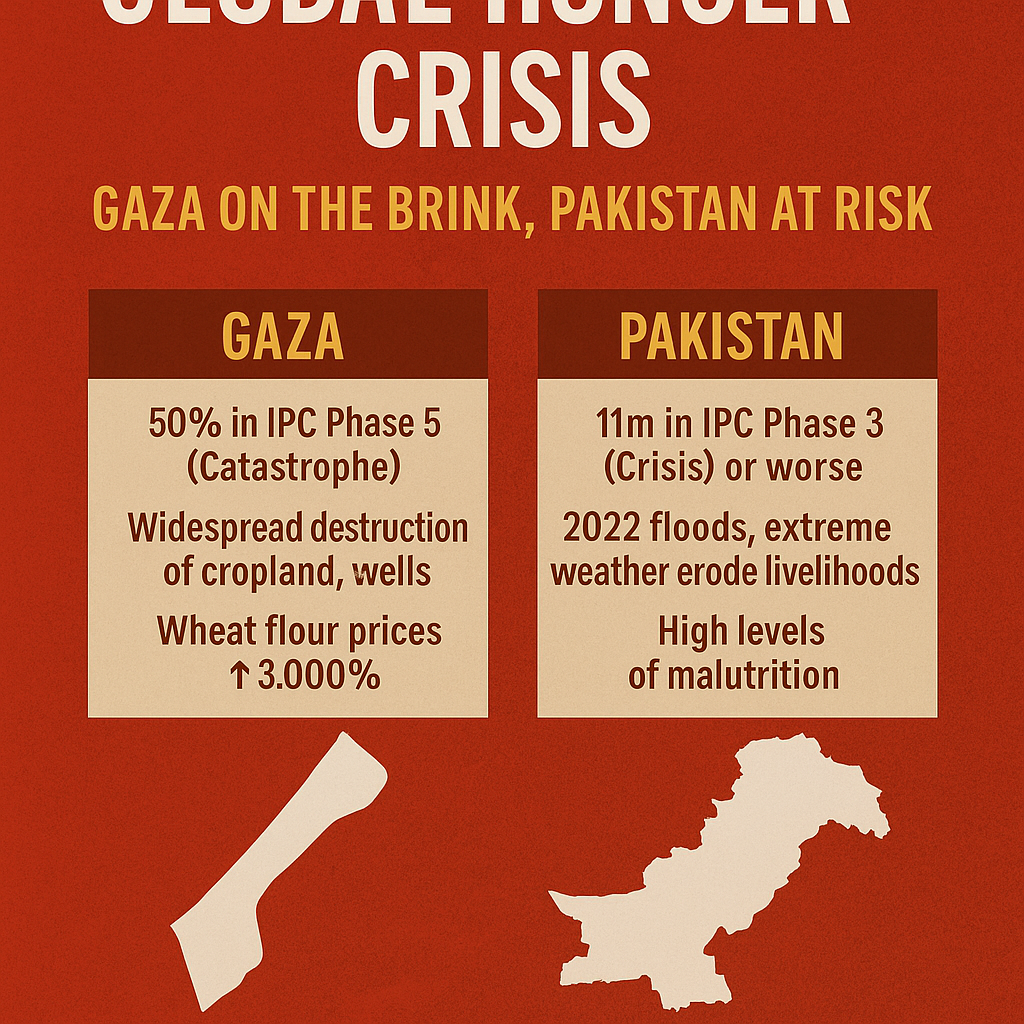
Global Hunger Crisis: Gaza on the Brink, Pakistan at Risk


As we move deeper into 2025, the world is facing an escalating food security emergency. According to the latest Global report on food crisis the number of people experiencing high levels of acute food insecurity is the highest ever recorded. Conflict, economic shocks, and climate disasters are pushing vulnerable populations to the edge—and in some regions, over it.

No place illustrates this human catastrophe more starkly than Gaza, where the entire population of over 2.1 million people is now trapped in a web of starvation, siege, and suffering. But Gaza isn’t alone. From northern Pakistan to the drought-stricken Horn of Africa, hunger is becoming a global phenomenon—and political inaction is letting it happen.


Gaza: Starvation by Design

The humanitarian situation in Gaza has become apocalyptic. As of March 2024, over half the population was classified at IPC Phase 4 (Emergency), while a staggering 50% were in IPC Phase 5 (Catastrophe)—the last step before an official famine declaration. These are not just numbers. They represent real families, children, and communities enduring daily misery with no end in sight.

The root cause isn’t merely bad luck or natural disaster—it’s political policy. Gaza’s economy has been strangled by a 17-year blockade, compounded by frequent military escalations. Basic infrastructure has been shattered. By the end of 2024:

  • 75% of cropland was destroyed
  • 57% of greenhouses were obliterated
  • 68% of wells were made inoperable

The destruction of Gaza’s food systems is systematic. In North Gaza and Gaza governorates, 70% of the population now survives solely on humanitarian aid, which is not only insufficient but erratic. To make matters worse, food prices have surged beyond imagination. Between February and April 2025, the cost of wheat flour rose by 3,000%.

This is not just a failure of governance—it’s a violation of human dignity. As famine looms, humanitarian access remains severely restricted. Aid trucks entering Gaza are far below pre-conflict levels, and every delay worsens the crisis. Global silence is not neutrality; it’s complicity.


Pakistan: A Growing Storm Beneath the Surface

While Gaza’s tragedy dominates headlines, Pakistan is quietly edging toward its own food security tipping point. Although food inflation dipped to 0.3% by December 2024, that statistic hides a deeper truth. Persistent poverty, rising unemployment, and climate shocks are undermining household access to nutrition—especially in the country’s most vulnerable regions.

The 2022 floods left long-term damage that Pakistan has yet to recover from. Recurrent extreme weather events in 2023 and 2024, including erratic rainfall, droughts, and early frosts, have dealt further blows to already fragile livelihoods. Farmers in Balochistan, Sindh, and Khyber Pakhtunkhwa (KP) have been especially hard-hit, with water scarcity and crop losses forcing many into crippling debt cycles.

The latest IPC assessment reveals a troubling picture:

  • 11 million people in Pakistan are in IPC Phase 3 (Crisis) or worse
  • 2.2 million are facing IPC Phase 4 (Emergency)
  • Malnutrition rates among children, especially in Sindh and KP, are alarmingly high

In these regions, low birth weight, child stunting, and high infection rates from diarrhoea and respiratory illness are accelerating the downward spiral. Compounding these challenges is a global reduction in humanitarian funding, which has led to scaled-down food assistance programs when they’re most needed.


A Global Crisis, Fueled by Political Neglect

What unites Gaza and Pakistan—and indeed most hunger hotspots—is not just food scarcity, but policy failure. Food insecurity in 2025 is largely man-made. It is rooted in:

  • Protracted conflict and political instability
  • Climate-induced agricultural loss
  • Economic inequality and fragile safety nets
  • Restriction of aid for geopolitical gain

In Gaza, it is the result of an intentional siege and destruction of civilian infrastructure. In Pakistan, it’s a dangerous cocktail of natural disaster, economic fragility, and underfunded social protection.

This is not simply a humanitarian challenge. It’s a moral one.


What Must Be Done: Recommendations for Pakistan

While international actors must demand an immediate ceasefire and unrestricted humanitarian access to Gaza, Pakistan’s government must act now to prevent a deeper crisis within its own borders. The following steps are critical:

1. Strengthen Social Safety Nets

Existing poverty alleviation programs like the Benazir Income Support Programme (BISP) must be expanded with a special focus on food assistance, child nutrition, and maternal health.

2. Scale Up Nutrition-Focused Interventions

Targeted support is essential in Sindh and KP. Government and NGO partnerships should focus on mobile health clinics, school feeding programs, and vitamin supplementation to reduce child mortality.

3. Invest in Climate-Resilient Agriculture

Introduce drought-resistant crop varieties, improve irrigation infrastructure, and train farmers in climate-smart techniques to reduce risk and improve yields.

4. Enhance Water Security

Pakistan must take steps to secure its water future, including reforestation, building rainwater harvesting systems, and ensuring fair access to water in drought-prone regions.


The Road Ahead: A Choice for Humanity

The question is not whether we have the resources to end hunger. The world grows enough food. The problem is how that food is distributed—and how hunger is weaponized in times of conflict. Food should never be used as a tool of war.

In Gaza, the world must say: enough.
In Pakistan, the state must act: now.
And globally, we must remember: hunger is not inevitable—it is a choice we allow.

As millions go to sleep tonight without food, as children face another day with empty stomachs and no certainty of survival, we must ask ourselves:

How long can humanity endure this silence?


Posted on Leave a comment

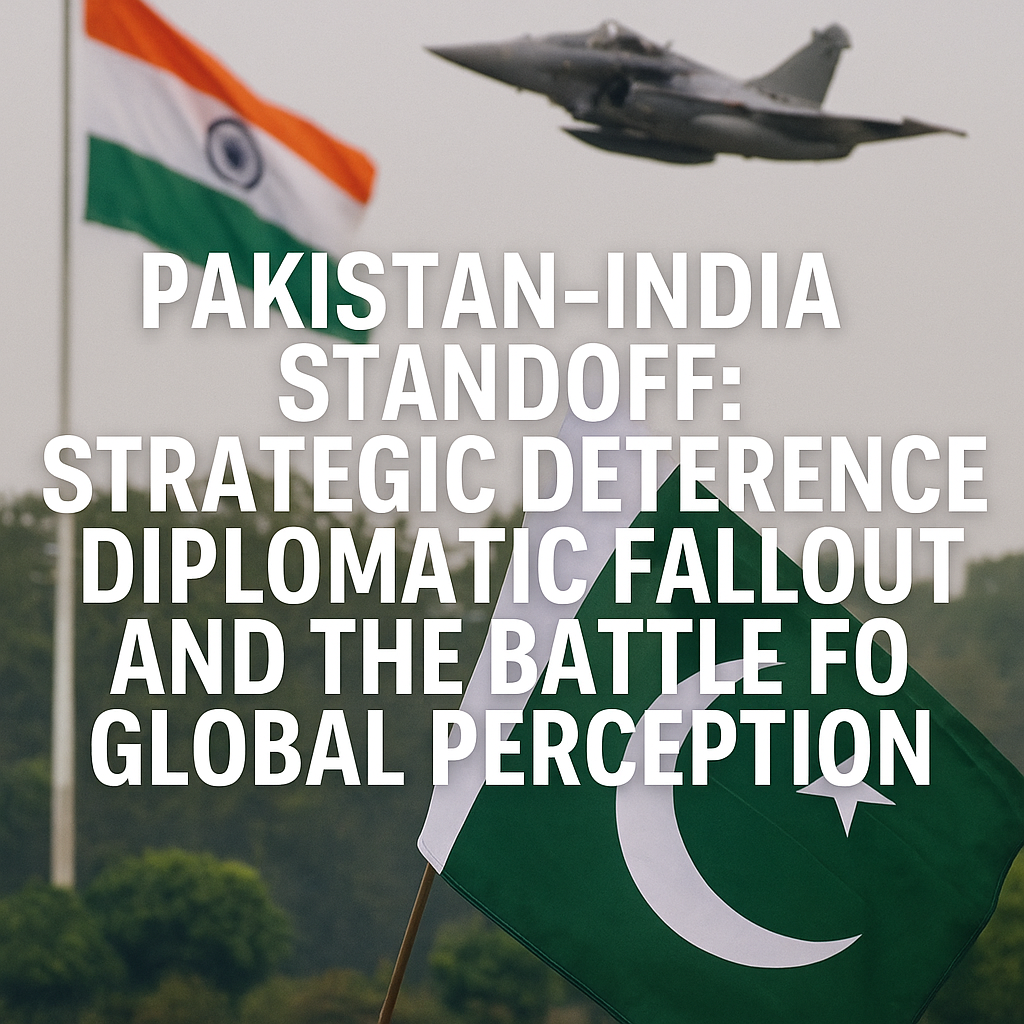
Pakistan-India Standoff: Strategic Deterrence, Diplomatic Fallout, and the Battle for Global Perception


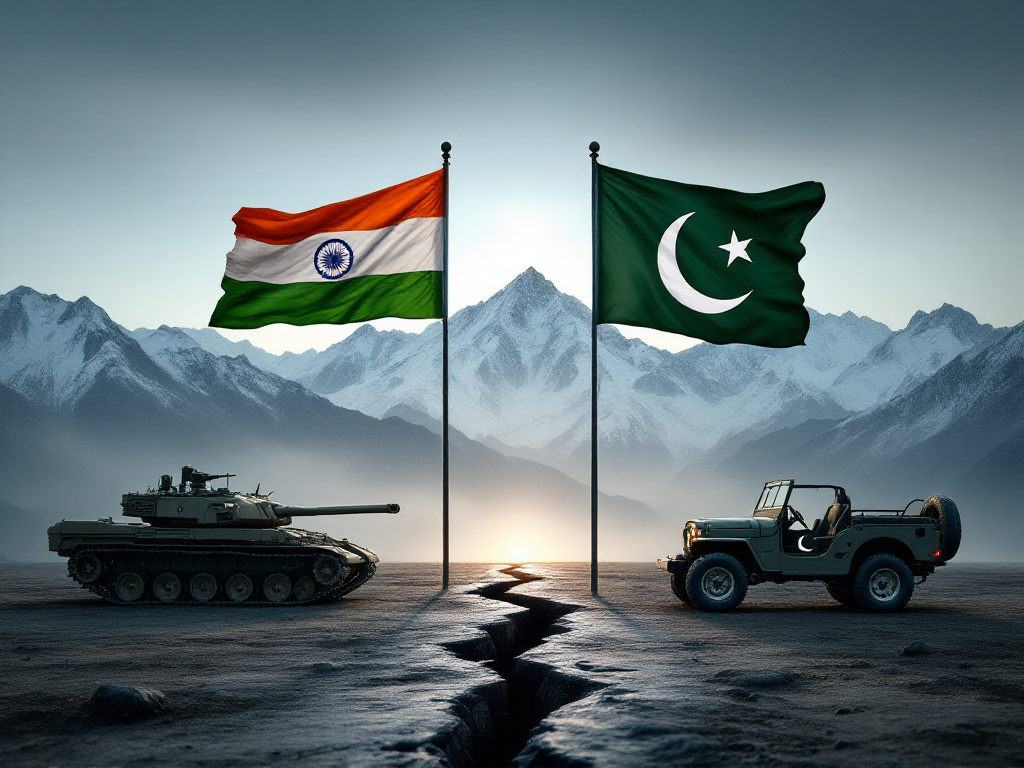
In the recent military standoff between India and Pakistan, the region was once again on the brink of a full-blown war. While New Delhi sought to reshape the strategic landscape in its favor, Islamabad’s measured yet forceful kinetic response not only thwarted India’s escalation plans but also re-established Pakistan’s conventional deterrence as a credible force under the nuclear overhang. The standoff sent a clear message: Pakistan will respond decisively if provoked, and the costs for India could outweigh the gains in any future conflict.

Conventional Deterrence vs. Escalation: A Strategic Reset

Pakistan’s military response is seen by many defense analysts as a successful check on India’s attempt to broaden the spectrum of conventional war under the assumption of nuclear deterrence. According to reports, the loss of multiple Rafale aircraft by India and Pakistan’s demonstrated ability to target strategic sites across the Indian mainland forced a recalibration of India’s aggressive posture. Islamabad’s show of force effectively neutralized India’s bid for a “limited war” doctrine, a concept that has increasingly dominated Indian military thinking in recent years.

New Delhi’s assumption that it could carry out precision strikes under the umbrella of nuclear deterrence without triggering broader consequences backfired. In reality, India’s military objectives were left unachieved, its strategic calculations misfired, and its international credibility suffered.

Modi’s “New Normal” Falls Apart

Indian Prime Minister Narendra Modi’s rhetoric about having destroyed “terrorist infrastructure” in Pakistan proved hollow when contrasted with ground realities. Despite bold claims, India failed to create any tangible shift in its favor. In fact, the assertion of setting a new military norm was met with harsh realities that India could not ignore. Rather than establishing a precedent for future military responses to cross-border terror attacks, New Delhi found itself boxed in, wary of an even more punishing reprisal from Pakistan if it attempted a similar strategy again.

Pakistan, by reaffirming its conventional strength and political will, has effectively reshaped the regional security equation, turning India’s so-called “new normal” into a strategic liability.

A Fragile Ceasefire and the Risk of Miscalculation

Today, the situation remains precarious. A tenuous ceasefire agreement is in place, but the broader diplomatic framework between the two nuclear neighbors remains broken. The Directors General of Military Operations (DGMOs) continue to engage at a technical level, but meaningful political dialogue remains absent.

This lack of sustained communication increases the risk of future miscalculations, especially in a crisis-prone environment where even a minor incident could spiral into another major military confrontation. Modi’s declaration that India had “only suspended” military operations adds to the uncertainty, suggesting that the door to renewed escalation remains open.

Diplomatic Damage: India’s Global Standing Takes a Hit

Perhaps the most significant fallout of this crisis was diplomatic. India’s militaristic approach alienated several key global players and shifted international attention away from terrorism to the risks of nuclear war in South Asia. What was intended to be a show of strength instead revealed strategic recklessness. The international community began to question the wisdom of New Delhi’s aggressive policies, and for the first time in years, Kashmir returned to the global agenda.

In a particularly stinging development for India, former U.S. President Donald Trump offered to mediate the Kashmir conflict, a move that India publicly rejected but one that effectively re-hyphenated India and Pakistan in the eyes of the global community—something Indian diplomacy had long tried to avoid. Read more on Trump’s Kashmir mediation

India’s decision to suspend the Indus Waters Treaty also backfired. Even U.S. officials, in private communications, reportedly urged India to maintain its obligations under the treaty. Learn more about the Indus Waters Treaty and its history

US Intervention and China’s Strategic Alignment with Pakistan

The Trump administration played a decisive role in diffusing tensions, with Secretary of State Marco Rubio and Vice President J.D. Vance engaging both sides to urge de-escalation. Multiple diplomatic calls and backchannel efforts culminated in Trump announcing the ceasefire—an announcement India conspicuously ignored, refusing to publicly acknowledge the American role in ending the standoff.

In stark contrast, Pakistan and China maintained robust coordination throughout the crisis. Intelligence sharing, strategic alignment, and diplomatic synergy between the two countries strengthened their position while exposing the strategic isolation of India on the global stage.

Domestic Reactions: A Tale of Two Nations

Domestically, the political consequences of the conflict were equally revealing. In India, Modi’s Operation Sindoor drew criticism from opposition parties and even from within his traditional base. The right-wing was disillusioned by the decision to agree to a ceasefire, while the opposition painted the operation as a strategic failure.

In Pakistan, however, the narrative was starkly different. There was a surge of national unity, a renewal of confidence in the military, and widespread public approval of the government’s handling of the crisis. The military’s image soared, and the political leadership benefited from the perception of strength and success in repelling Indian aggression.

The Road Ahead: Uncertainty and Unfinished Business

While some confidence-building measures are underway, and the ceasefire is holding, long-term peace between India and Pakistan remains elusive. Both countries have emerged from the crisis with diametrically opposed interpretations. India believes it set a precedent, while Pakistan is convinced it neutralized that precedent entirely.

Without a meaningful diplomatic roadmap, these conflicting narratives only heighten the risk of future escalations. Any new incident—be it cross-border firing, a terrorist attack, or misinformation—could ignite another confrontation. With nuclear weapons in play, the margin for error is razor-thin.


Final Thoughts

The recent Pakistan-India military crisis underscores the fragility of peace in South Asia. It has shattered the illusion that conventional strikes can occur under a nuclear umbrella without grave consequences. The geopolitical fallout, domestic repercussions, and diplomatic aftershocks show that military adventurism comes with heavy costs.

For long-term stability, sustained dialogue, mutual recognition of red lines, and international engagement are essential. Otherwise, the region will remain one misstep away from disaster.


Posted on Leave a comment

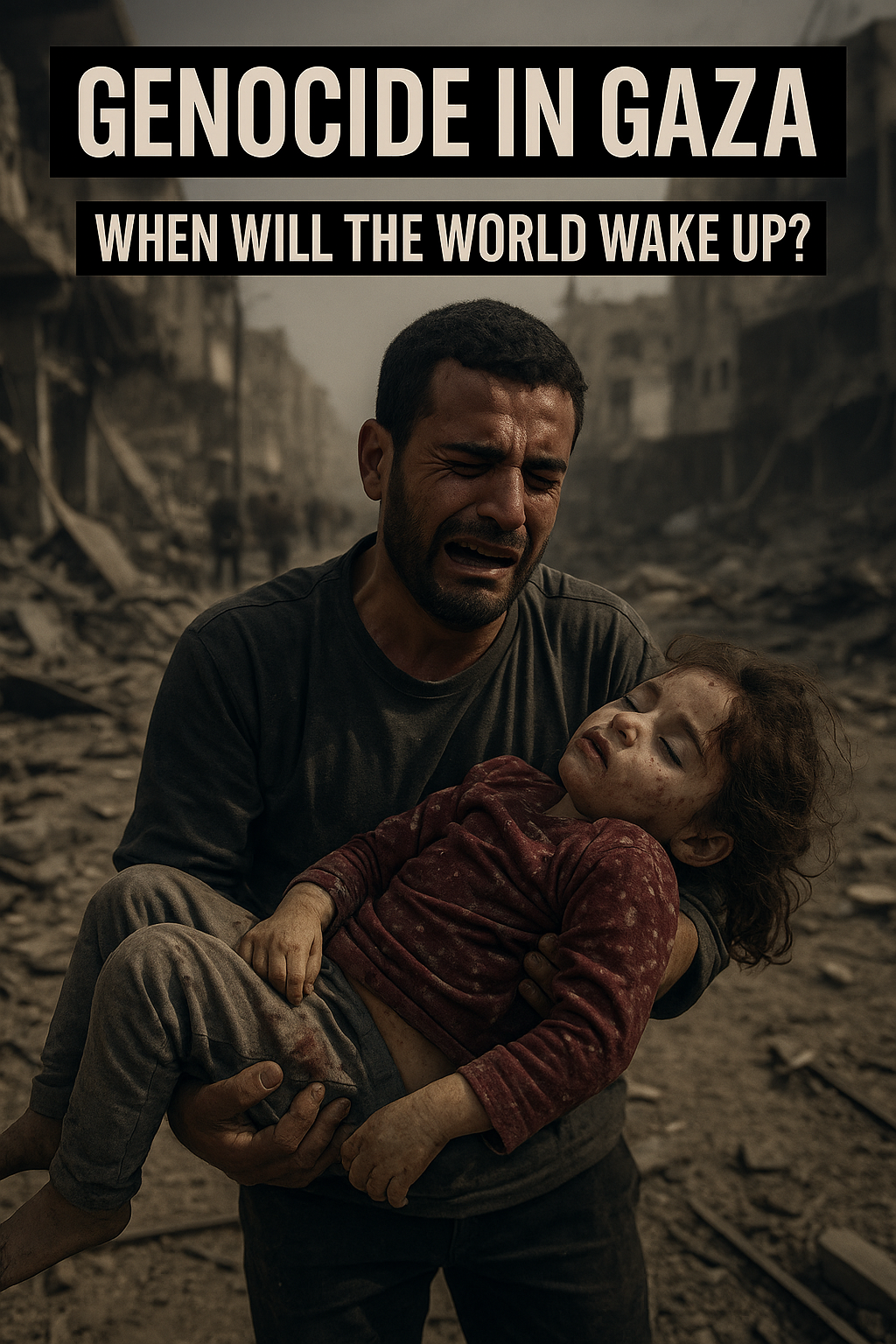
GENOCIDE IN GAZA: WHEN WILL THE WORLD WAKE UP?


With more Israeli forces than ever now deployed inside Gaza, and a fresh call-up of reservists, the situation has shifted from dire to devastating. Gaza is now under a relentless siege—cut off from food, water, medicine, and electricity for over six weeks. Despite warnings from the UN, WHO, and multiple human rights watchdogs about the imminent threat of mass starvation, the aid blockade remains firmly in place.

Bombings have escalated. Hospitals have been reduced to rubble. Entire neighborhoods flattened. Children are buried under debris, mothers clutch their lifeless babies, and doctors treat patients without anesthesia. And yet, world leaders stay silent—or worse, continue justifying it as “Israel’s right to defend itself.”

A Military Operation or Ethnic Cleansing?

Israel continues to claim its operation is focused on freeing the remaining hostages. But the facts on the ground tell another story. As journalist Mark Seddon wrote on X:

“Only 8 hostages have been rescued by the Israeli army. 33 have been killed by Israeli airstrikes. 148 were freed through negotiations. This isn’t about the hostages—it’s about the annihilation of the Palestinian people.”

The numbers speak for themselves. The cruelty cannot be overstated. Gaza’s children—over 18,000 of them, most under 10 years old—are already dead. The very same West that once vowed “Never Again” after the Holocaust is now watching history repeat itself. And doing nothing.

The Silence of the “Free” World

Despite its lofty claims of democracy, human rights, and journalistic freedom, the Western world has clearly picked a side—and it isn’t with the oppressed.

Mainstream media dehumanizes Palestinians. Every day, we see 50, 75, or 100 deaths reported as mere numbers. These are people. Children. Families. Journalists. Doctors. Yet their lives seem to matter less.

Meanwhile, foreign journalists have been barred from Gaza. Local journalists—every one of whom Israel claims is “Hamas”—have been systematically killed. This silence ensures that genocide can proceed without global outcry.

Images That Break the Soul

Who hasn’t seen the footage? A father carrying the broken body of his daughter. A mother screaming next to the shattered corpse of her son. Hospital corridors stained with blood. Entire families vaporized in seconds. Gaza looks less like a warzone and more like a mass graveyard.

Healthcare workers operate with no medicine, no supplies, no electricity—yet they continue, carrying out surgeries by flashlight. Many don’t survive the next airstrike.

Words fail. Adjectives feel useless. And still, we scroll past.

Is the World Finally Realizing?

Perhaps, just perhaps, the horrors are beginning to catch up with Western leaders. Maybe even their selective morality is starting to sting. When Donald Trump, Keir Starmer, and Emmanuel Macron start voicing concerns about the Gaza aid blockade, it’s not a shift in conscience—it’s political panic. Because people are waking up. Protesters are flooding the streets in London, Paris, New York, Berlin. Even under harsh repression.

But the real betrayal comes from the Arab world—silent, complicit, obedient. Some of the richest Muslim countries welcomed American presidents with red carpets and billion-dollar deals but failed to speak a single word for Gaza.

A Diabolical Plan: The Next Nakba?

According to an NBC report, a shocking plan is allegedly in the works: the forced relocation of up to one million Palestinians from Gaza to Libya. Yes, Libya—a nation already broken by Western intervention.

NBC says the U.S. would offer Libya billions of dollars in frozen assets as “incentives.” It’s a horrifying echo of 1948—a second Nakba. And it must alarm every Arab and European leader.

Because what happens when these Palestinians—angry, dispossessed, and desperate—refuse to stay in Libya? Europe, already seeing a surge in far-right extremism due to refugee fears, could face destabilizing consequences. The entire Mediterranean could become a humanitarian disaster zone.

When Terrorism Becomes an Excuse for Genocide

Western hypocrisy is no longer even subtle. Leaders who once refused to meet elected Palestinian officials now share handshakes with people like Syrian President Ahmed al-Sharaa—a former Al Qaeda leader with a $10 million bounty on his head.

This proves one chilling point: The problem was never Hamas. It’s the Palestinians themselves. It’s the idea of a free Palestine. It’s the dream of an independent, dignified life for people who have lived under siege for over 16 years.

The project is Greater Israel. And everything else is collateral damage.

A Choice the World Must Make

The world is standing at a crossroads. Do we let another genocide take place while hiding behind diplomatic language and meaningless press releases? Or do we finally raise our voices and demand accountability?

Humanity is not defined by how we treat the powerful, but how we respond to the cries of the powerless. Gaza has been crying for far too long.

It’s time for the world to listen.


✊ CALL TO ACTION

Don’t just read. Share. Speak up. Educate others. Support journalists risking their lives. Push for sanctions. Demand an arms embargo. Write to your representatives. Protest.

History is watching. So are the children of Gaza—if they survive.


Posted on Leave a comment

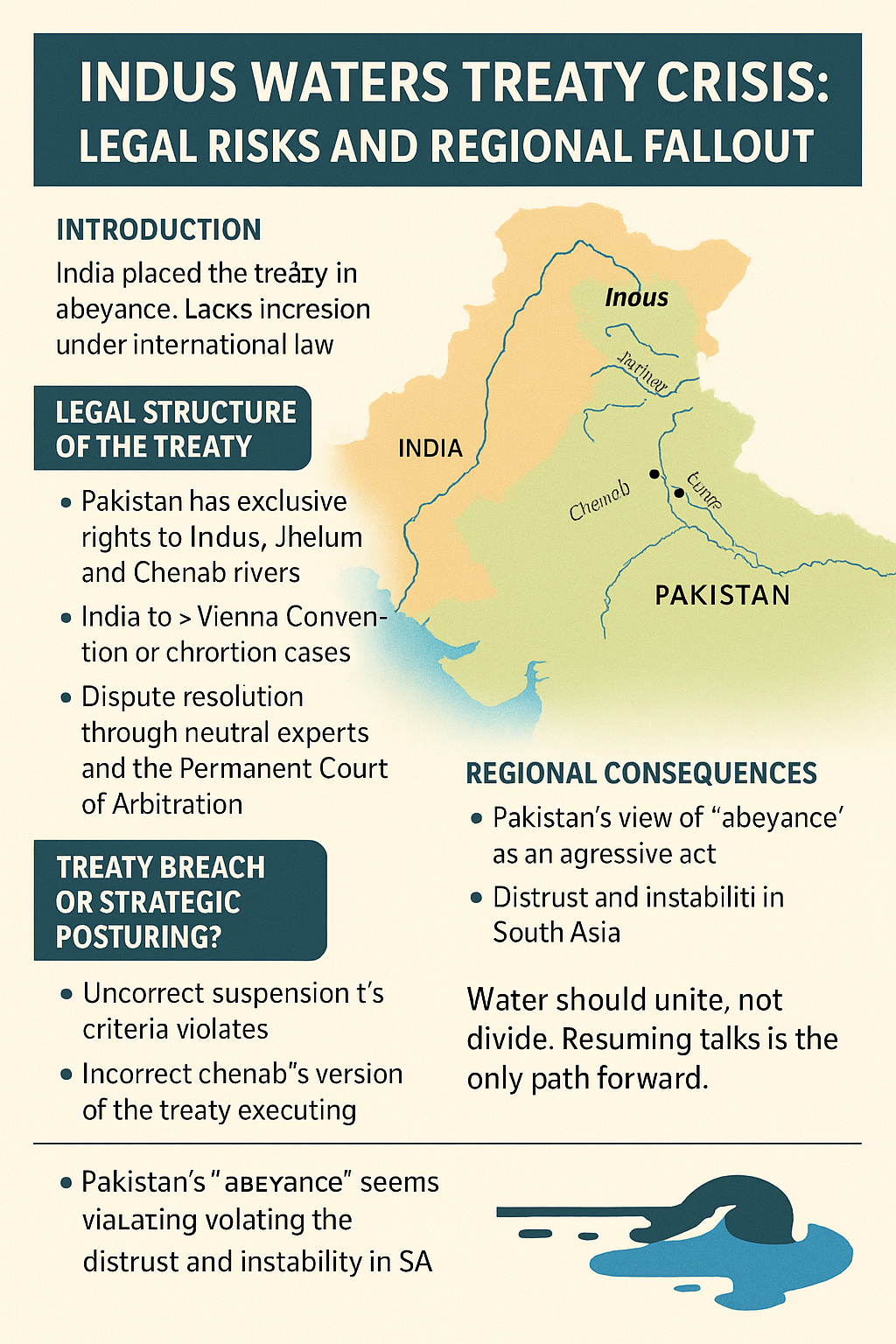
Indus Waters Treaty Crisis: Legal Risks and Regional Fallout


India’s suspension of the Indus Waters Treaty raises legal red flags and regional concerns. Explore its implications under international law and treaty obligations.


Indus Waters Treaty Crisis: Legal Risks and Regional Fallout

For over six decades, the Indus Waters Treaty (IWT) has served as a rare example of cooperation between India and Pakistan in a highly strained bilateral relationship. Signed in 1960 and brokered by the World Bank, it distributed control of six rivers: the eastern three (Ravi, Sutlej, and Beas) to India and the western three (Indus, Jhelum, and Chenab) to Pakistan.

But recent developments have cast a long shadow over this landmark water-sharing agreement. In a drastic move, India has placed the treaty “in abeyance”—a diplomatic phrase that has no clear legal standing under international law.


⚖️ The Legal Structure of the Indus Waters Treaty

Under the IWT:

  • India has exclusive rights over the eastern rivers.
  • Pakistan has unrestricted use of the western rivers, except for limited uses by India (e.g., agriculture, hydropower without storage).
  • The treaty outlines specific rules for dispute resolution, including neutral experts and the Permanent Court of Arbitration.

Suspending a treaty is a legally weighty act. According to the Vienna Convention on the Law of Treaties (VCLT)—the global framework for managing treaties—such suspension is only valid under specific conditions: breach by one party, impossibility of performance, or fundamental change of circumstances.

India’s recent declaration does not meet any of these conditions, making the suspension legally questionable under international law.


🚫 Treaty Breach or Strategic Posturing?

The current standoff follows escalating tensions and border-related clashes between the two nations. By suspending the IWT, India has unilaterally acted outside the treaty’s legal boundaries. According to Article III(2) of the IWT, India must not interfere with the unrestricted flow of the western rivers.

Allegations that India diverted or restricted the Chenab’s water flow could amount to a violation of treaty obligations, constituting an internationally wrongful act that demands remedy or compensation.

Such action not only weakens the legal fabric of the IWT but also sets a dangerous precedent for other transboundary water agreements worldwide.


🧑‍⚖️ What International Law Says

Under international law:

  • Unilateral suspension of a bilateral treaty—especially one like the IWT with well-established mechanisms—is not permitted without formal dispute procedures.
  • The Vienna Convention (1969) governs such treaties and emphasizes resolving conflicts through peaceful means before suspensions or withdrawals.

If India believes the treaty has been materially breached by Pakistan, it should invoke the dispute resolution provisions within the IWT—not act unilaterally.

This action by India could be challenged in the International Court of Justice or be raised at forums such as the UN General Assembly or International Law Commission.


🌍 Regional Consequences: More Than Just Legal Drama

This is not just a legal matter—it’s a geopolitical flashpoint.

Pakistan sees the Indus as its lifeline. Its agriculture, industry, and food security are intricately tied to the rivers controlled under this treaty. Any disruption, especially of the Chenab or Jhelum, could spark major economic and political unrest.

India’s move, even if temporary or symbolic, fuels distrust and instability in a region already burdened by unresolved disputes and competing nationalisms. It also raises fears of “water weaponization”—where access to water becomes a tool of coercion or retaliation.


💬 Missed Opportunity for Diplomacy

What’s even more troubling is that no formal dispute process was initiated before this suspension. The IWT allows for:

  • A neutral expert to resolve technical differences
  • The Permanent Court of Arbitration for legal disputes
  • World Bank facilitation if bilateral efforts fail

By bypassing these steps, India has not only weakened the treaty’s framework but also delegitimized international mechanisms that have long preserved peace over this crucial shared resource.


🛑 A Dangerous Precedent for Water Wars?

The Indo-Pak water conflict is not isolated. Globally, over 260 rivers are shared across national borders, and many nations rely on international agreements to manage access. If large countries can suspend such treaties without legal backing, it undermines decades of diplomacy and environmental cooperation.

Countries like Egypt (Nile), Turkey (Tigris-Euphrates), and China (Brahmaputra) may start taking cues from this bold maneuver—setting off a chain reaction of treaty breakdowns.


✅ Conclusion: Law Over Power

The Indus Waters Treaty has been hailed as a model for cooperation even in the worst of times. If it fails now due to political maneuvering, it will be a failure of law, diplomacy, and foresight.

Pakistan must push for legal redress through international platforms and engage allies diplomatically to exert pressure for treaty reinstatement. India, on the other hand, should recognize the long-term damage to its regional and global credibility if it continues down this path.

💧 In the 21st century, water should be a bridge, not a battleground. It’s time for both nations to return to the negotiation table—not the brink of conflict.


📚 References & Further Reading


Posted on Leave a comment

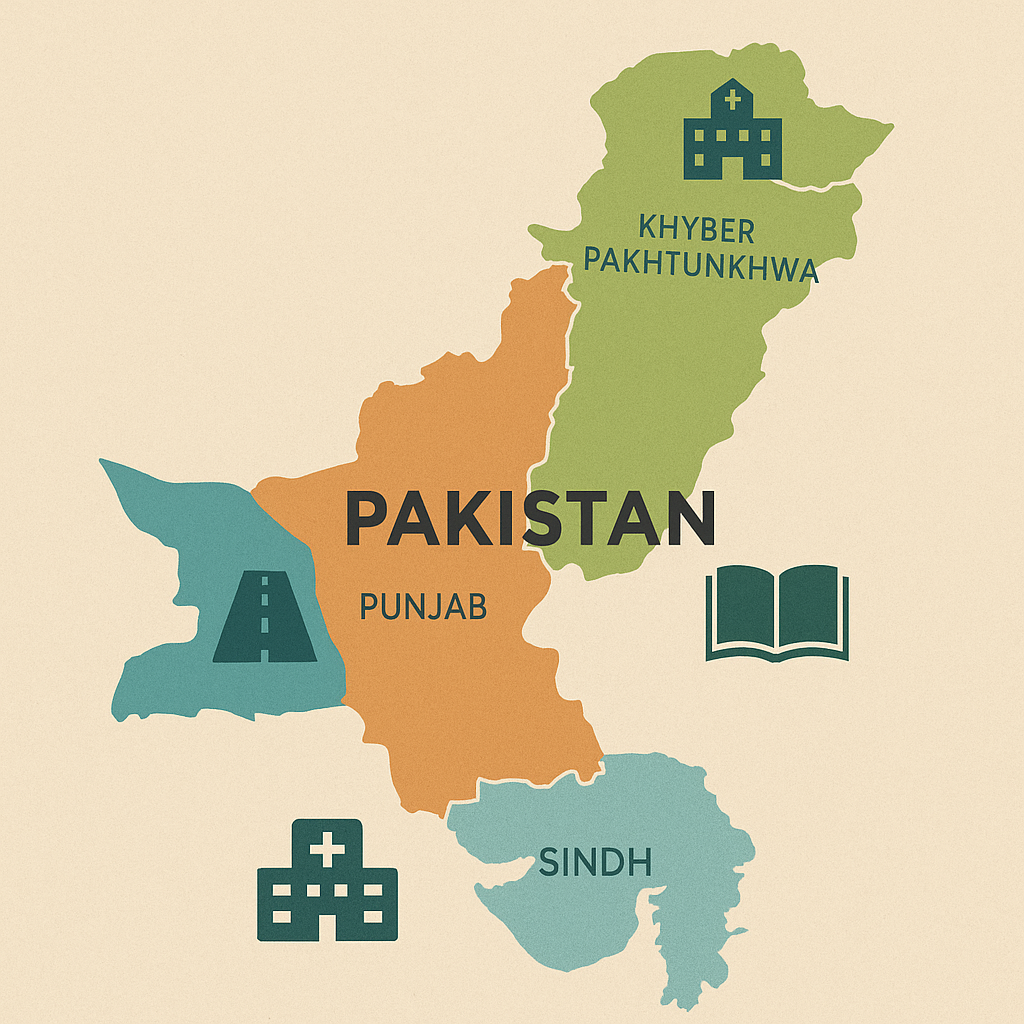
Bridging Divides: How Pakistan Can Ensure Equitable Resource Distribution by 2025


Learn how Pakistan can achieve national unity through equitable resource distribution among its ethnic regions and address historical injustices by 2025.


Why Equitable Resource Distribution in Pakistan Matters

Pakistan is a country of diverse ethnic, linguistic, and cultural identities spread across its provinces. Yet, this richness has long been overshadowed by regional disparities and historical grievances. The uneven distribution of resources has led to underdevelopment in several regions, particularly Balochistan, Gilgit-Baltistan, southern Punjab, and parts of Sindh and Khyber Pakhtunkhwa.

To promote national unity and long-term stability, Pakistan must prioritize equitable resource distribution as a national development strategy. This involves moving beyond population-based formulas and addressing the structural inequalities that have held back entire regions for decades.


Causes of Regional Inequality in Pakistan

Several key factors contribute to regional inequality in Pakistan:

  • Over-centralized planning and weak provincial autonomy
  • Political favoritism in federal fund allocations
  • Neglect of remote and low-population areas like Balochistan and GB
  • Underrepresentation of minority ethnic groups in policymaking
  • Unequal access to education, healthcare, and infrastructure

These challenges not only create socio-economic gaps but also fuel discontent and alienation. Without corrective measures, Pakistan risks deepening internal divides.


Reforms for Equitable Development in Pakistan

1. Reform the NFC Award Formula

The National Finance Commission (NFC) Award currently favors population as the primary metric. This must be revised to include other indicators like:

  • Poverty rate
  • Development needs
  • Literacy and health indicators
  • Geographic size and remoteness

This shift will ensure that underdeveloped regions get a fairer share of federal resources and are not punished for having smaller populations.

2. Strengthen Local Governments

Empowering local government bodies is critical for addressing grassroots development. Provincial governments must:

  • Conduct regular local body elections
  • Allocate sufficient funds to municipal governments
  • Reduce bureaucratic delays in project approvals

When local leaders are given real authority and resources, development becomes more targeted, transparent, and inclusive.

3. Create a National Development Equity Commission

Pakistan needs a federal commission to monitor equity in public spending and development. This independent body can:

  • Track regional development indicators
  • Advise on equitable fund allocation
  • Publish annual reports on development disparities
  • Engage civil society in oversight

Such a body would increase transparency and ensure that development is needs-based, not politically motivated.

4. Prioritize Underserved Regions for Infrastructure Investment

Remote and disadvantaged areas must be first in line for public infrastructure projects, including:

  • Roads and transportation
  • Schools and vocational centers
  • Hospitals and basic health units
  • Clean water and sanitation projects
  • Internet and mobile connectivity

This kind of targeted investment can close long-standing gaps and open up economic opportunities for marginalized communities.

5. Ensure Ethnic and Regional Representation in Institutions

National inclusion begins with representation. The federal government must:

  • Ensure fair quotas for underrepresented provinces in civil services
  • Promote regional languages and cultures in national media
  • Establish universities and think tanks in remote provinces
  • Appoint diverse voices to key national policy positions

A diverse and inclusive state machinery increases legitimacy and trust.


The Role of Data and Technology in Resource Allocation

Equity must be data-driven. Tools like:

  • GIS mapping
  • District-level development indices
  • Real-time monitoring dashboards
  • AI-based budget tracking

…can help policymakers visualize regional disparities and allocate resources accordingly.

A digital governance model with open data portals can also allow citizens to track public spending, promoting transparency and accountability.


Overcoming Political Resistance and Building National Consensus

Equity threatens entrenched interests. Those benefiting from the current system may resist reform. To move forward, Pakistan needs:

  • Political will at the federal and provincial level
  • Media advocacy to raise awareness of regional inequality
  • Civil society pressure to ensure follow-through on policy reforms
  • Cross-party consensus to keep reforms out of partisan conflict

Equity should not be a favor — it must be treated as a constitutional obligation and development priority.


Shared Prosperity Is National Prosperity

Equitable development is more than a policy — it’s a nation-building strategy. When all provinces receive a fair share of development, the entire country benefits. Reduced resentment, greater stability, and higher productivity follow.

For Pakistan to rise as a modern state, it must ensure that no region or community is left behind. Addressing historical grievances through fair and transparent policies is not just moral — it is essential to long-term peace and economic growth.


Conclusion

As Pakistan moves forward in the 21st century, the focus must shift from political favoritism and reactive governance to justice-based policy. The goal is not to weaken strong regions but to uplift weaker ones.

By reforming the NFC Award, strengthening local governments, investing in underserved regions, and using technology and data, Pakistan can finally begin to heal its historical wounds.

Equitable resource distribution is not a cost — it’s an investment in national unity and future prosperity.


Posted on Leave a comment

“The Venom Gold Rush: Big Pharma’s Secret Hunt in Australia’s Backyard”

Australia is renowned for its array of venomous creatures—from snakes and spiders to jellyfish. While these animals are often feared for their lethal potential, scientists are uncovering a fascinating paradox: the very venoms that pose threats to humans are now being harnessed to develop groundbreaking medical treatments.

From Venom to Vital Medicine

In Australia, venom research has evolved from a focus on antivenom production to exploring therapeutic applications for various diseases. Institutions like the University of Queensland’s Institute for Molecular Bioscience (IMB) and the Australian Venom Research Unit (AVRU) at the University of Melbourne are at the forefront of this transformation.

Funnel-Web Spider Venom: A Potential Heart Protector

One of the most promising discoveries comes from the venom of the K’gari funnel-web spider. Researchers have identified a peptide named Hi1a that shows potential in protecting heart cells during heart attacks. This peptide works by preventing cell death caused by oxygen deprivation, a common issue during cardiac events. The research team, led by Professor Glenn King, is preparing for human clinical trials to assess the efficacy of Hi1a in cardiac treatment. (The Australian, The University of Queensland, The Guardian)

Tarantula Venom: Exploring Epilepsy Treatments

Beyond cardiac care, venom is also being investigated for neurological applications. A study led by Professor Ernst Wolvetang at the University of Queensland is examining the effects of tarantula venom on epilepsy. By creating brain organoids from the blood of epilepsy patients, researchers can test how specific venom peptides influence neuronal activity. Preliminary findings suggest that certain venom components may reduce the hyperexcitability of neurons, offering hope for new epilepsy treatments. (ABC)

Antivenom Production: A Lifesaving Endeavor

Australia’s commitment to antivenom production has significantly reduced fatalities from venomous bites and stings. For instance, since the introduction of the funnel-web spider antivenom in 1981, there have been no recorded deaths from its bite. The process involves collecting venom, often by “milking” the creatures, and then using it to immunize animals like horses. The resulting antibodies are purified to create antivenoms that are distributed to hospitals nationwide. (School of Biomedical Sciences, BBC)

The Role of Venom Research Units

Institutions like the AVRU play a crucial role in understanding venomous creatures and developing treatments. Their research encompasses not only the biochemical analysis of venoms but also the development of first-aid protocols and public education to prevent envenomation incidents. (School of Biomedical Sciences)

Conclusion: Nature’s Lethal Compounds as Therapeutic Tools

The exploration of venom’s potential in medicine exemplifies how nature’s most dangerous compounds can be transformed into life-saving therapies. As research progresses, these natural toxins may offer solutions to some of the most challenging medical conditions, turning the tables on their deadly origins.