
Posted on 6 Comments

” Mental Health Myths Debunked: Facts Backed by Science You Need to Know”

Introduction

There is a widespread misconception about the mental health that creates a barrier that stop people from understanding, treatment and seeking help worldwide. These myths frequently lead to a lack of knowledge about the realities of mental health issues, deter people from getting assistance, and reinforce stigma. By making up for these misconceptions we may be able to destroy the stereotypes that are damaging the society and make a world that is more accepting, healthier and enable people to seek help for mental health problems with empathy.

Myth: Mental Health Problems Are Rare

Mental Health: Not an Infrequent Occurrence, But a Common Reality

There is a widespread misconception that mental health problems are uncommon and only impact a tiny percentage of people. But the reality presents a completely different picture. A fairly large population is victim of mental and neurological problems and are more common than most believe it is, with one in four individuals in world experience it at some points in their lives, according to World Health Organization (WHO).

In some parts of the world, such as in UK, according to research one in six adults can face some kind of mental health problems such as anxiety, stress or depression, once a week. And these figures clearly shows that how common it is.

It is important to understand that how quickly and it is spreading and how frequently it is present in the society around us only then we will be able develop the empathy, lessen stigma and encourage people to talk about this more frequently. By acknowledging that mental health issues are affecting lives in every walk of life we can change the thinking from responsibility of a one person to shared responsibility.

The first step in developing a better and more caring world for the people suffering from the mental health disorders as a common concern rather than an uncommon exception is to acknowledge the prevalence and frequency of mental health issues that are present in our society.

Myth: People with Mental Illness Are Aggressive and unpredictable

False media representations is the leading source of this stigma that associates the mental health problems to the violence. Headlines wrongly associating the violent activites to the mental health issues is reinforcing this stigma. But reality is otherwise in which these incidents are rare rather than the rule.

Studies repeatedly reveal that most mentally ill people are not violent. The U.S. Department of Health and Human Services reports that just 3-5% of violent acts are committed by the people with mental health illness and these stats are far lower than people perception. Substance abuse, trauma and socioeconomic stresses are the contributor to the mental health violence. Mental illness rarely causes violence alone.

Myth: Mental Health Issues Show Weakness

The root cause of this stigma that mental health issues show weakness is the social stigma or culture beliefs that consider emotional difficulties equal to the weakness. And this is further supported by the historical perception that discounted mental health illness is the human short comings. This misconception discourages many people from seeking help out of concern of mockery or critics. But contrary to that mental health issues are illness not personal shortcomings.

For every mental health illness (For example anxiety or depression) there are genetic, biochemical or environmental variables. Just like the other diseases they also have some pathology that requires the particular treatment. Asking for help isn’t sign of weakness it is actually an act of bravery, determination and self-awareness. But mental health disorders require the courage and perseverance to manage with juggling personal and professional obligation.

Myth: Children Don’t Experience Mental Health Problems

Alot of people do not realize the complications and influence of children surroundings on their mental health. And they consider it just a bad phase in their life rather than possible signs of bigger problems. Parents may not discuss about this in the fear of being judged by others.

It is a widespread misperception that mental health problems are only present in adults and that kids are too young to think about these things. In reality they are equally vulnerable to the mental health issues and ignoring the signs and symptoms of mental health issues in children leads to the untreated problems, delayed diagnosis, and long-term effects.

According to World Health Organization (WHO) 14% of children and adolescents around the globe are affected by the mental health disorders. These include attention-deficit/hyperactivity disorder (ADHD), depression, anxiety disorders, and more. (UNICCEF)

Children’s mental health problems are as frequent as these problems are present in adults, but they present differently in children making it difficult to diagnose . Trauma, family strife, bullying, and academic pressure are some of key factors that impact the children mental health badly. Hormonal fluctuations, brain development, and genetics can all predispose kids to mental health problems and the risk is raised by environmental factors such exposure to violence, unstable family situations, and poverty.

Myth: Therapy Is Only for People with Severe Mental Illness

A common misconception is that therapy is only for persons experiencing serious mental health issues or crises. But therapy is a flexible instrument that can help everyone, no matter how bad their problems are. It can help people to overcome a variety of daily stressful activities and foster better relationships.

Not everyone responds to the therapy in the same manner in some cases therapy isnt helpful. Those having problems with the stress, life changes, marital problems, or personal development objectives may find it beneficial.
Improving communication abilities, managing bereavement, and obtaining clarity of mind when making important life decisions are some of common motivations for the people for asking help.
There is a spectrum of mental health, and treatment can help people at every stage of the disease, from managing complicated disorders to helping moderate anxiety. Therapy can serve as a preventive approach, addressing difficulties before they become more serious, much like routine doctor’s visits help maintain physical health.

Myth: Medication Is the Only Treatment for Mental Health Issues

A widespread misperception about mental health care is that medicine is the only option for treating mental illnesses. There is no doubt that the medication plays a significant role in managing mental health issues, but it is not the only method. People use different approach, including therapy, lifestyle changes, and support networks to successfully address individual needs.

Media shows medication as the only way of treating mental health issues downgrading the other methods. Many people seek immediate relief, and medication can sometimes provide speedier symptom control than the steady progression of therapy or lifestyle modifications. In many locations, therapy and alternative treatments are less accessible than medication, supporting the belief that medication is the only option.

The most effective method of treatment of anxiety and depression found by the researchers are combination of medication and psychotherapy. According to a study published in The Journal of the American Medical Association (JAMA), patients with severe depressive disorder benefit more from both medication and cognitive behavioral therapy. Therapy, lifestyle improvements, and support systems can help maintain mental health and reduce pharmaceutical need in the long run. Learning to manage triggers, develop resilience, and cultivate healthy habits offers people power over their mental health journey.

Myth: People with Mental Health Conditions Can’t Hold Jobs

Individuals with mental health disorders can be as productive as their colleagues without them, according to the National Alliance on Mental Illness (NAMI), with the right support. According to a World Health Organization (WHO) study, people with mental health conditions who obtain some kind of support or workplace accommodation are very highly going to stay in their jobs and perform well.

Lack of knowledge and misconceptions regarding the mental health illnesses contribute to this notion specifically its association with instability and unreliability. Coworkers don’t know how these problems are addressed and likelihood of success with their support. These people face job discrimination due to the historical stereotypes.

A person’s talent is not limited due to any mental health condition. Many people with variety of mental health conditions have done great in different fields. After dealing with these mental health conditions a person usually gain a variety problem solving skills, empathy and creativity that can be very helpful at work. Many persons with these disorders can control their symptoms and function efficiently in their workplace with appropriate treatment and lifestyle changes. Flexible workplace rules, such as remote work or mental wellness days, contribute to employees’ success.

Myth: If you have a mental illness, you cannot recover

One of the most depressing and inaccurate clichés about mental health is that persons suffering from mental illnesses can never recover. This misunderstanding not only contributes to stigma but also discourages people from getting help, encouraging emotions of hopelessness. While in truth, mental illness is treatable and can be cured just like any other disease. They are very much misinterpreted that these disorders can’t be treated, and they are permanent.

Many people learn to manage the symptoms of their illness along with doing their work efficintly and mantainig their relationships. Recovery is a journey, not a destination. It comprises gradual improvement, with setbacks as a normal part of the process.

Conclusion

By understanding what mental health is and we will be able to overcome these myths with scientifically proven facts and maybe can create a society which is more informed. Mental health issues are not a sign that a person is weak neither they are uncurable nor uncommon. People can effectively manage their work along with their mental health with a little support and necessary resources.

It is time to abandon the myths and accept the fact mental health is as important as physical health. Together, we can make a world where we can help each other, asking for help is easier, support is available, and no one suffers alone. In short, we can work on making a world better place to live. Let us continue the conversation, communicate the truth, and lobby for increased mental health awareness for everyone.
Posted on 3 Comments

“The Impact of Sleep on Mental and Physical Health: Why Quality Rest is Essential”

Introduction

Modern life moves so quickly that there are moments when you hardly have time to pause and relax. It can make consistently getting a decent night’s sleep feel unattainable.

However, sleep is just as vital to health as food and exercise. Getting enough sleep enhances your happiness, health, and cognitive function.

Sleep is physically essential for cardiovascular health since it lowers the risk of heart disease, stroke, and hypertension. By balancing hormones, it also controls appetite and metabolism, preventing weight gain. Additionally, sleep helps the immune system by generating proteins called cytokines, which improve the body’s defenses against inflammation and infections. (NIH News in Health)

Making sleep a priority is a proactive way to enhance general health. People can improve their physical resilience, emotional stability, and cognitive function by implementing appropriate sleep habits, which will ultimately lead to a higher quality of life.

This blog’s goal is to draw attention to how important sleep is for preserving both physical and mental well-being. This blog seeks to inform readers about the importance of getting enough sleep by examining the science underlying sleep, its effects on wellbeing, and the negative effects of sleep deprivation. It also offers doable methods for enhancing sleep patterns, enabling people to take concrete measures for improved health and a more balanced way of living.

How much sleep a person needs?

As you age, your sleep requirements vary. Experts advise teens should receive eight to ten hours per night, while school-age youngsters should get at least nine. The majority of adults require seven hours or more of sleep every night.

There are a lot of misconceptions around sleep. One is that as people age, they require less sleep. This is untrue. The amount is still the same for older folks. But as you age, the quality of your sleep may deteriorate. Additionally, older persons are more likely to take sleep-impairing drugs.

Sleep Science

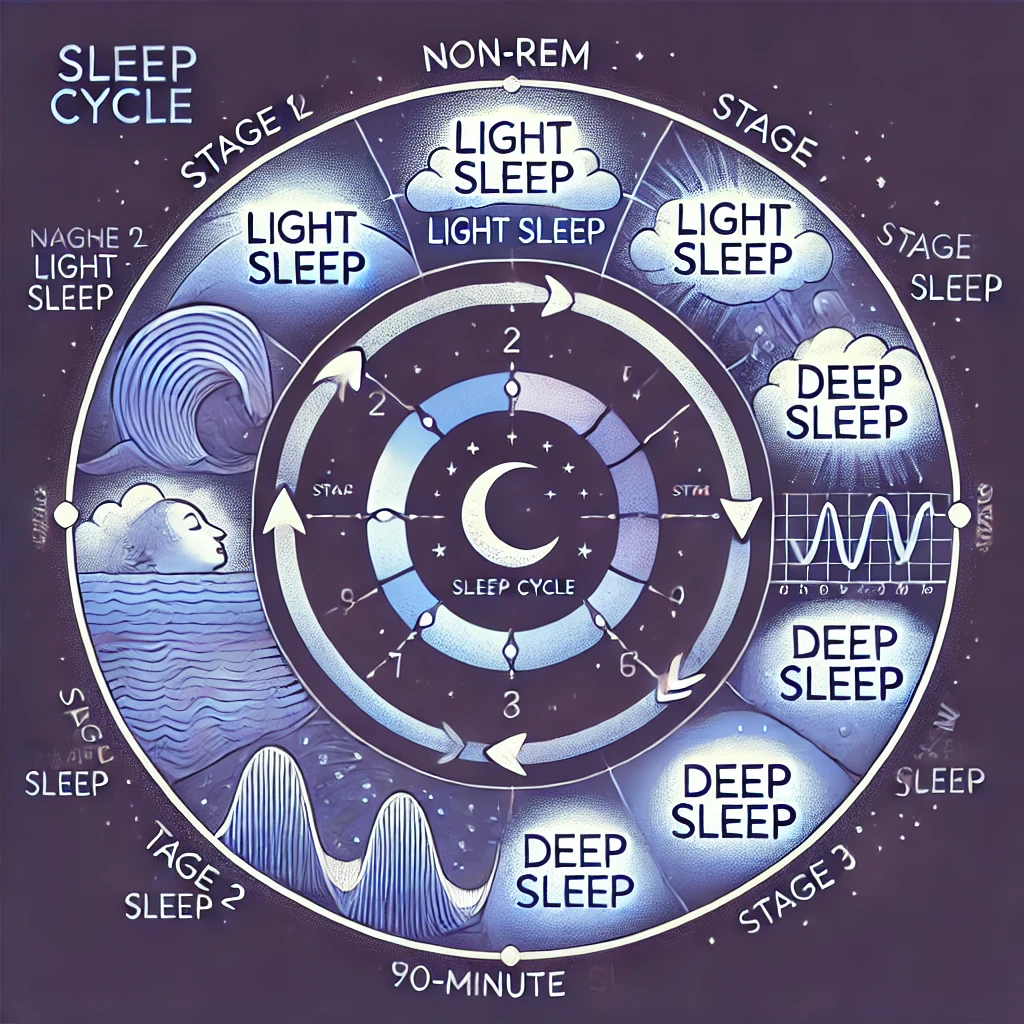
The circadian rhythm, which is the body’s internal clock, controls the various stages of sleep.Sleep is not consistent. Rather, your overall sleep is comprised of multiple cycles of the sleep cycle, which consists of four distinct stages, throughout the night. A person experiences four to six sleep cycles in a normal night.

Sleep Stages

Rapid eye movement (REM) sleep and non-rapid eye movement (NREM) sleep are the two primary categories of sleep. Every kind includes distinct phases that alternate over the night.

NREM Sleep:

Stage 1: This phase, which lasts for a few minutes, is the change from wakefulness to sleep. Muscles start to relax during this period of light sleep, and respiration, eye movements, and heartbeat all slow down.
Stage 2: A brief interval of light slumber followed by deeper sleep. Muscles relax even more and breathing and heartbeat slow down even more. Body temperature decreases and eye movements cease. Short electrical activity bursts cause the brain’s activity to slow down.
Stage 3: Also referred to as slow-wave sleep or deep sleep, this stage is essential for feeling rejuvenated. Muscles are completely relaxed, and respiration and heart rate drop to their lowest points. During this phase, awakening is challenging.

REM Sleep:

occurs roughly ninety minutes after going to sleep. Behind closed eyelids, the eyes move quickly, and brain activity resembles that of waking. REM sleep is when most dreams occur. In order to stop dreaming, muscles are momentarily paralyzed.
Each of these phases lasts roughly 90 to 110 minutes and repeats cyclically throughout the night. While deep sleep diminishes as the night go on, REM sleep durations increase.

What is Circadian Rhythms

The body’s internal 24-hour clock, known as the circadian rhythm, controls the sleep-wake cycle and affects our feelings of alertness and drowsiness. The brain’s suprachiasmatic nucleus (SCN), which reacts to environmental cues including light and dark, is principally in charge of it.

Light Exposure: The SCN tells the brain to produce less melatonin, a hormone that encourages sleep, when exposed to light, particularly natural sunshine. This results in heightened alertness. On the other hand, darkness causes the SCN to increase melatonin levels, which results in drowsiness.
Daily Fluctuations: Circadian rhythms adapt physiological processes to the outside world by causing changes in body temperature, hormone release, and other physiological activities throughout the day.
Sleep disorders and adverse health effects can result from circadian rhythm disruptions brought on by shift work, time zone changes, or exposure to artificial light at night.

Impact of Sleep on Mental Health

Sleep deprivation causes more than simply fatigue. According to an American Psychological Association study that summarized more than 50 years of research on sleep deprivation and mood, it can impair our emotional functioning, reduce good emotions, and increase our risk for anxiety symptoms.

In our largely sleep-deprived society, quantifying the effects of sleep loss on emotion is critical for promoting psychological health,” said study lead author Cara Palmer, PhD, of Montana State University. “This study represents the most comprehensive synthesis of experimental sleep and emotion research to date, and provides strong evidence that periods of extended wakefulness, shortened sleep duration, and nighttime awakenings adversely influence human emotional functioning.”

The study was published in the journal Psychological Bulletin.

Control of Emotions

Sleep is essential for maintaining emotional stability. Lack of sleep can make it harder to handle stress and everyday demands by increasing anger and emotional instability. Sleep deprivation has been shown to increase anxiety and reduce pleasant moods.

Mental Abilities

For cognitive functions like learning, memory consolidation, and attention, getting enough sleep is essential. Sleep deprivation affects these processes, making it harder to focus, make decisions, and solve problems. Lack of sleep negatively impacts cognitive function, affecting tasks requiring attentiveness and fast thinking, according to studies.

Mental Illnesses Due to Sleep deprivation

Numerous mental health conditions are directly associated with persistent sleep disturbances:

Depression: There is increase in the symptoms of major depressive symptoms in individuals with the lack of proper sleep. Sleep deprivation is also associated with the higher risk of the depression. COLUMBIA PSYCHIATRY

Anxiety: Sleep deprivation makes us less happy, more anxious. Anxiety symptoms are more likely to be heightened in people who are sleep deprived. AMERICAN PSYCHOLOGICAL ASSOCIATION

Bipolar Disorder: Bipolar disorder sufferers who experience sleep deprivation may experience manic episodes, suggesting a close connection between mood stability and sleep habits.

Suicidal Ideation: It is seen that the sleep deprivation can lead to increase in the suicidal thoughts and behavior. By focusing on the sleep issues one can mitigate this risk and improve the overall health outcomes.

What Factors Affect Sleep Quality?

Irregular Sleep Schedules: Sleep can be enhanced by establishing a regular bedtime and wake-up schedule. People going to bed at different times can disturb the circadian rhythm and that disturbs the sleep quality.

Dietary Habits: Consuming excessive amounts of alcohol or coffee might make it difficult to fall or stay asleep

Physical Activity: Physical activity is essential for the healthy life and a good sleep but doing externes exercise near the sleeping time can leads to arousal and disturb the sleep.

Light Exposure: Melatonin, a hormone that controls sleep-wake cycles, can be suppressed by exposure to light, especially blue light from electronics. In a 2016 study, researchers examined how light pollution—which includes light from streetlights, billboards, buildings, automobiles, and more—affects the quality of sleep. They discovered that even a small amount of light, such that from nocturnal lights outside, can interfere with sleep and raise the risk of illness.

Room Temperature: What room temperature is the best for the sleeping is the question often asked. For the best sleeping conditions, experts advise keeping the bedroom temperature between 60- and 68-degrees Fahrenheit.

Snoring: Although some snoring is natural, excessive snoring can have an impact on the sleeper or their partner. One possible cause of this kind of snoring is obstructive sleep apnea (OSA).

Medications: Certain prescription medications, like diuretics, can cause users to wake up in the middle of the night by increasing the desire to use the restroom. Whether prescribed by a physician or purchased over the counter (OTC), sleep aids can have adverse consequences, including daytime sleepiness.

Sleep Disorders: Sleep quality is directly impacted by disorders like restless legs syndrome, sleep apnea, and insomnia. To restore good sleep patterns, it is imperative to seek medical diagnosis and proper treatment for these problems.

Strategies for Improving Sleep Quality

1.Keep the constant sleep schedule: Try to go to sleep and wake up at about the same times every day — even on weekends. This reinforces your body’s sleep cycle (your internal clock), which can make it easier for you to fall asleep and wake up every day.

    2. Create a Restful Sleep Environment: You can create a restful sleep environment by reducing the amount of exposure to the blue light before you go to bed, using the earplugs for reducing the ambient noise. Keep your bedroom at or below 65°F (18.3°C) to encourage restful sleep.

    3.Don’t drink any liquids before the Bed: Drinking large amounts of water and other liquids leads to excessive urination which can have a negative effect on the sleep quality and daytime energy.

    4. Supplements for the good sleep: A number of supplements could aid with your relaxation and sleep, such as: Nitrate of magnesium, zinc, resveratrol, and omega-3
    These supplements can be helpful when used in conjunction with other tactics, even though they are not a panacea for sleep problems. To evaluate these supplements’ impact on your sleep and ensure you do not have a bad reaction, try them one at a time.

    5.Melatonin supplements: One important sleep hormone that signals to your brain when it is time to unwind and go to sleep is melatonin. Supplementing with melatonin, a very common sleep medication, may help you go to sleep more quickly.

    6. Reduce daytime naps: Short power naps have their uses, but prolonged or erratic naps during the day can interfere with your ability to sleep at night. Sleeping during the day might throw off your internal clock, making it difficult for you to fall asleep at night.

    7. Exercise regularly: Your general health and quality of sleep can be enhanced by as little as 30 minutes of aerobic exercise each day. Given that exposure to natural light helps regulate your sleep cycle, exercising outside may enhance the advantages even further.

    8. Manage stress before going to bed: It can keep you up at night to think about your concerns. To lessen the likelihood that your anxieties will keep you up:

    To help you get your problems out of your thoughts,

    • write them down before bed
    • Write down your to-do list as well if it causes you tension. Set your priorities for tomorrow and the remainder of the week, then make an effort to unwind.
    • According to research, a weighted blanket may offer advantages akin to those of deep pressure treatment for treating anxiety and sleeplessness.
    • To help you relax, try meditation before bed.

    9.Limit large meals before the bed: Limit your large meals before the bed as it can affect your sleep and it may also cause symptoms of acid reflux, which can keep you awake.

    10. Rule out sleeping disorders: You might also experience insomnia, which can be caused by factors such as stress and underlying medical conditions. If you’ve always had trouble sleeping, it might be a good idea to consult a healthcare professional.